What Does "Gold Grade" Shilajit Mean? 5 Checks That Prove More Than the Label
Short answer: "Gold grade" is a marketing label, not a regulated standard. No industry-wide body defines what it means for shilajit, so the words alone can't tell you how a resin was sourced, processed or tested. What proves quality is documentation you can check: a lab report matched to your lot number, a named source, a one-ingredient label, and a resin that behaves the way real resin should.
You already know a premium-sounding word on a label is not the same thing as proof. You've seen "artisan," "ultra," and "premium" on enough products to read past them. Grade names on shilajit jars deserve the same healthy skepticism, and the same follow-up question: graded by whom, against what?
Below are five checks that tell you more than any grade name can. Stick around for the founder's tip at the bottom; there's a little thank-you waiting there too. No. 2 is the one most people skip.
1. Ask who did the grading, and against what
A real grade needs a published scale and someone outside the company applying it. If a brand uses a grade name, look for a page explaining the criteria: color, texture, fulvic content, test results, anything measurable.
If the grade is defined only by the seller, it's a product name. That's fine as a name. It just isn't evidence.
2. Match the lab report to the lot number on your jar
This is the check that does the heavy lifting. A lab report should name the testing lab, the date, and a lot or batch number that matches the one printed on the jar in your hand.
A single "sample certificate" from years ago tells you about that sample. A lot-matched report tells you about your resin. If you want a refresher on what to look for in the report itself, our guide to the 8-point brand scorecard walks through it line by line.
But a clean report is only half of it.
3. Look for a named source, not a general region
"Mountain shilajit" or a broad range name tells you very little. Useful documentation names where the resin was gathered and roughly how high. That's not because one mountain range is categorically better than another; it's because documented sourcing can be traced and checked, and undocumented sourcing can't.
4. Count the ingredients
Pure resin is one ingredient: shilajit. Flip the jar. If you see carriers, sweeteners, fillers, or "proprietary blend," you're buying a formulation, not straight resin. A formulation can be a perfectly valid product. It just shouldn't need a precious-metal name to sell it.
5. Let the resin show you how it behaves
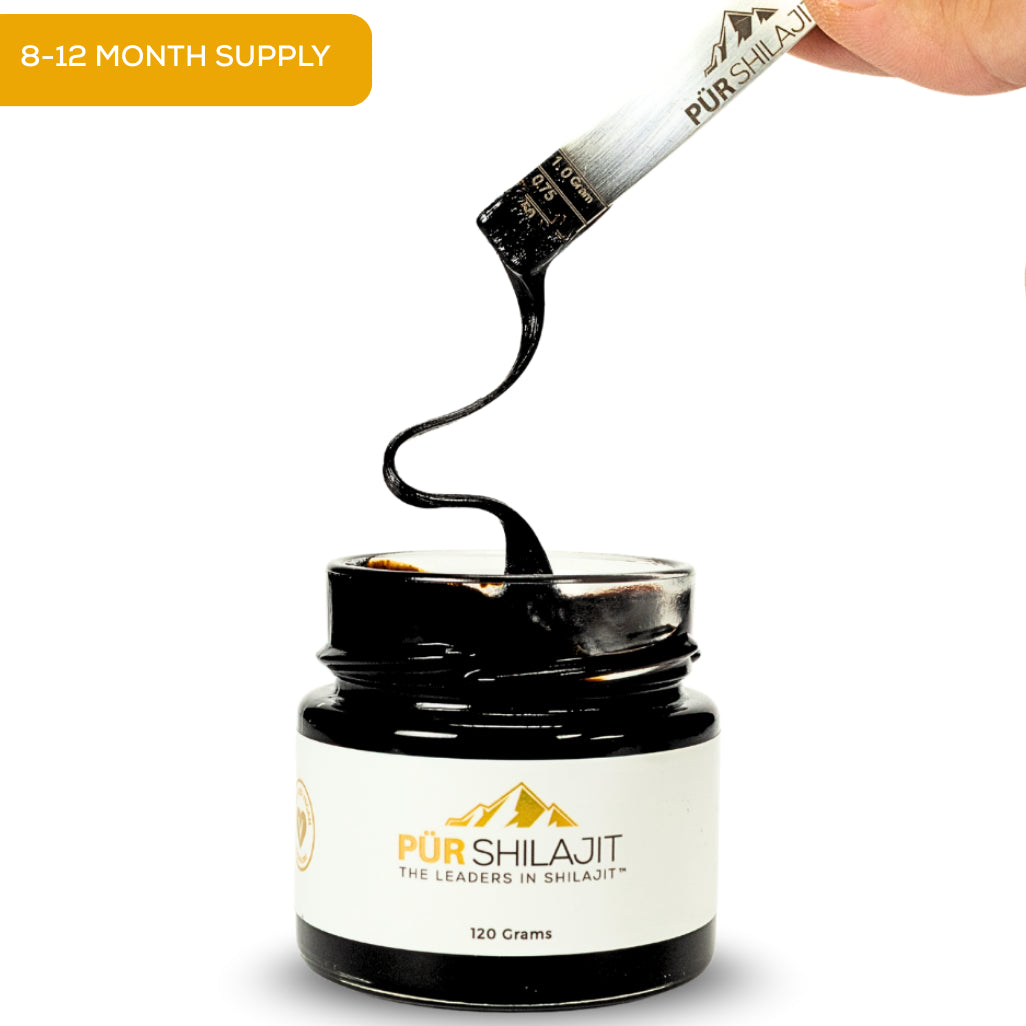
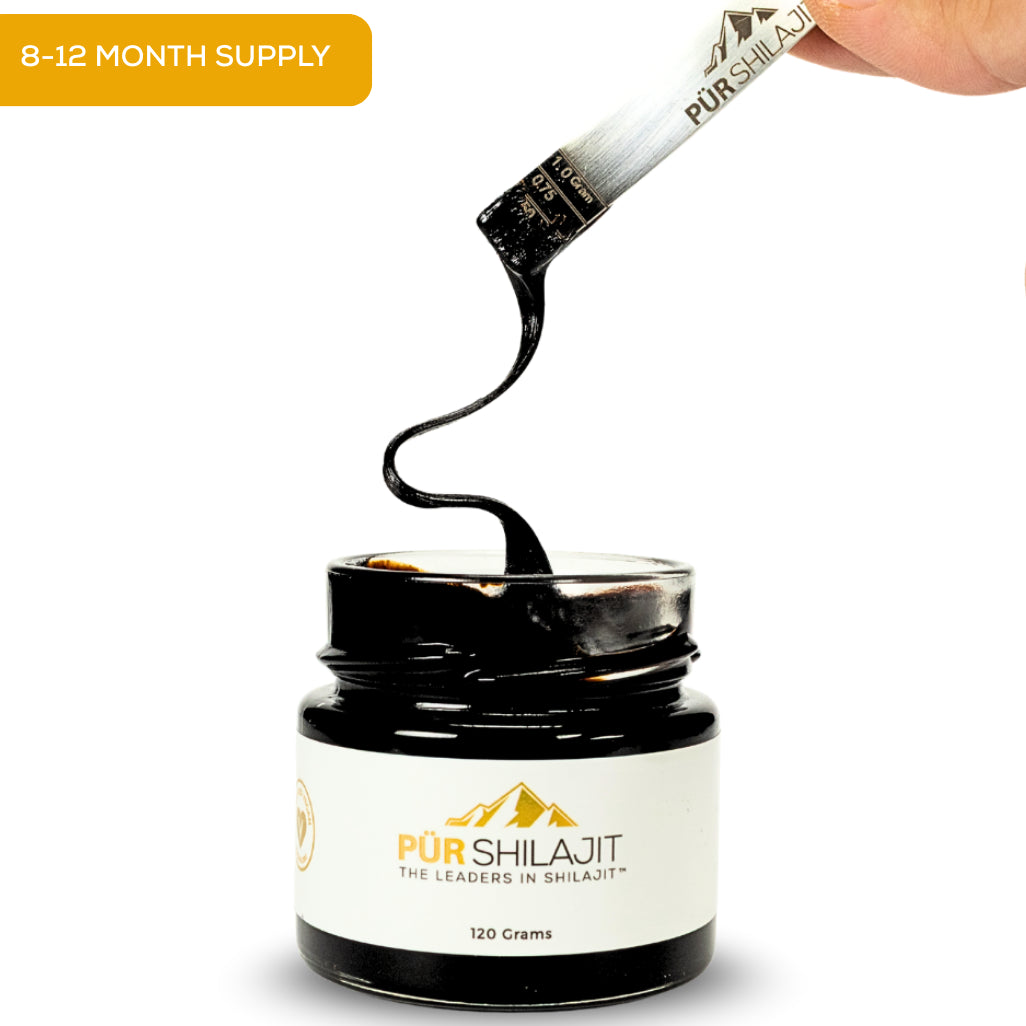
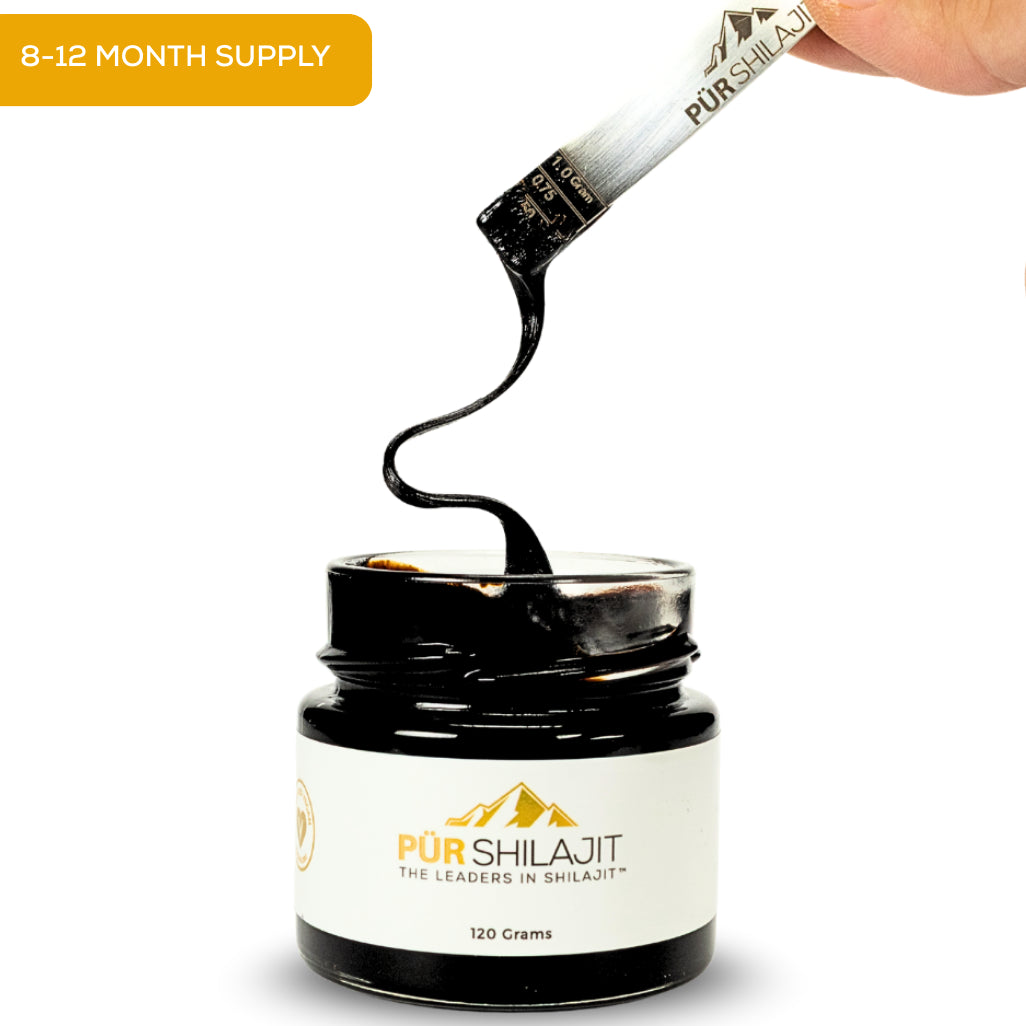
Real resin has physical habits. It firms up in the cold and softens with warmth. Turned upside down at room temperature, a thick resin should hold rather than run. Our 30-second drip test shows exactly how to do it at your kitchen counter.
Home tests can't replace a lab. They're a quick sanity check that pairs well with the paperwork in No. 2.
Grade label vs. what actually proves quality
| What the label says | What it tells you | What to check instead |
|---|---|---|
| "Gold grade" / "premium grade" | How the seller describes it | Published grading criteria, if any |
| "Lab tested" | Some test happened at some point | Named lab + report matched to your lot number |
| "Mountain sourced" | It came from a mountain | A named source and harvest elevation |
| "100% pure" | A claim | An ingredient list with exactly one item |
| Glossy, uniform look | How it looks in a photo | Cold hardening and the drip test at home |
The Pür proof
We don't put a grade name on our jar. We put the evidence behind it instead, and we named the company Pür for a reason.
- Named source: single-source resin from the Altai Mountains, hand-harvested around 14,000 feet and never below 13,500.
- One ingredient: no molasses, no water, nothing added. Sun-dried for 70+ days and never purified with heat.
- Lot-matched lab reports: every batch is tested by Eurofins, an independent ISO 17025-accredited lab network, and the reports are published by lot number. California Prop 65 compliant, with 84+ trace minerals.
- Behaves like resin: passes the 30-second upside-down drip test, hardens in the cold, softens with warmth.
- Backed by people: family-owned since 2019, 155,000+ customers, and a 90-day money-back guarantee.
That's as pür as pure gets. Our 120 g resin jar is $209, which works out to about $0.57 a day at a 300 to 500 mg serving.
Quick questions
Is "gold grade" shilajit better than regular shilajit? Not by definition. There's no shared industry standard behind the term, so compare the lab report, the source documentation and the ingredient list rather than the grade name.
Does "gold grade" mean the shilajit contains gold? Usually it's a quality descriptor, not an ingredient. If gold or anything else has actually been added, it should appear on the ingredient list, so read the list to be sure.
What's the single most useful thing to check? A lab report from a named, accredited lab with a lot number that matches your jar. Everything else is supporting evidence.
The founder's tip
When a new jar shows up, before I even open it, I take a photo of the lot number on the label. It takes two seconds. Then I pull up the lab results page and find that exact lot. I've done it so many times it's habit now, and I'd love for it to become yours too, with our jar or anyone's. A grade name asks you to trust. A lot number lets you check. And if you ever can't find the match on ours, let us know. I want to hear about it.
— Jason Reese, founder
A thank-you for reading this far: add any resin jar and The Spoon to your cart and use code RESINREPORT — the spoon's on me.
These statements have not been evaluated by the Food and Drug Administration. This product is not intended to diagnose, treat, cure, or prevent any disease.

Written by Jason Reese