How to Compare Shilajit Brands in 2026: The 8-Point Scorecard Most Labels Can't Pass
Short answer: the fastest way to compare shilajit brands is to ignore the adjectives and check eight things you can verify yourself: a lab report tied to a batch number, the actual heavy-metal numbers, who ran the test, where and how high it was harvested, what else is in the jar, the serving size in milligrams, the guarantee terms, and the real cost per day. A brand that can't answer all eight in writing is asking you to take its word for it.
You already know every brand calls itself pure. The word is free to print. What isn't free is a lot number, a lab name and numbers you can check, and that's exactly what this scorecard is built around.
Stick around for the founder's tip at the bottom; there's a little thank-you waiting there too.
The 8-point shilajit scorecard
Use this table on any brand, including ours. The right-hand column shows how Pür Shilajit answers each one, with a link you can check.
| # | What to check | Red flag | Pür Shilajit's answer |
|---|---|---|---|
| 1 | A lab report matched to a batch or lot number | One generic PDF, no lot number, or "available on request" | Every jar carries a lot number; current lot 20251001 is published in full |
| 2 | Actual heavy-metal numbers (lead, arsenic, cadmium, mercury) | "Passed" or "tested" with no figures | All four metals published in ppm on the lab results page |
| 3 | Who ran the test | An unnamed lab, or the seller's own lab | Eurofins, an independent ISO 17025-accredited lab network |
| 4 | Named region and harvest elevation | "Himalayan" with no elevation or source | Altai Mountains, harvested around 14,000 feet and never below 13,500 |
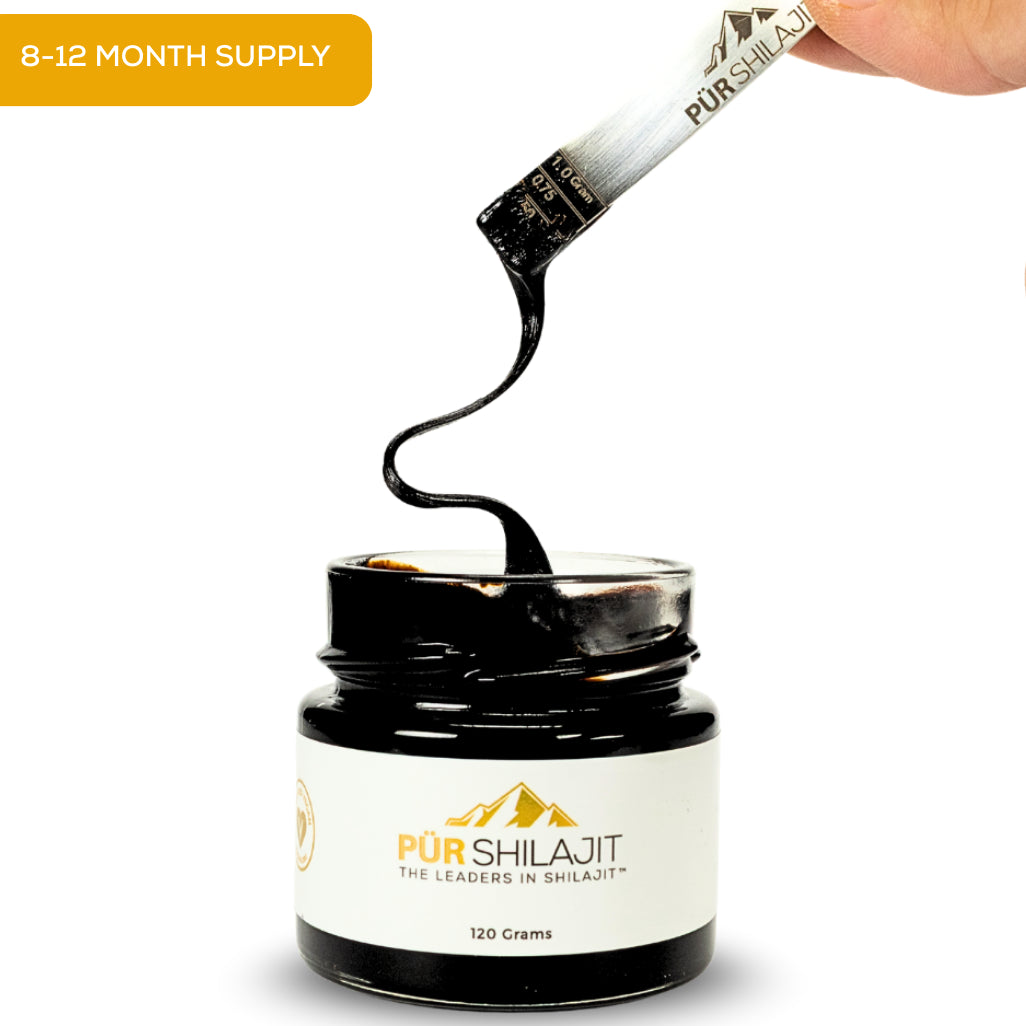
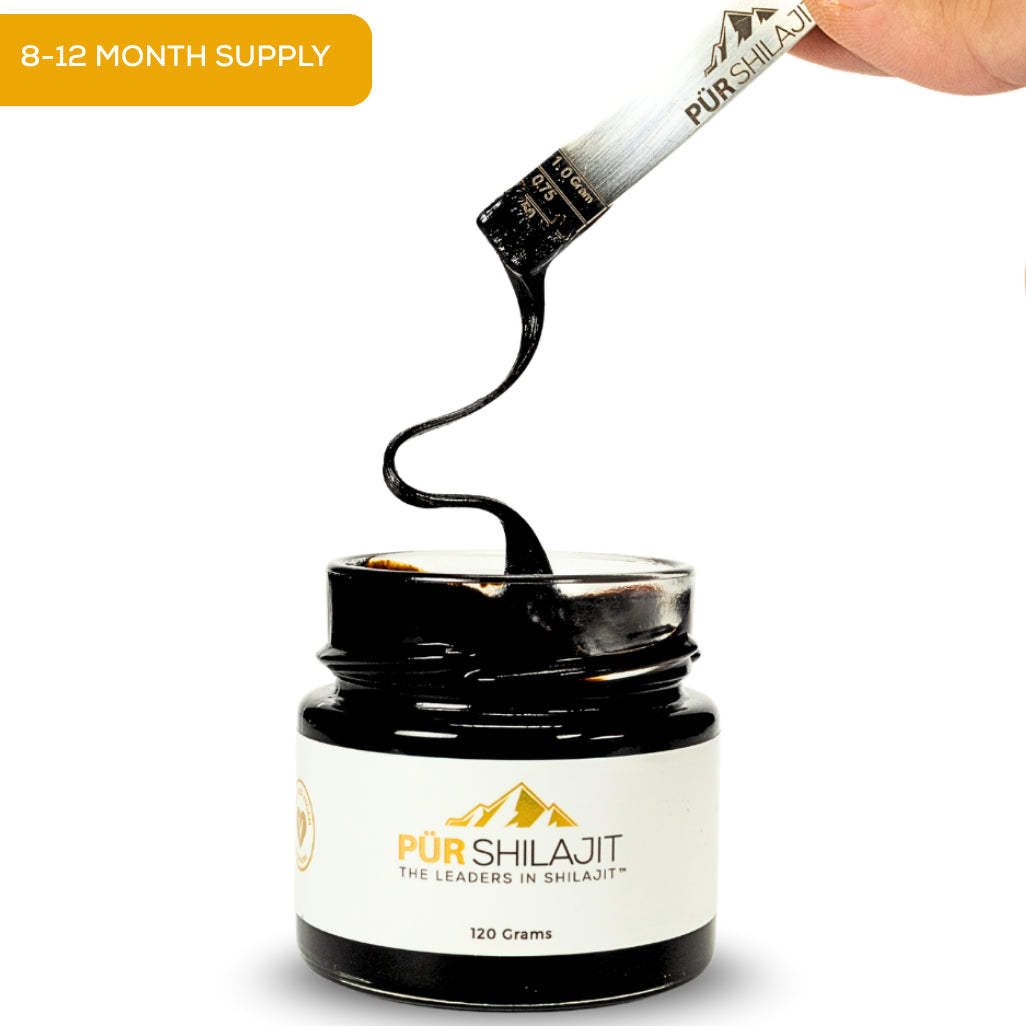
| 5 | What else is in the jar | Resin that pours like syrup (a sign of added water or molasses) | One ingredient; passes the 30-second upside-down drip test |
| 6 | Serving size in milligrams | "A small amount" with no number | 300–500 mg of resin, once a day |
| 7 | Guarantee length and written terms | No guarantee, or terms you can't find | 90-day founder guarantee with terms published |
| 8 | Real cost per day | A low jar price hiding a tiny jar or a vague serving | From $0.57/day for the 120 g jar at list price |
Why the lab report matters more than anything else
Shilajit forms in mountain rock, so it naturally carries trace minerals — including trace metals. That's normal. What separates a clean product from a risky one is how much, and the only way to know is a test run on the batch you're actually buying. A report without a lot number could be from any year and any harvest. A report with a lot number you can match to your jar is evidence.
How to read the numbers you find
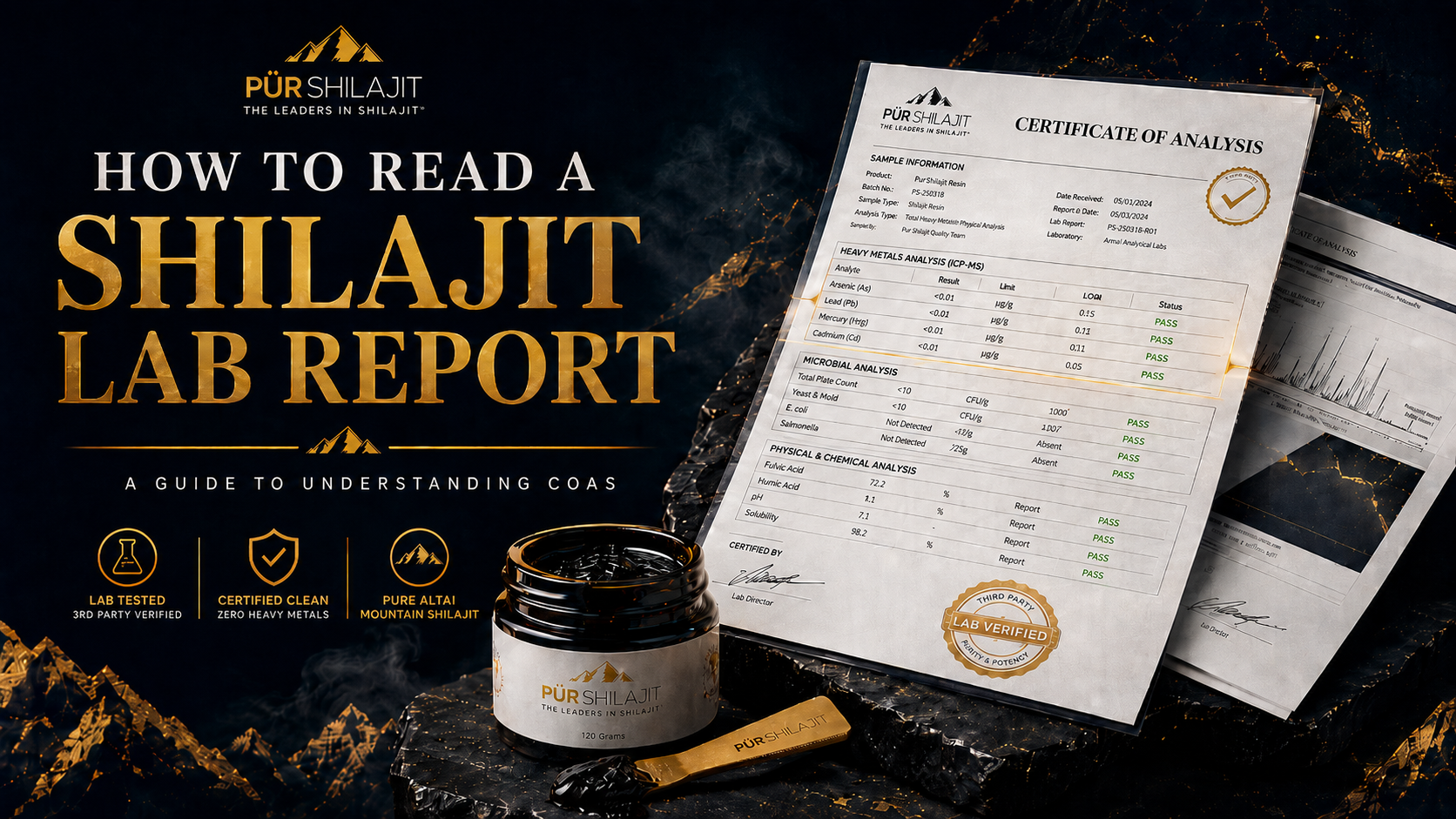
Lab reports list metals in ppm (parts per million), which is the same as micrograms per gram. To see what you'd actually take in each day, multiply the ppm by your serving in grams. For example, 1.0 ppm at a 0.3 g serving is about 0.3 micrograms. Our guide How to Read a Shilajit Lab Report walks through a full report line by line.
Altai vs. Himalayan: does the region matter?
The mountain range matters less than whether the brand can prove where its resin came from and what's in it. Both regions produce genuine shilajit. The real difference is in documentation: a named source, a stated elevation, and a batch-level lab report. For the background on the two regions, see What's the Difference Between Himalayan and Altai Shilajit?
The Pür proof
The right-hand column of that table isn't marketing copy; it's a list of things you can click. Our resin is single-source from the Altai Mountains, hand-harvested around 14,000 feet and sun-dried for 70+ days. One ingredient, nothing added. Every batch is tested by Eurofins, an independent ISO 17025-accredited lab network, and published by lot number. Family-owned since 2019, 155,000+ customers, and every order is covered by a 90-day money-back guarantee. We named the company Pür because that's the whole pitch: as pür as pure gets.
Quick questions
What's the single most important thing to check? A lab report with a lot number that matches the jar you receive.
Is a cheaper jar a better deal? Only if the serving size and purity are the same. Compare cost per day, not jar price.
Can I test shilajit at home? You can screen for dilution: turn the jar upside down for 30 seconds. Pure resin barely moves; diluted resin drips. Home tests can't measure heavy metals — only a lab can.
The founder's tip
Here's what I'd do before buying shilajit from anyone, us included: take the lot number off the jar or the box and ask the brand for the matching lab report. How quickly and how plainly they answer tells you more than any label. On ours, the lot number is printed on the jar and the reports are public.
— Jason Reese, founder
A thank-you for reading this far: add any resin jar and The Spoon to your cart and use code RESINREPORT — the spoon's on me.
These statements have not been evaluated by the Food and Drug Administration. This product is not intended to diagnose, treat, cure, or prevent any disease. Figures as of September 2026.

Written by Jason Reese