Shilajit vs. Spirulina: 5 Differences (and Why Both Turn Your Water a Color)
Short answer: Shilajit and spirulina come from opposite ends of nature. Shilajit is a mineral resin that seeps from high mountain rock, naturally containing fulvic acid and trace minerals, taken in tiny amounts (300 to 500 mg a day). Spirulina is a blue-green algae grown in water and dried into a powder, taken by the gram. They do different jobs, which is why many people keep both in the same routine.
You already know the green-powder shelf is crowded, and that spirulina shows up on half of it. You've probably also seen shilajit dropped into the same "superfood" lists, as if the two were interchangeable. They aren't, and the differences are easy to see once you put them side by side. Literally: both will change the color of your glass.
Stick around for the founder's tip at the bottom; there's a little thank-you waiting there too. No. 5 is the one most people skip.
1. Where they come from: rock vs. water
Shilajit forms over centuries as plant matter breaks down inside high mountain rock, then seeps out as a dark, sticky resin. Nobody grows it; it's gathered by hand.
Spirulina is a cyanobacterium, commonly called blue-green algae. It's cultivated in ponds or tanks, harvested, then dried into a fine powder or pressed into tablets. One is geology. The other is farming.
2. What each one is known for
Shilajit is known for its natural fulvic acid and broad trace-mineral profile. Ours carries 84+ trace minerals.
Spirulina is known for being protein-dense by dry weight, and for phycocyanin, the blue pigment behind its color, which is also used as a natural blue food coloring. A mineral complex on one side, a whole-food algae on the other.
But that's only half of it. The bigger day-to-day difference is how much of each you actually take.
3. Serving size: milligrams vs. grams
A daily serving of shilajit resin is 300 to 500 mg, about the size of a pea. Spirulina servings are measured in grams, usually a teaspoon of powder or a small handful of tablets, per the label.
That gap matters when you compare prices. A big bag and a small jar aren't the same purchase, so compare cost per serving, not cost per container.
4. How they look (and taste) in the glass
Here's the color payoff. Stir resin into warm water and it dissolves completely into a clear golden-brown, like strong tea. Shake spirulina into water and it turns a deep, opaque green.
The taste follows the color. Shilajit is earthy and slightly bitter. Spirulina is grassy, with a sea-like edge that most people tuck into a smoothie.
| Shilajit | Spirulina | |
|---|---|---|
| Origin | Resin from high mountain rock | Algae grown in ponds or tanks |
| Category | Mineral complex | Whole-food algae |
| Known for | Fulvic acid and trace minerals | Protein density, phycocyanin pigment |
| Daily serving | 300 to 500 mg | Grams, per the label |
| In water | Dissolves clear golden-brown | Turns deep green |
| Taste | Earthy, slightly bitter | Grassy, sea-like |
| Main thing to check | Dilution, plus a lot-matched lab report | Third-party contaminant testing |
5. What to check before you buy
This is the one most people skip. Both are natural products shaped by where they come from, so both are worth buying from sellers who publish third-party testing.
For spirulina, look for heavy metals results and, because it's grown in water, screening for microcystins, compounds made by certain other algae that can find their way into a growing pond. For shilajit, look for a report tied to the lot number on your jar, then try the 30-second drip test at home: real resin holds in an upside-down jar.
Can you take both?
Many people do. A mineral resin and a food-like algae sit in different lanes, so neither replaces the other. Talk to your doctor first if you're pregnant, nursing, taking medication or under medical care.
The Pür proof
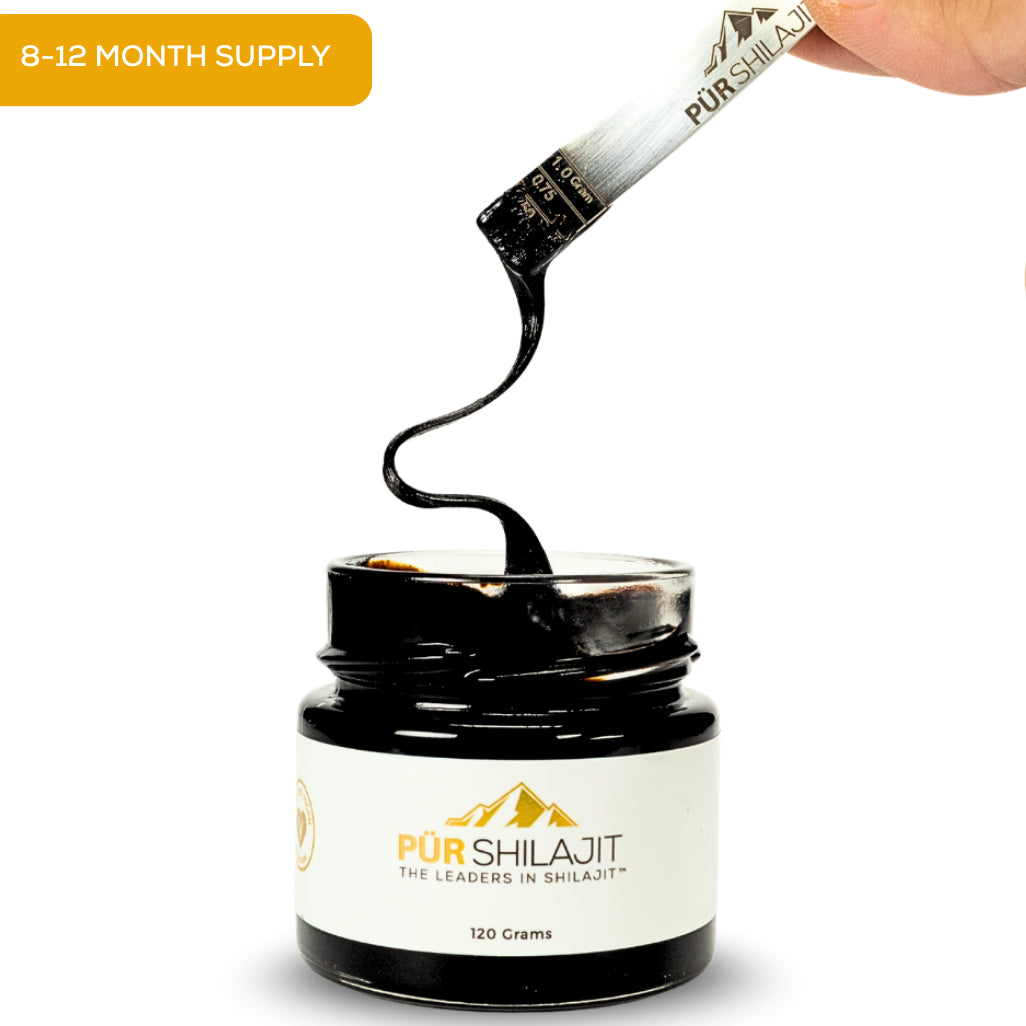
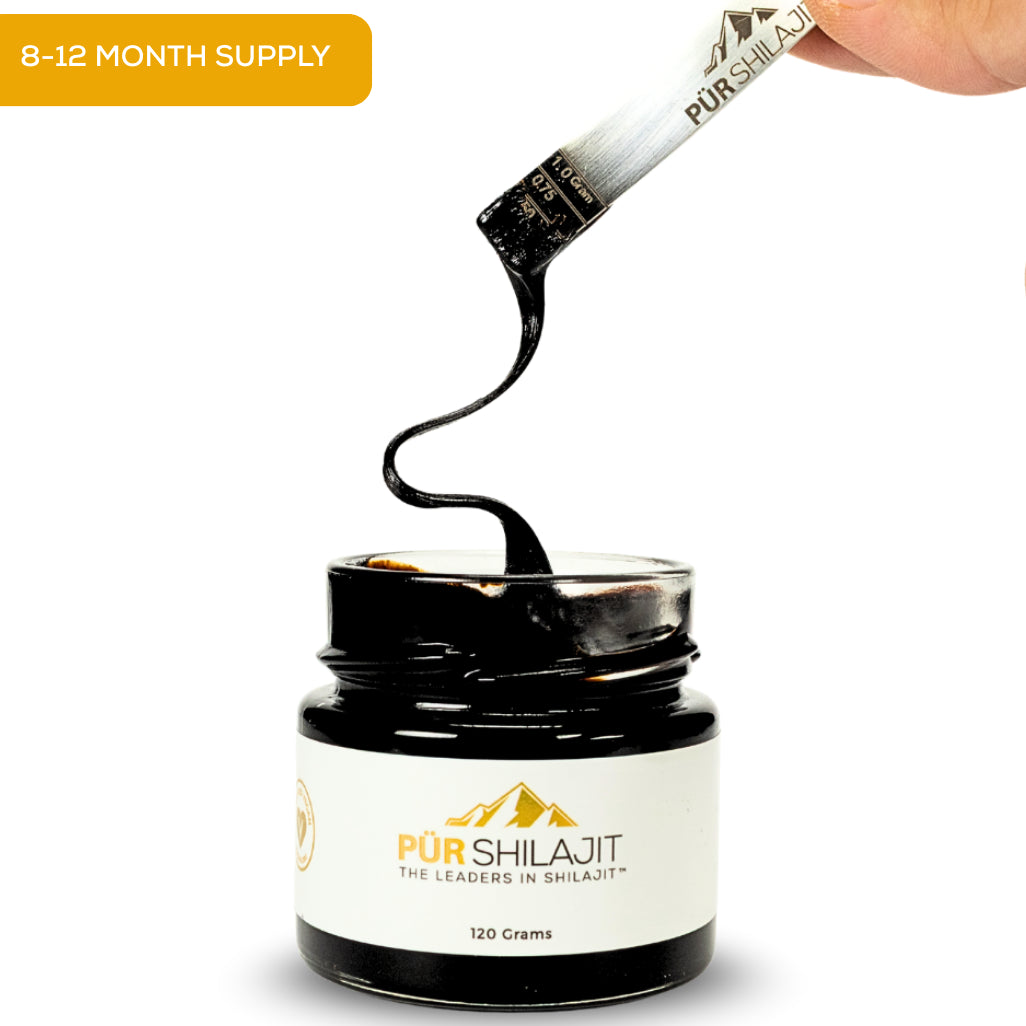
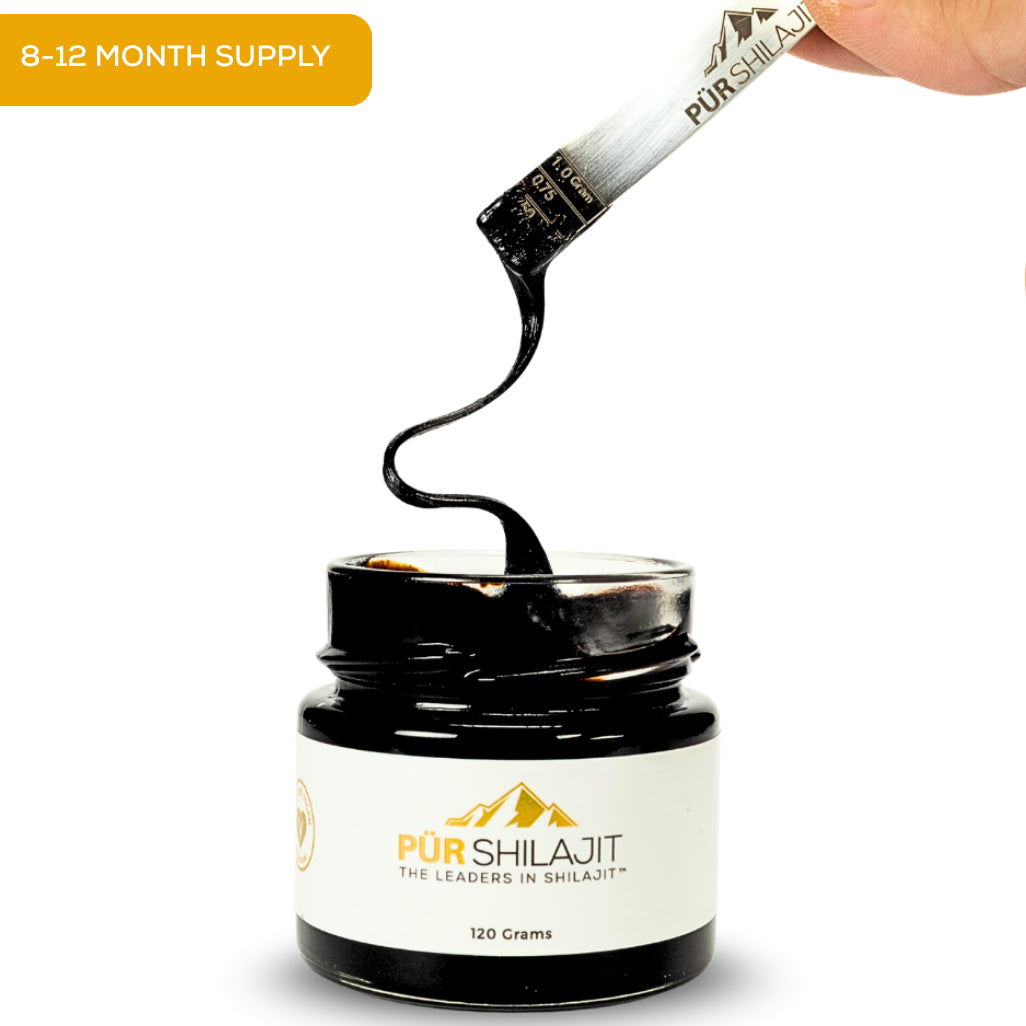
We named the company Pür for a reason. Our resin is single-source from the Altai Mountains, hand-harvested around 14,000 feet and never below 13,500, sun-dried 70+ days and never purified with heat. No molasses, no water, nothing added: one ingredient.
Every batch is tested by Eurofins, an independent ISO 17025-accredited lab network, with reports published by lot number. It's California Prop 65 compliant and passes the 30-second upside-down drip test. Family-owned since 2019, 155,000+ customers, and every order is backed by our 90-day money-back guarantee.
Pick your form: resin (120 g, $209, about $0.57 a day), binder-free tablets (2 a day, from $44.99), or Daily Drive (1 vegan cap a day, $44.99 for 30). As pür as pure gets.
Quick questions
Is spirulina a type of shilajit? No. Spirulina is a blue-green algae grown in water; shilajit is a mineral resin that forms in mountain rock. They're unrelated.
Which one has more protein? Spirulina is the protein-dense one by dry weight. Shilajit isn't a protein source; it's taken in milligram amounts for its fulvic acid and trace minerals.
Can I mix them in the same drink? Yes. Dissolve the resin in a splash of warm water first, then add the cool liquid and the powder. The founder's tip below walks through it.
The founder's tip
If you take both, don't fight them in one mug. Resin wants warm water; a powder mixes best with a good shake in something cool. So I do it in two moves: a pea-sized bit of resin and a splash of warm water in the bottom of a shaker bottle, swirl until it's gone, then top it up with cold water, add the green powder, lid on, ten seconds of shaking. And keep two spoons. The one that's been in a powder bag never goes near your resin jar, because whatever's on it ends up in the jar.
— Jason Reese, founder
A thank-you for reading this far: add any resin jar and The Spoon to your cart and use code RESINREPORT — the spoon's on me.
These statements have not been evaluated by the Food and Drug Administration. This product is not intended to diagnose, treat, cure, or prevent any disease. Talk to your doctor before starting any supplement if you're pregnant, nursing, or under medical care.

Written by Jason Reese