Shilajit vs. Vitamin D: 5 Differences (and the Sunshine Detail They Share)
Short answer: Vitamin D is one specific vitamin, measured in IU or micrograms, usually sold as a softgel or drop. Shilajit is a whole natural resin from mountain rock that carries 84+ trace minerals and fulvic acid, measured in milligrams. They're different things doing different jobs, so one doesn't replace the other, and plenty of people keep both in their routine.
You already know vitamin D is the "sunshine vitamin." You've probably got a bottle in the cabinet right now. What most people never think about is where that vitamin actually comes from, what the number on the front means, and why it belongs next to something completely different rather than instead of it.
Stick around for the founder's tip at the bottom; there's a little thank-you waiting there too. No. 5 is the one most people skip.
1. One is a single nutrient. The other is a whole substance.
Vitamin D is one compound (or two close cousins, D2 and D3). A vitamin D supplement is built to deliver that one thing, in one precise amount.
Shilajit isn't a single nutrient. It's a complete resin that forms over centuries in mountain rock, carrying a broad spread of trace minerals and fulvic acid together. Nothing is isolated or concentrated. That's the whole point of it.
2. Where each one comes from
Your skin makes vitamin D when sunlight hits it. In supplements, D3 is most often sourced from lanolin, the natural oil in sheep's wool; vegan D3 is typically made from lichen, and D2 usually comes from yeast or mushrooms exposed to UV light.
Shilajit doesn't get made in a facility. It seeps out of high mountain rock. Ours is hand-harvested in the Altai Mountains around 14,000 feet, never below 13,500. But that's only half of it.
3. How each one is measured
Vitamin D labels list International Units (IU), micrograms (mcg), or both. One microgram equals 40 IU, so a label might say 25 mcg (1,000 IU). Always check the serving size per the label, since some products count two softgels as one serving.
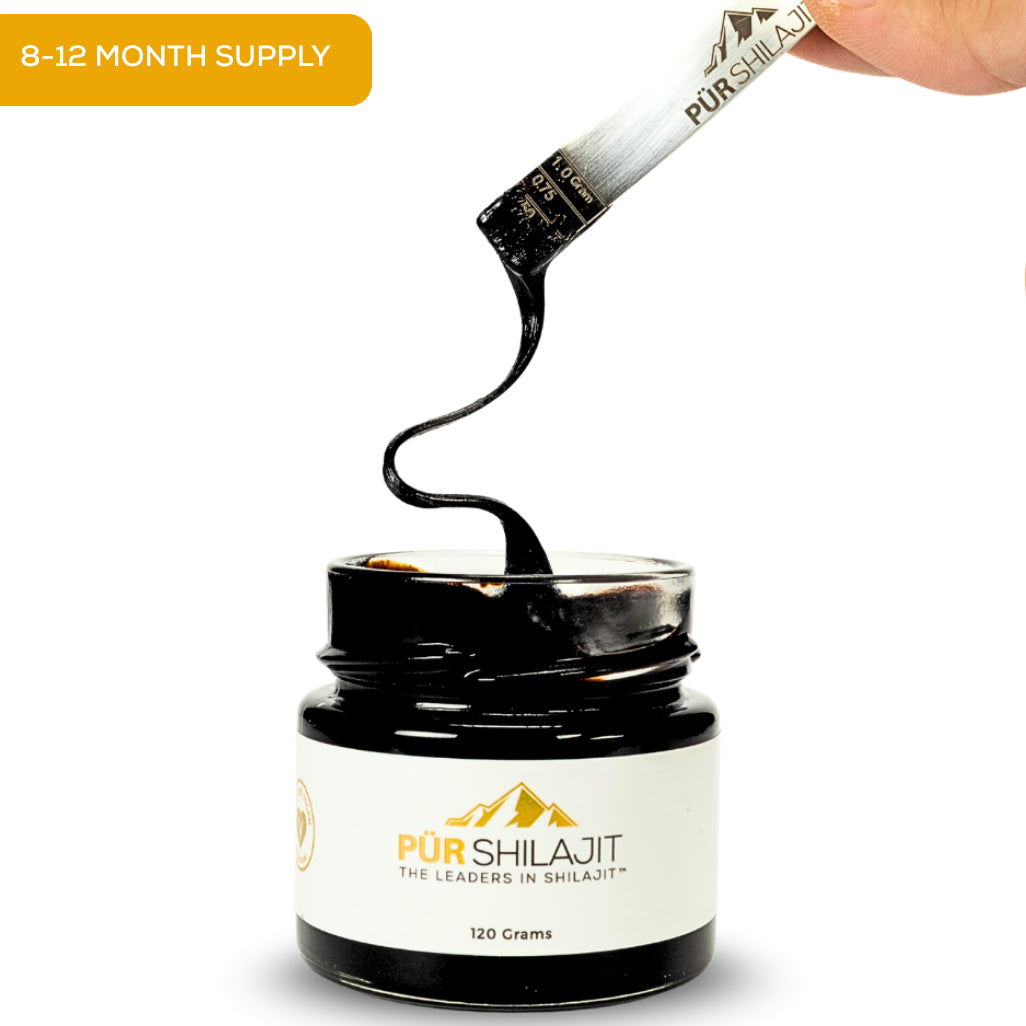
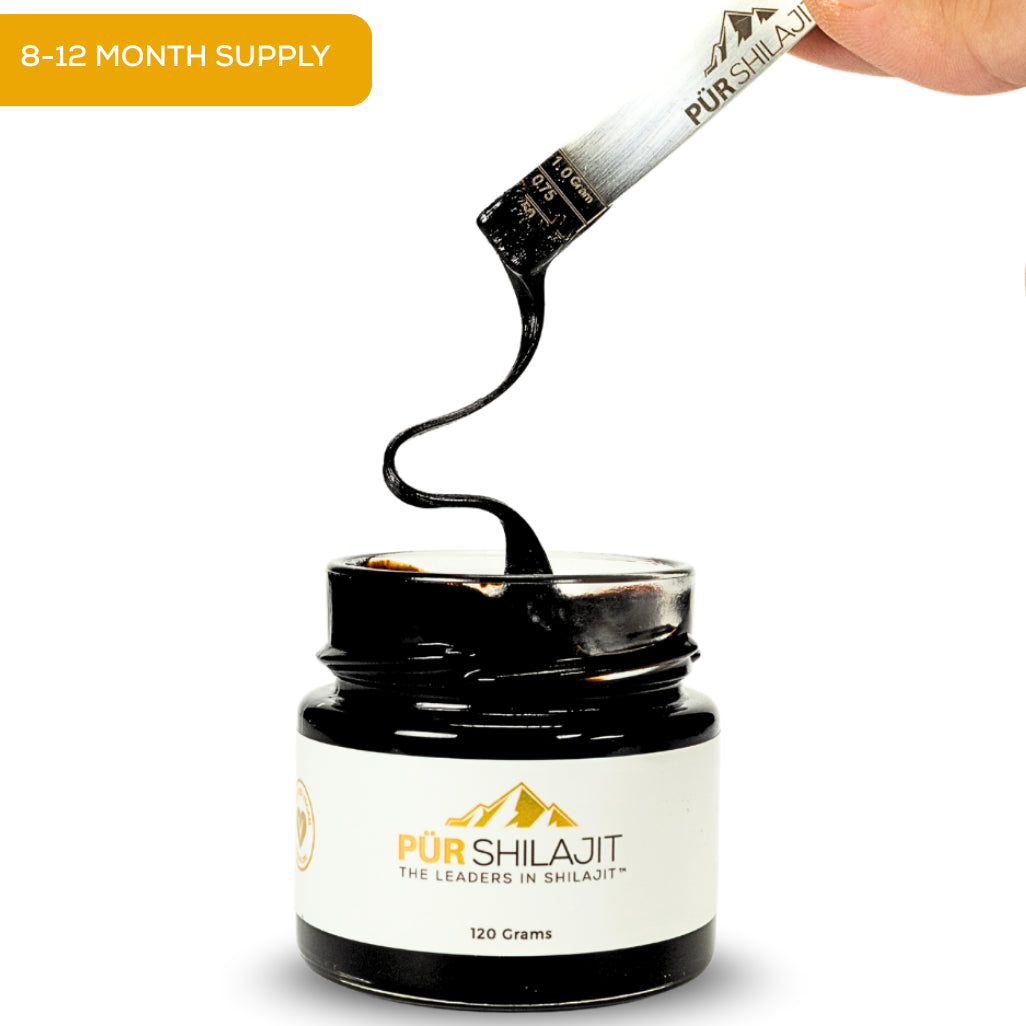
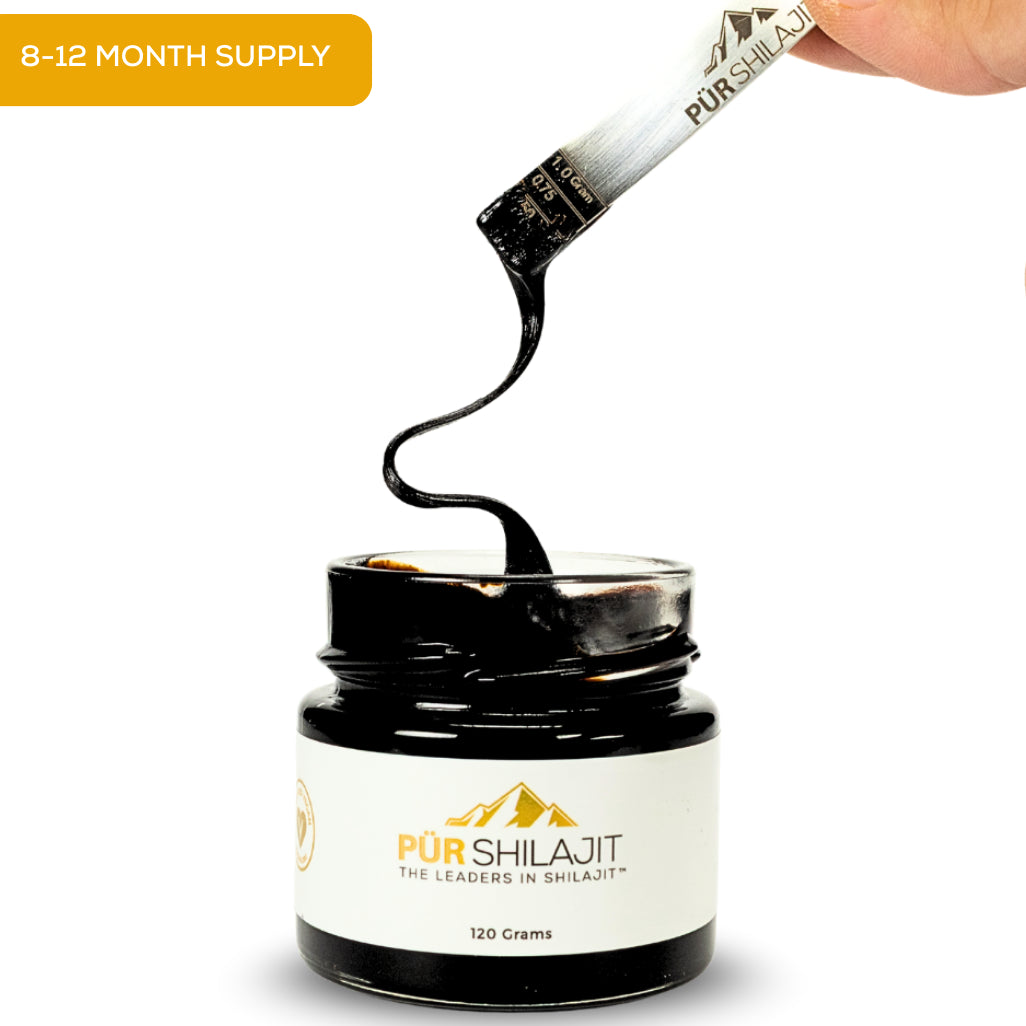
Shilajit is measured by weight in milligrams. A typical daily serving of resin is 300 to 500 mg, about the size of a pea.
| Detail | Vitamin D | Pür Shilajit Resin |
|---|---|---|
| What it is | One vitamin (D2 or D3) | Whole mountain resin, 84+ trace minerals |
| Common source | Lanolin, lichen, or UV-exposed yeast | Altai Mountain rock, ~14,000 ft |
| Unit | IU or mcg, per the label | Milligrams (300 to 500 mg) |
| Usual format | Softgel in oil, or liquid drops | Resin, tablets, or a vegan cap |
| How to take it | Often with a meal containing fat | Dissolved in warm water or tea |
4. Oil vs. water
Vitamin D is fat-soluble. That's why it usually comes suspended in oil inside a softgel, and why many people take it with a meal that has some fat in it.
Shilajit resin is the opposite. It dissolves in warm water. Stir a pea-sized piece into a mug of warm water or tea and it disappears in about a minute. Different chemistry, different habit, and they sit side by side in a morning routine without stepping on each other.
5. What proof looks like on each label
A good vitamin D label states the exact amount per serving, the form (D2 or D3), and the source. Because fat-soluble vitamins can build up in the body, labels also guide how much to take; follow the label and your doctor rather than stacking bottles.
Shilajit proof looks different. You want a lab report tied to the lot number on your jar, showing heavy metals results from an independent, accredited lab. Then you check the resin itself with the 30-second drip test. This is the step most people skip, and it's the one that tells you the most.
The sunshine detail they share
Here's the twist. Your skin needs sunlight to make vitamin D. Our resin needs sunlight too: it's sun-dried for 70+ days, slowly, the way it's been done for centuries. To be clear, sun-drying doesn't add vitamin D to shilajit. It's simply the gentlest way to dry the resin without ever purifying it with heat.
The Pür proof
We named the company Pür for a reason. Our resin is single-source from the Altai Mountains, hand-harvested around 14,000 feet, sun-dried 70+ days, and never purified with heat. No molasses, no water, nothing added. One ingredient, as pür as pure gets.
Every batch is tested by Eurofins, an independent ISO 17025-accredited lab network, and we publish the reports by lot number on our lab results page. It's California Prop 65 compliant, it passes the 30-second upside-down drip test, and it hardens in the cold and softens with warmth, just like real resin should.
We've been family-owned since 2019 and have served 155,000+ customers. A 120 g jar of resin is $209, which works out to about $0.57 a day, and every order is backed by our 90-day money-back guarantee.
Quick questions
Can I take shilajit and vitamin D together? They're different things, and many people keep both in their routine. Since vitamin D is often taken with a meal and shilajit with warm water, you can take them at the same time or split them up. If you're under medical care, check with your doctor first.
Does shilajit contain vitamin D? Shilajit is known for its trace minerals and fulvic acid, not vitamins. If you want vitamin D, look for a product that lists it, in IU or mcg, on the label.
Which is easier to verify? Vitamin D is a single compound with a stated amount. Shilajit is a natural resin, so verification means a lot-matched lab report plus a hands-on check like the drip test.
The founder's tip
Here's what I do. I keep my vitamin D right next to my resin jar, so one morning stop handles both. Resin goes into warm water first thing, and the softgel waits for breakfast, since that's when I've got some food in me. Tying both to the coffee maker means I never have to remember either one. Small habit, zero thinking, and the streak takes care of itself.
— Jason Reese, founder
A thank-you for reading this far: add any resin jar and The Spoon to your cart and use code RESINREPORT — the spoon's on me.
These statements have not been evaluated by the Food and Drug Administration. This product is not intended to diagnose, treat, cure, or prevent any disease. Talk to your doctor before starting any supplement if you're pregnant, nursing, or under medical care.

Written by Jason Reese