Shilajit vs. Black Seed Oil: 5 Differences (and the Two Words to Find on the Bottle)
Short answer: Shilajit and black seed oil are two different kinds of supplements. Black seed oil is a plant oil pressed from the seeds of Nigella sativa, a flowering herb. Shilajit is a mineral-rich resin that slowly seeps out of high mountain rock. They differ in where they come from, what they're made of, how you take them, and how you store them. Many people keep one of each, and neither stands in for the other.
You already know the wellness shelf has gotten crowded. A new bottle shows up in your feed every week, and half of them promise the same thing in different words. You're right to be skeptical. The better question isn't "which one is better," it's "what is each one, really, and does it earn a spot in my morning?"
That's what this comparison is for. Stick around for the founder's tip at the bottom; there's a little thank-you waiting there too. And No. 5 is the one most people skip: there are two words worth finding on any black seed oil bottle.
1. One comes from a field, the other from a mountain
Black seed oil starts as a crop. Nigella sativa is a small flowering plant grown across parts of the Middle East, North Africa and South Asia. Its tiny black seeds are harvested and pressed for their oil.
Shilajit has no seed and no harvest season in the farming sense. It forms over long stretches of time as plant matter breaks down inside mountain rock, then seeps out of cracks as a dark resin. Ours is hand-harvested in the Altai Mountains around 14,000 feet, never below 13,500.
So one is pressed from something grown. The other is gathered from something formed. But that's only half of it.
2. They're made of completely different stuff
Black seed oil is a fat. Like olive oil or flaxseed oil, it's mostly fatty acids, and it carries a compound called thymoquinone, which is the one people usually mean when they talk about it.
Shilajit isn't an oil at all. It's a resin best known for fulvic acid and a broad spread of naturally occurring trace minerals; our lab reports show 84+ of them. There's no fat to speak of.
Different makeup means they simply aren't swaps for one another. Comparing them is a bit like comparing a spoon of olive oil to a pinch of sea salt.
3. You take them in very different ways
Black seed oil is usually sold as a liquid you measure by the teaspoon, or as softgels. How much and how often is set per the label, and amounts vary from bottle to bottle.
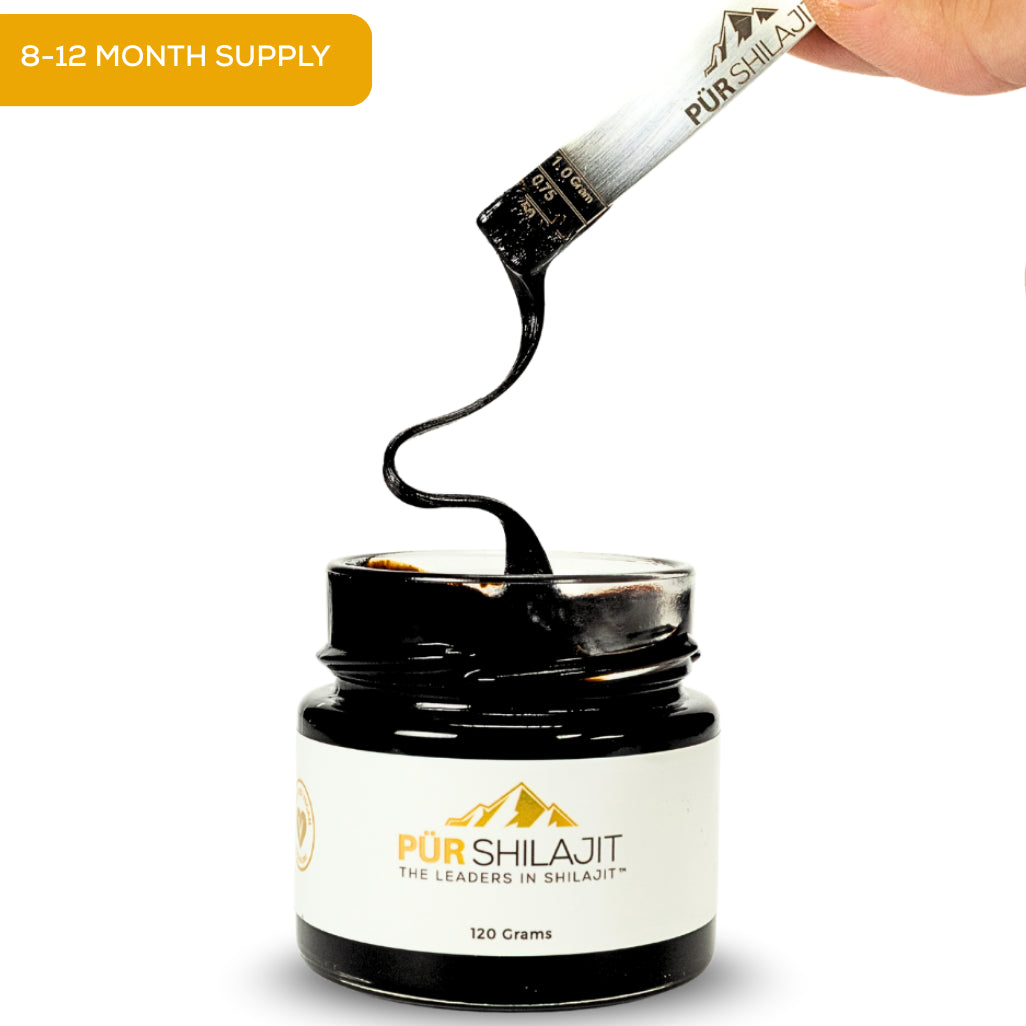
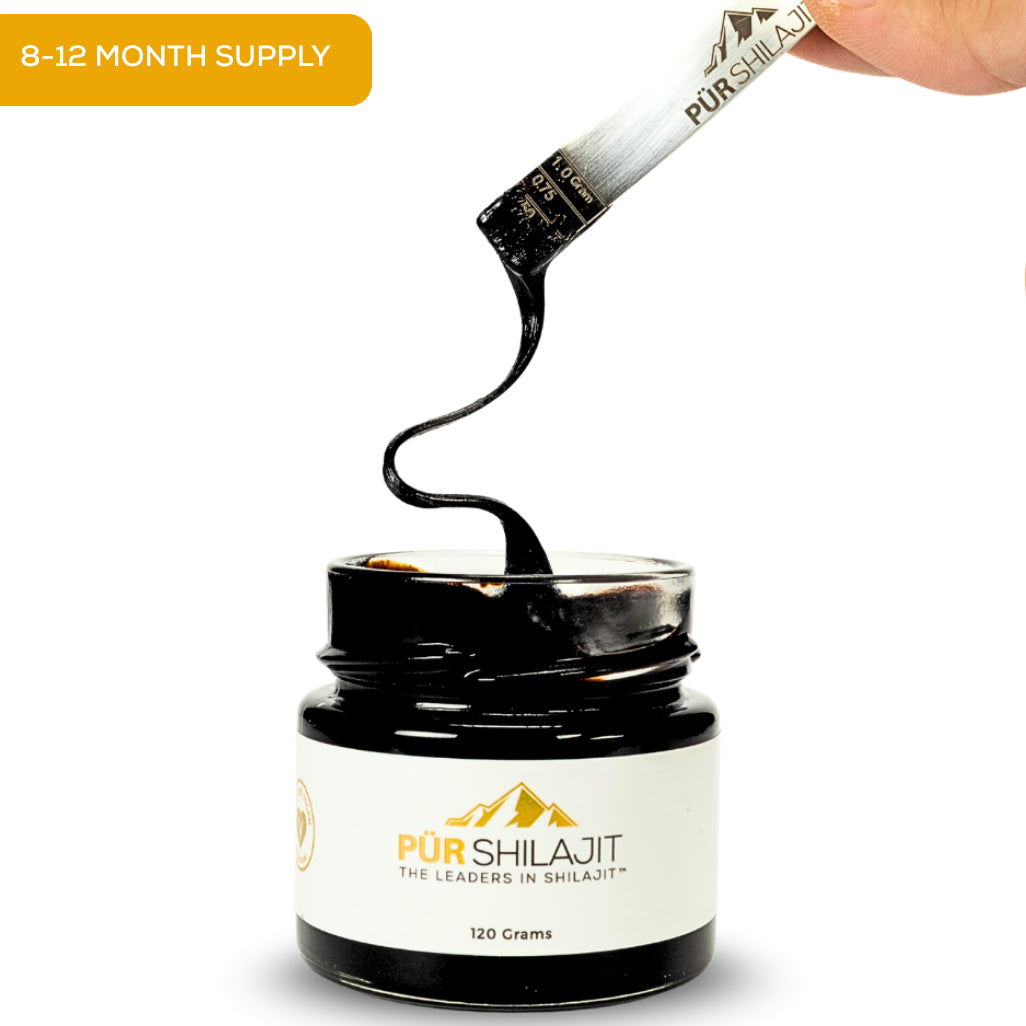
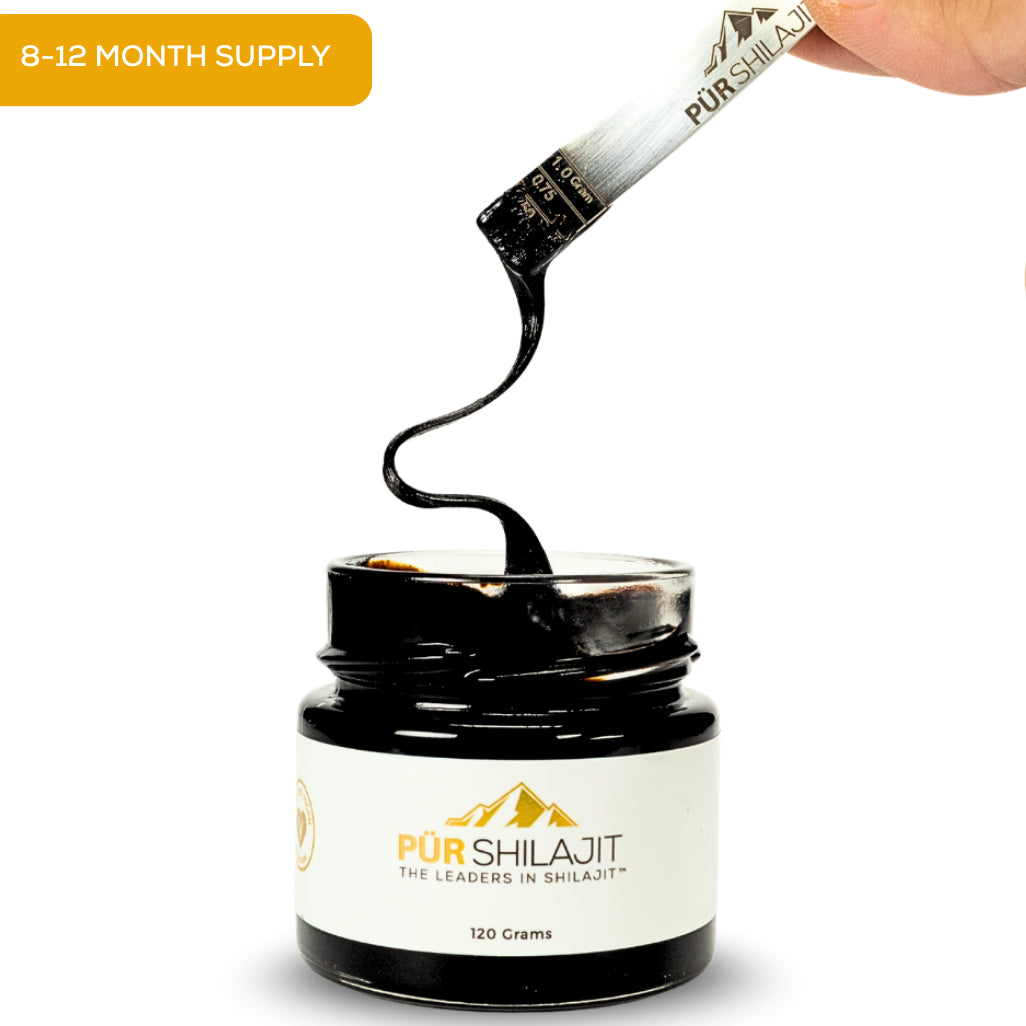
Shilajit resin is taken in a tiny amount: about 300 to 500 mg a day, roughly a rice-to-pea-sized piece. Most people dissolve it in warm water, tea or coffee. If you'd rather skip the spoon, there are binder-free tablets (two a day) too.
| Pür Shilajit Resin | Black seed oil | |
|---|---|---|
| What it is | Mineral-rich mountain resin | Oil pressed from Nigella sativa seeds |
| Source | Altai Mountains, ~14,000 ft | Cultivated flowering plant |
| Known for | Fulvic acid, 84+ trace minerals | Fatty acids, thymoquinone |
| Typical serving | 300–500 mg, dissolved in a warm drink | Per the label (liquid or softgel) |
| Taste | Earthy, bitter | Sharp, peppery |
| Storage | Hardens in cold, softens with warmth | Cool, dark place; dark glass |
4. They taste nothing alike
Black seed oil is sharp and peppery, with a bite at the back of the throat. A lot of people take it with honey or choose softgels for that reason.
Shilajit is earthy and bitter. Dissolved in something warm, it fades into the background fast. If taste is the thing holding you back from either, the format usually solves it.
5. How each one handles cold, light and time
Here's the one most people skip. Plant oils can oxidize and go stale with heat, light and air, which is why black seed oil usually comes in dark glass. The two words worth finding on the bottle: cold-pressed. It tells you the oil was pressed without added heat. Then check the date and keep it somewhere cool and dark.
Real shilajit resin reacts to cold in its own way: it firms up when it's cold and softens again with warmth. That's normal behavior, and it's part of why the 30-second drip test works. Pure resin holds together instead of running off the spoon.
Funny enough, both labels reward the same instinct: less heat, less fuss, fewer added steps.
The Pür proof
If shilajit is the one earning a spot in your routine, here's what goes into every jar of ours, and what doesn't.
It's single-source resin from the Altai Mountains, hand-harvested around 14,000 feet. It's sun-dried for 70+ days and never purified with heat. No molasses, no water, nothing added. One ingredient. We named the company Pür for a reason.
Every batch is tested by Eurofins, an independent ISO 17025-accredited lab network, and the reports are published by lot number on our lab results page. We're California Prop 65 compliant. The resin passes the 30-second upside-down drip test.
We've been family-owned since 2019 and have shipped to 155,000+ customers. A 120 g jar of resin is $209, which works out to about $0.57 a day. And every order is covered by our 90-day money-back guarantee. As pür as pure gets, with the paperwork to show it.
Quick questions
Can you take shilajit and black seed oil together? They're different kinds of supplements, and plenty of people keep both. Follow each product's label, start one at a time so you know how each sits with you, and check with your doctor first if you take medication or are under medical care.
Is black seed oil the same as shilajit? No. Black seed oil is pressed from the seeds of a flowering plant. Shilajit is a mineral-rich resin that forms in mountain rock. They have different makeups and different uses in a routine.
Why does my shilajit get hard in winter? Real resin firms up in the cold and softens with warmth. A stiff jar on a cold morning is normal. Warm it gently and it scoops easily again.
The founder's tip
This time of year my kitchen runs cold first thing, and the resin in my jar goes stiff. I actually like seeing that; it's the real thing doing what it's supposed to do. My fix is simple: while the kettle heats, I set the closed jar in a mug with an inch of warm tap water for a minute or two. By the time my coffee's poured, it scoops like soft caramel. Please don't microwave it. Gentle warmth is all it needs, the same way the sun dried it in the first place.
— Jason Reese, founder
A thank-you for reading this far: add any resin jar and The Spoon to your cart and use code RESINREPORT — the spoon's on me.
These statements have not been evaluated by the Food and Drug Administration. This product is not intended to diagnose, treat, cure, or prevent any disease. Talk to your doctor before starting any supplement if you're pregnant, nursing, or under medical care.

Written by Jason Reese