Shilajit vs. Rhodiola: 5 Differences (and the Cold Mountain Detail They Share)
Short answer: shilajit and rhodiola are two completely different things. Rhodiola (Rhodiola rosea, also called golden root or roseroot) is a flowering plant whose root is dried and extracted, usually into a capsule standardized to marker compounds listed on the label. Shilajit is a mineral-rich resin that forms in high mountain rock and, at its purest, is one ingredient with nothing added. Neither replaces the other, and some people keep both in their routine.
You already know the wellness aisle loves a mountain story. Snow-capped peaks sell a lot of capsules. What nobody tells you is how differently these two mountain-born supplements are made, measured and taken, and that's the part that decides whether either one belongs in your morning.
Stick around for the founder's tip at the bottom; there's a little thank-you waiting there too. No. 3 is the one most people skip.
Shilajit vs. rhodiola at a glance
| Shilajit | Rhodiola | |
|---|---|---|
| What it is | Mineral-rich resin that forms in mountain rock | Root of a flowering perennial in the stonecrop family |
| Where it comes from | High mountain rock; ours is from the Altai, around 14,000 feet | Cold Arctic and mountain regions of Europe and Asia |
| How it's made | Ours: hand-harvested, sun-dried 70+ days, never heat-purified | Root dried, then usually extracted and concentrated |
| What the label tells you | A lot number to match to a batch lab report | Extract amount and marker-compound percentages, per the label |
| Common forms | Resin or tablets | Mostly capsules or tablets; sometimes tea |
| Taste and smell | Earthy, like strong black tea | Cut root has a faint rose scent; capsules taste of little |
| Typical serving | Ours: 300 to 500 mg of resin, once a day | Per the label |
1. One is a plant. The other was plants, a very long time ago.
Rhodiola is a living plant: a low, fleshy perennial with yellow flowers and a thick root. The root is the part that ends up in your capsule.
Shilajit is what alpine plant matter becomes after a very long time pressed inside mountain rock: a dark, sticky resin. It's closer to geology than gardening.
2. Extracted vs. left whole
Most rhodiola supplements start with dried root that's extracted and concentrated into a powder, then filled into capsules. That's a normal, established way to make an herbal supplement.
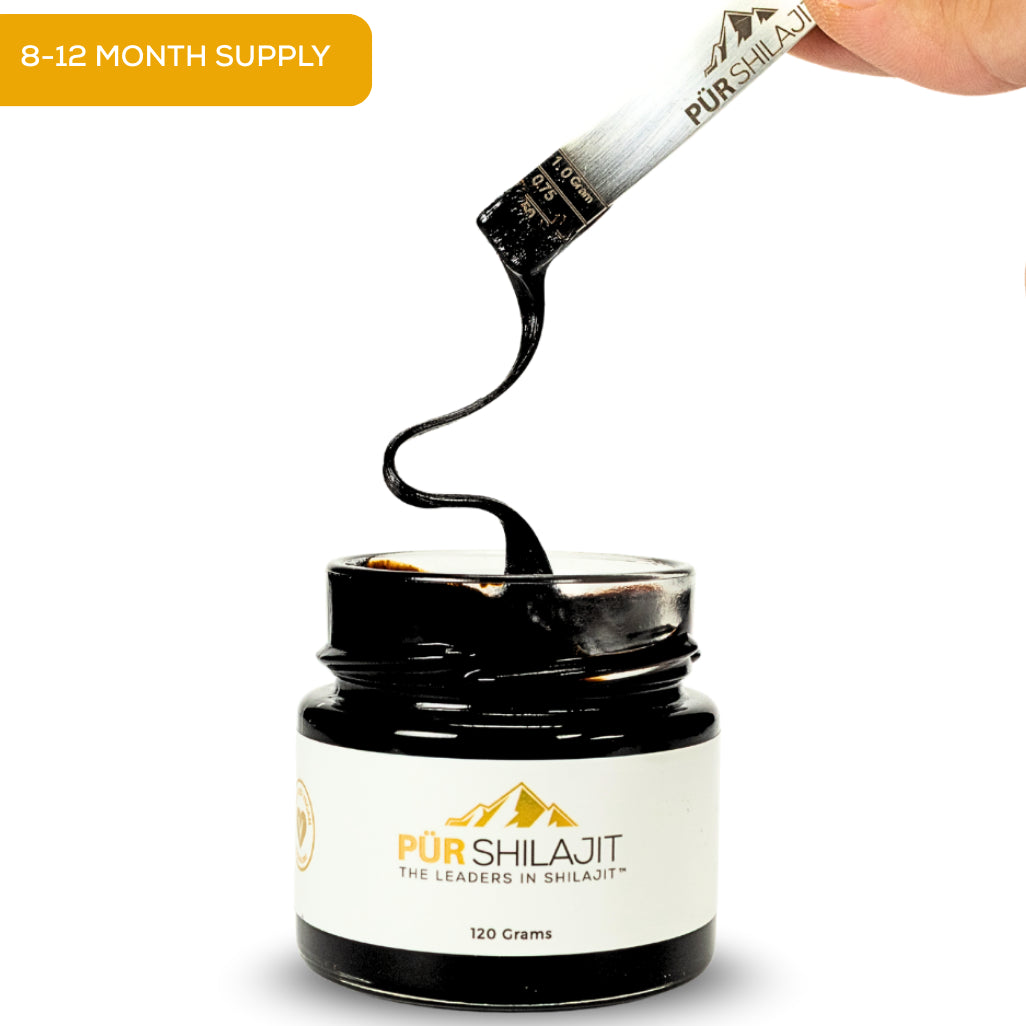
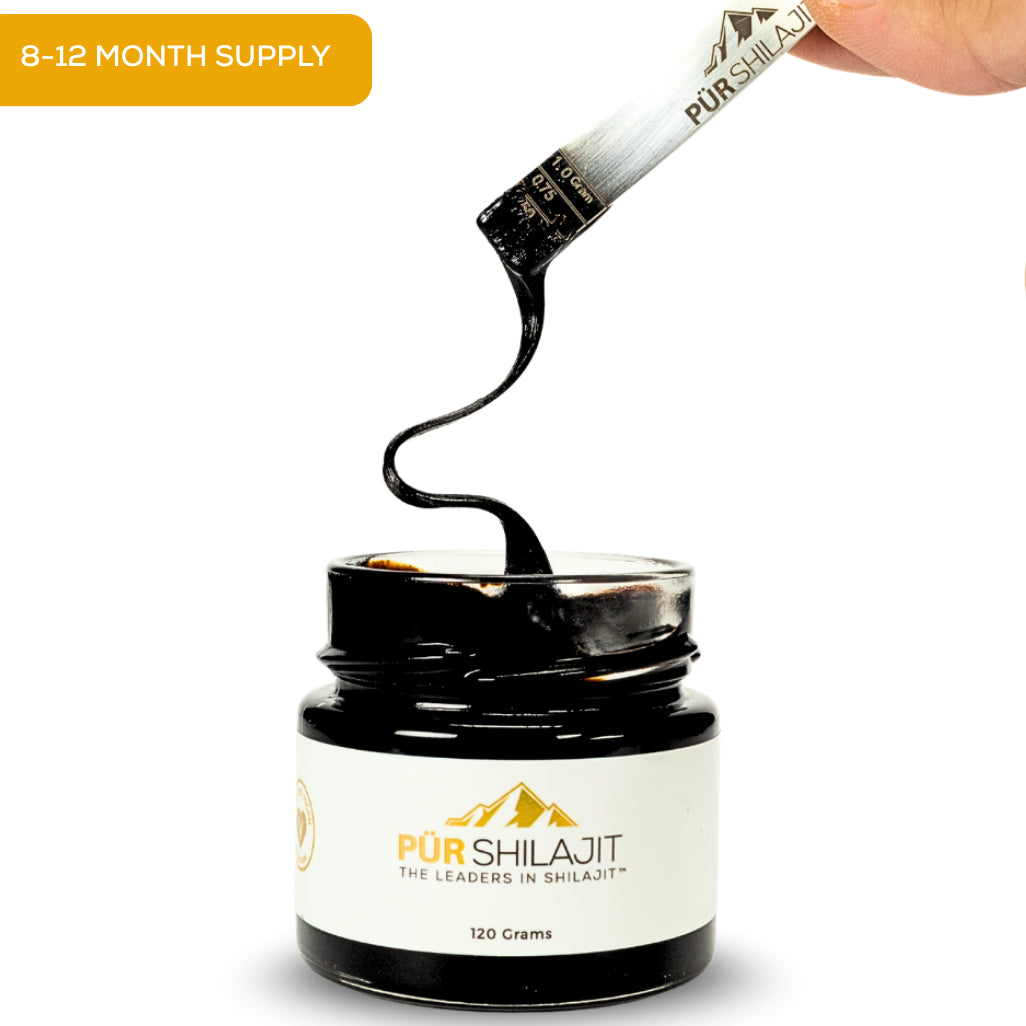
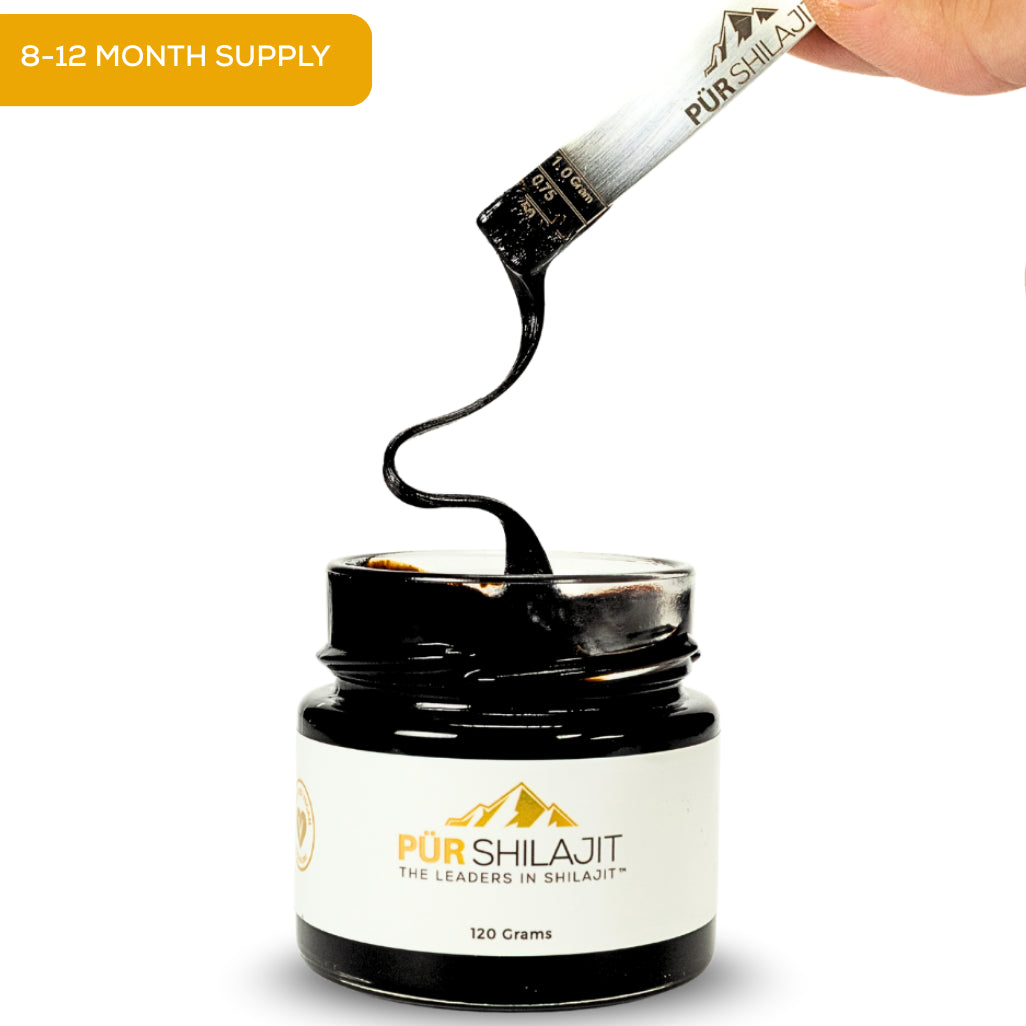
Pure shilajit resin skips that step. Ours is hand-harvested, sun-dried for 70+ days and never purified with heat. No molasses, no water, nothing added. One ingredient goes in the jar.
3. What the label is actually measuring
Here's the one most people skip. A rhodiola label usually lists how much extract is in each capsule and the percentage of marker compounds, typically rosavins and salidroside, it's standardized to. Those amounts vary from product to product, so read them per the label.
Shilajit asks a different question. Because it forms in rock, what matters is what's in the batch you're holding, trace metals included. So the number to look for is a lot number with a matching third-party lab report. Ours are published by lot number.
Two labels, two different questions. Compare the wrong numbers and you learn nothing. But that's only half of it.
4. How you actually take them
Rhodiola is almost always a swallow-and-go capsule. Many labels suggest taking it earlier in the day, so follow yours.
Shilajit gives you a choice. Resin is 300 to 500 mg (about 0.33 g) a day, stirred into warm water, tea or coffee. Tablets are two a day, pressed from resin with no binders, for days you're on the move.
5. The cost math looks different
A rhodiola bottle is priced per capsule, so the math is simple: price divided by servings, per the label.
Resin hides its value in a small jar. Our 120 g jar is $209 at list price, which works out to about $0.57 a day. We broke down every format in How Much Does Shilajit Cost Per Day?
The cold mountain detail they share
Both come from places most living things avoid. Rhodiola grows in cold, thin soil across the Arctic and the high mountains of Europe and Asia, the Altai among them. Shilajit forms in mountain rock at altitude. It's a good story, but a mountain doesn't make a supplement better on its own. What a brand can document about it does.
The Pür proof
Here's what's behind every jar. Single-source resin from the Altai Mountains, hand-harvested around 14,000 feet and never below 13,500. Sun-dried 70+ days, never purified with heat, one ingredient. It passes the 30-second upside-down drip test, hardens in the cold and softens with warmth.
Every batch is tested by Eurofins, an independent ISO 17025-accredited lab network, with reports published by lot number. It's California Prop 65 compliant and carries 84+ trace minerals. We've been family-owned since 2019, 155,000+ customers have trusted us, and every order is covered by our 90-day money-back guarantee. We named the company Pür for a reason: as pür as pure gets.
Quick questions
Is rhodiola the same thing as shilajit? No. Rhodiola is a plant root, usually sold as a standardized extract. Shilajit is a mineral-rich resin that forms in mountain rock.
Can you take shilajit and rhodiola together? Many people keep both in one routine because they're such different products. Add one at a time, follow each label, and talk to your doctor first if you take medication or are under medical care.
Which label number matters most? For rhodiola, the extract amount and standardization per capsule. For shilajit, a lot number that matches a published lab report.
The founder's tip
When people ask me how to start two new supplements at once, I give the same answer: don't. Start one. Take it at the same time every day for two full weeks, stacked onto something you already do. For me that's the first coffee of the morning. Then add the second. Change everything on the same Monday and you'll never know what's doing what. One more thing: put a strip of tape on the lid and write your start date on it. Old-school, and it works.
— Jason Reese, founder
A thank-you for reading this far: add any resin jar and The Spoon to your cart and use code RESINREPORT — the spoon's on me.
These statements have not been evaluated by the Food and Drug Administration. This product is not intended to diagnose, treat, cure, or prevent any disease. Talk to your doctor before starting any supplement if you're pregnant, nursing, or under medical care.

Written by Jason Reese