Shilajit vs. Bone Broth: 5 Differences (and Why Both Firm Up in the Fridge)
Short answer: Bone broth and shilajit are different categories. Bone broth is a food, made by simmering animal bones and connective tissue in water for hours, and sipped by the mug for its protein and gelatin. Shilajit is a mineral resin that forms in high mountain rock, naturally containing fulvic acid and trace minerals, taken in a pea-sized 300 to 500 mg serving. They don't replace each other, and plenty of people keep both in the kitchen.
You already know the warm-mug ritual is back. Bone broth in a thermos, something earthy stirred into coffee, a slower first hour of the day. You're right that both of these belong to that same instinct. Where they part ways is almost everything else, starting with what happens when you put them in the fridge.
Stick around for the founder's tip at the bottom; there's a little thank-you waiting there too. No. 5 is the one that explains the title.
1. One is cooked in a kitchen, one forms in rock
Bone broth is made by people. Beef, chicken or fish bones go into a pot with water, often with vegetables and a splash of vinegar, and simmer for many hours.
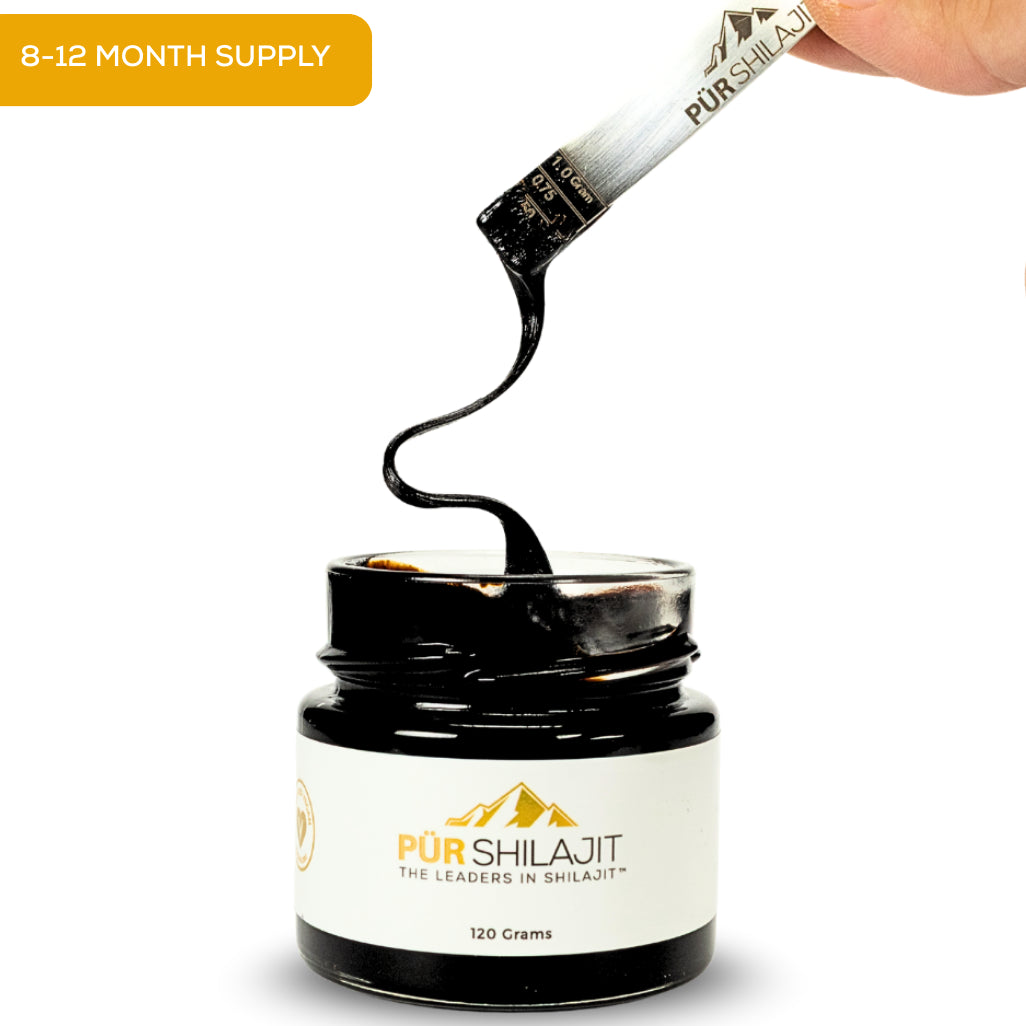
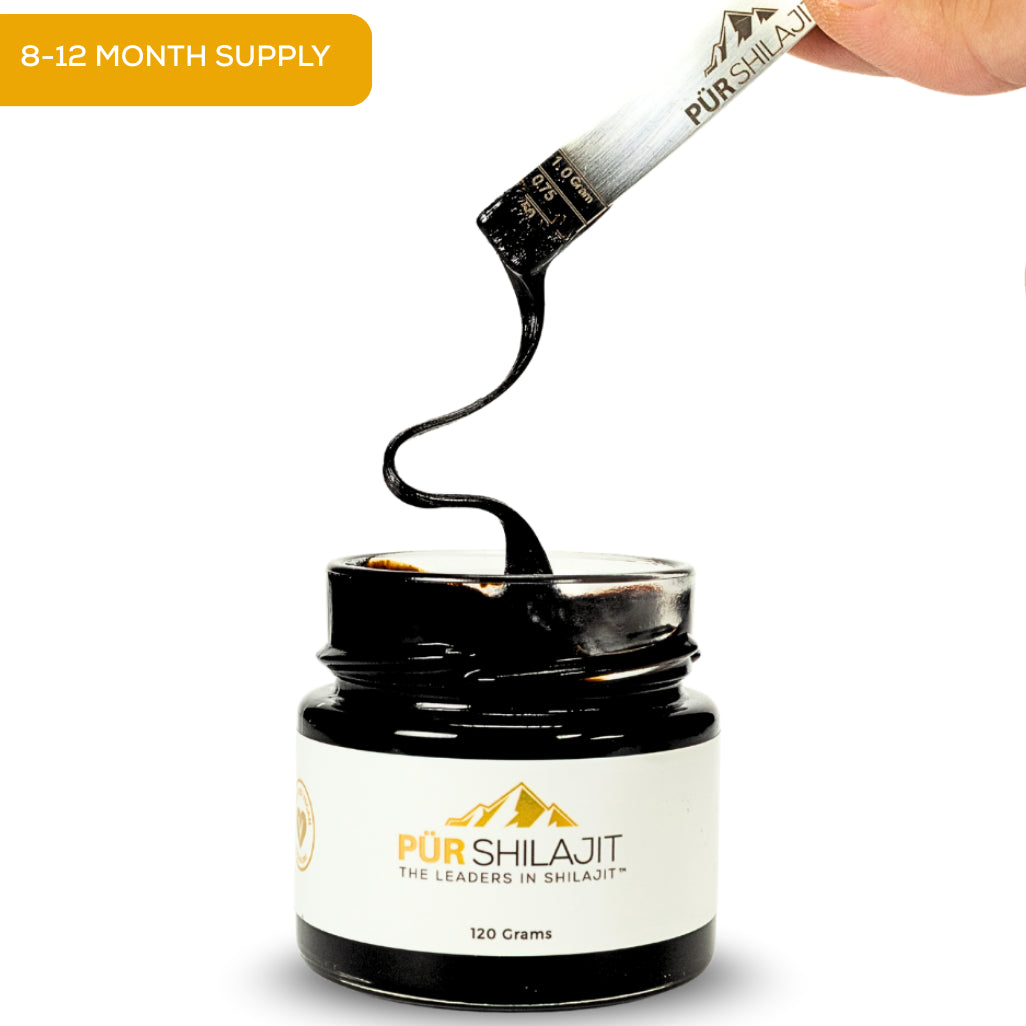
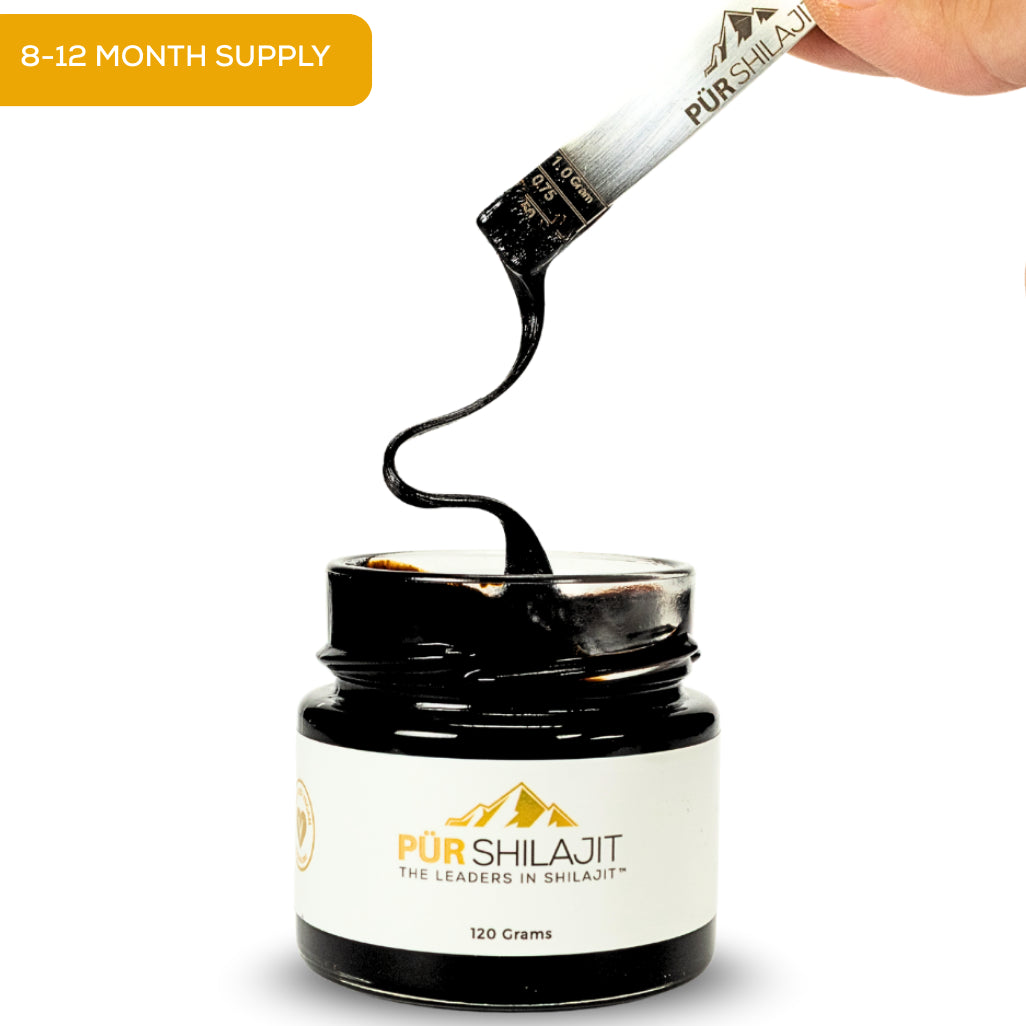
Shilajit isn't made at all. It forms slowly in high mountain rock as plant matter breaks down under pressure, then seeps out as a dense, dark resin. Ours is single-source from the Altai Mountains, hand-harvested around 14,000 feet.
2. One needs heat, the other avoids it
Heat is the whole point of broth. Long simmering is what pulls collagen out of bones and turns it into gelatin.
Resin is the opposite story. Ours is sun-dried for 70+ days and never purified with heat. That's also why we tell people to dissolve it in warm, not boiling, liquid.
But that's only half of it.
3. A mug vs. a pea
Broth is served by the cup or mug; check the carton or jar for the serving size, protein and sodium per the label. Powdered broths list their own scoop size.
Shilajit is tiny by comparison: 300 to 500 mg of resin, about 0.33 g, roughly the size of a pea. One serving of broth outweighs a whole week of shilajit servings many times over.
| Bone broth | Shilajit resin | |
|---|---|---|
| What it is | A food: simmered bones and connective tissue | A mineral resin formed in mountain rock |
| How it's made | Hours of simmering | Hand-harvested, sun-dried 70+ days, no heat |
| Serving | About a mug, per the label | 300 to 500 mg (pea-sized) |
| Known for | Protein and gelatin; sodium varies by label | Fulvic acid and 84+ trace minerals |
| Animal ingredients | Yes | None: one ingredient |
| After opening | Refrigerate; use within the days on the label | Cool, dry cupboard, lid tight |
4. Protein vs. minerals
Broth's appeal is that it's real food: protein, gelatin and the savory depth of a long simmer. The numbers differ a lot from one carton to the next, so the label is the place to compare.
Shilajit isn't a protein source and doesn't try to be. Its draw is a naturally occurring mineral profile, 84+ trace minerals in ours, alongside fulvic acid. Different jobs, different lanes.
5. Why both firm up in the fridge (for different reasons)
Here's the twist. A good homemade broth sets into a wobbly jelly when chilled. That's the gelatin from the simmered collagen, and many cooks take it as a sign the pot was done right.
Real shilajit firms up in the cold too, but for a different reason: it's dense resin, not a gel. It hardens when cold and softens with warmth. Resin that stays runny in the fridge, or runs out of an upside-down jar in the 30-second drip test, is worth a closer look at the ingredient list. Water and molasses don't belong in it.
The storage story splits from there. Opened broth lives in the fridge and gets used within days. A jar of resin lives in a cool, dry cupboard and lasts for months of daily servings.
The Pür proof
We named the company Pür for a reason. Our resin is single-source from the Altai Mountains, hand-harvested around 14,000 feet and never below 13,500, sun-dried 70+ days and never purified with heat. No molasses, no water, nothing added: one ingredient.
Every batch is tested by Eurofins, an independent ISO 17025-accredited lab network, and we publish the reports by lot number. It's California Prop 65 compliant, hardens in the cold, softens with warmth and passes the 30-second upside-down drip test.
The 120 g resin jar is $209, about $0.57 a day, or start with the 10 g jar at $34.99. Family-owned since 2019, 155,000+ customers, and every order is backed by our 90-day money-back guarantee. As pür as pure gets.
Quick questions
Is shilajit the same as bone broth? No. Bone broth is a food made from simmered animal bones; shilajit is a mineral resin that forms in mountain rock. They come from different worlds and are taken in very different amounts.
Can you stir shilajit into bone broth? Yes. Its earthy taste suits a savory mug. Let the broth cool from boiling to warm, then stir in a pea-sized serving until it dissolves.
Does shilajit contain any animal ingredients? Ours doesn't. It's one ingredient, resin, with nothing added. If you avoid animal products, the Daily Drive cap is vegan too.
The founder's tip
On cold mornings I sometimes swap my coffee for a mug of broth, and the resin comes along for the ride. Here's the trick: don't drop it straight into the mug. Put your pea-sized piece in a spoonful of warm water first, give it twenty seconds and a stir, then pour the broth over it. It disappears completely, and the earthy note actually tastes like it belongs there. Just let the broth come off the boil for a minute before you pour.
— Jason Reese, founder
A thank-you for reading this far: add any resin jar and The Spoon to your cart and use code RESINREPORT — the spoon's on me.
These statements have not been evaluated by the Food and Drug Administration. This product is not intended to diagnose, treat, cure, or prevent any disease. Talk to your doctor before starting any supplement if you're pregnant, nursing, or under medical care.

Written by Jason Reese