Shilajit vs. Mushroom Coffee: 5 Differences (and the Fruiting Body Line on the Label)
Short answer: Shilajit and mushroom coffee aren't the same kind of product. Shilajit is a single-ingredient mineral resin from high mountain rock, caffeine-free, taken at 300 to 500 mg a day. Mushroom coffee is a blend, usually coffee mixed with powdered mushroom extracts, so it typically contains caffeine and several ingredients. They don't replace each other, and plenty of people stir one into the other.
You already know the morning mug has become a crowded place. Coffee, then collagen, then a mushroom blend, then something else your feed swears by. You're right to wonder which of these actually earns its spot. The honest answer starts with reading what's in each one, and they could hardly be more different.
Stick around for the founder's tip at the bottom; there's a little thank-you waiting there too. No. 4 is the one most people skip.
1. One ingredient vs. a blend
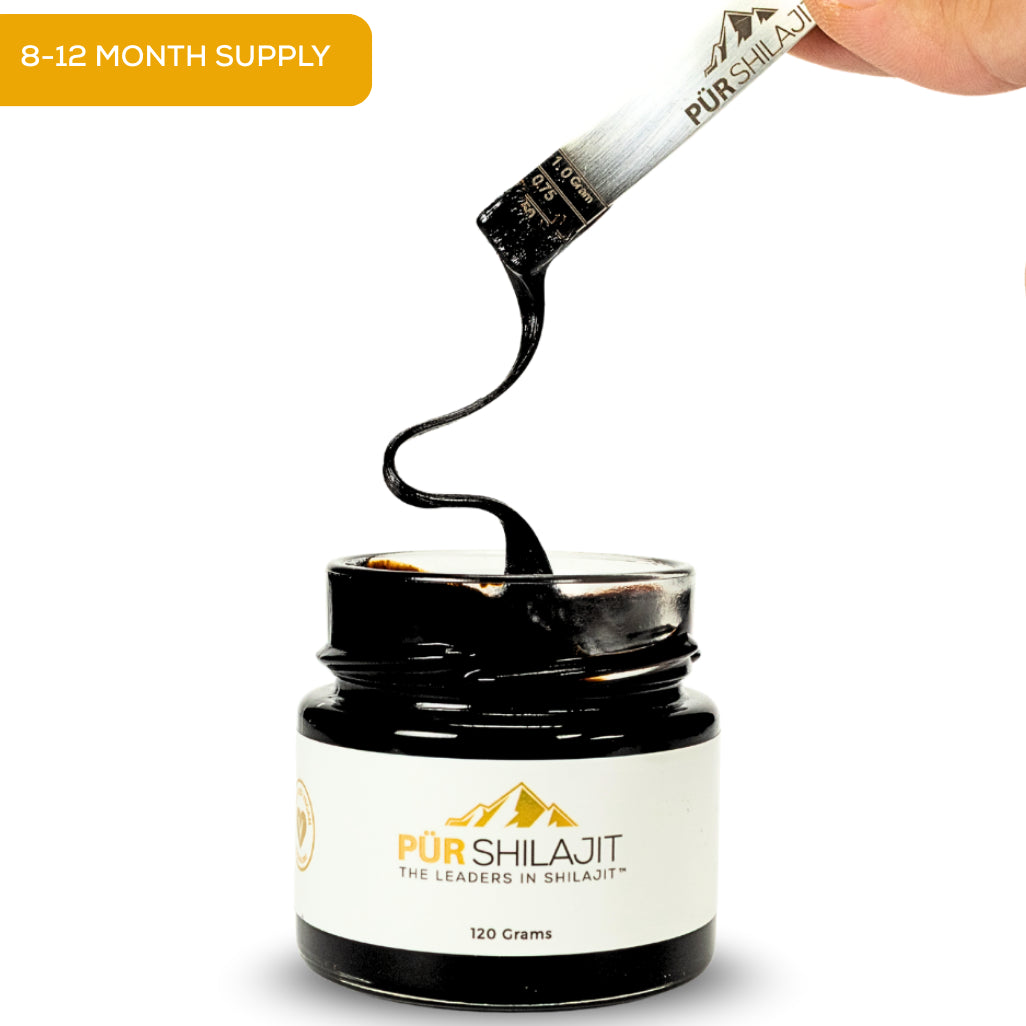
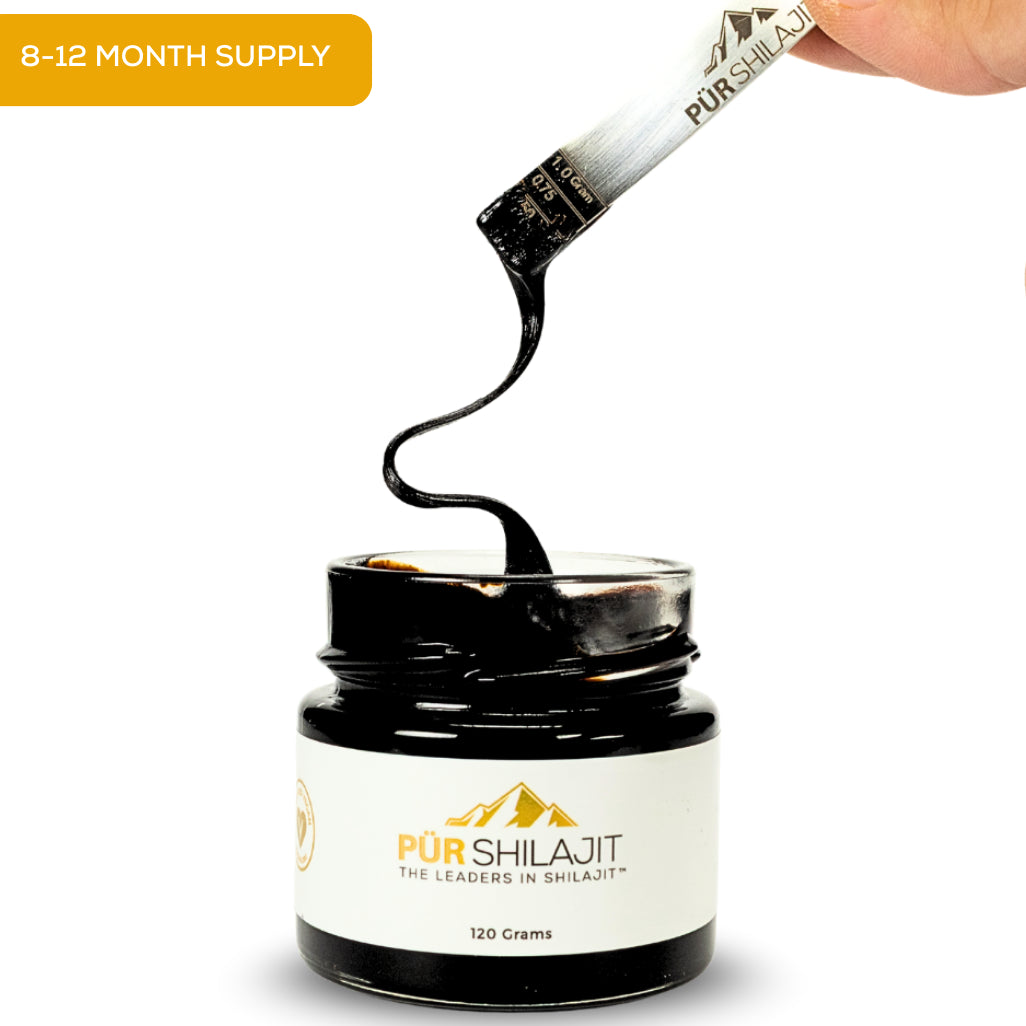
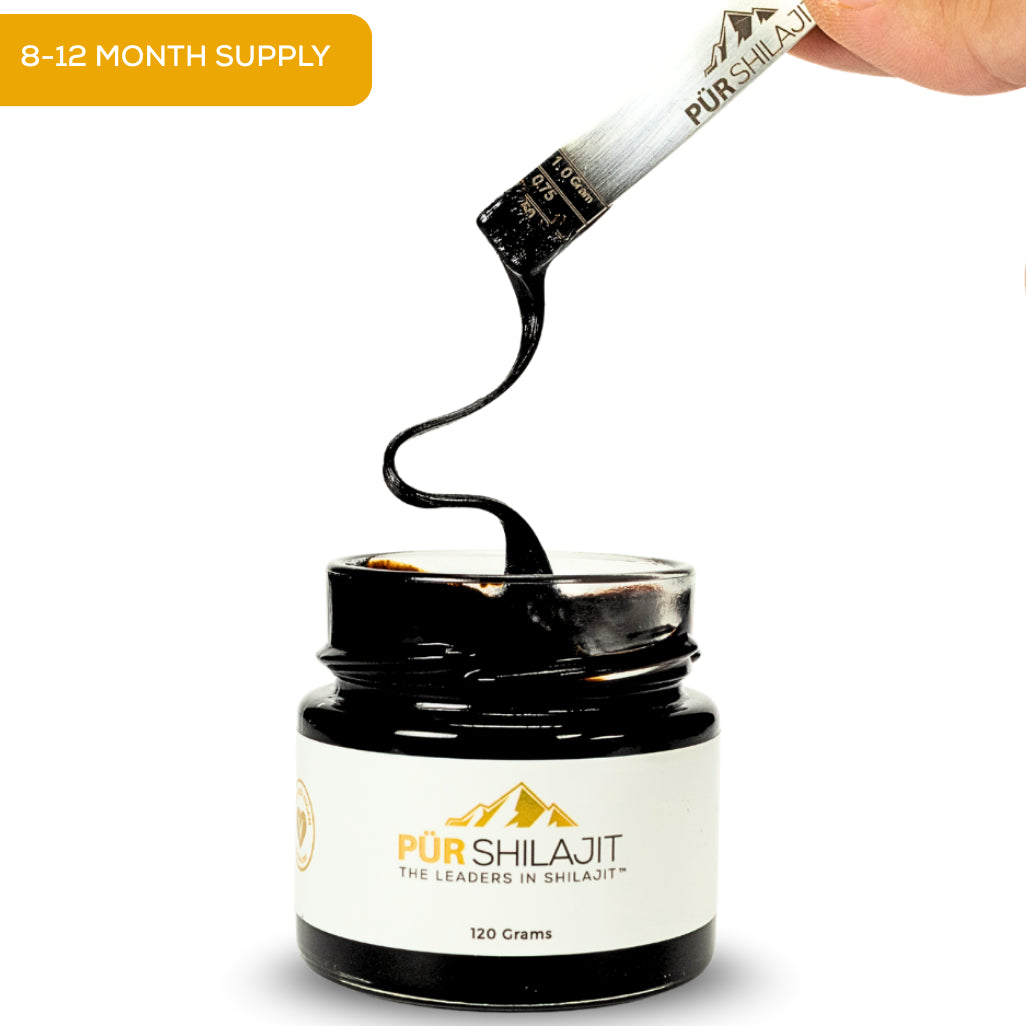
Real shilajit resin is one ingredient. Nothing is mixed in, so the label is a single word.
Mushroom coffee is a blend by design. Most versions combine ground or instant coffee with powdered extracts of mushrooms such as lion's mane, chaga, cordyceps or reishi, sometimes with cacao, chicory or flavorings. Read the full ingredient list to see what's actually in the bag.
2. Caffeine: none vs. some
Shilajit contains no caffeine. It won't add to your daily total, and there's nothing to time around.
Most mushroom coffee contains caffeine because it contains coffee. How much varies a lot from product to product, so check the amount per serving on the label. Some "mushroom coffee" products are actually coffee-free blends, which is another reason to read before you buy.
But caffeine is only half of it. The serving size tells a bigger story.
3. Milligrams vs. a scoop
A daily serving of shilajit resin is tiny: 300 to 500 mg, about a pea-sized portion, or roughly 0.33 g.
Mushroom coffee is measured by the scoop or packet, and most of that scoop is usually coffee. The mushroom portion is a share of the total, listed per the label. If you're buying it for the mushrooms, look for how many milligrams of each mushroom extract are in one serving, not just the names on the front.
4. The fruiting body line on the label
This is the one most people skip. Mushroom extracts can be made from the fruiting body (the mushroom cap and stem) or from mycelium (the root-like network), and mycelium is often grown on grain. Many labels say which part is used; some don't.
Two more details worth finding: whether the amounts are shown per mushroom or hidden inside a proprietary blend, and whether the brand publishes third-party testing. None of this makes a product good or bad on its own. It just tells you what you're paying for.
5. They fit in the same mug
Because they do different things, there's no reason to choose. Many people dissolve their shilajit right into their morning cup, mushroom coffee included. Keep the drink warm, not boiling, and stir until the resin is fully dissolved.
Prefer zero prep? Swallow two binder-free tablets alongside your cup instead.
| Shilajit resin | Mushroom coffee | |
|---|---|---|
| What it is | A resin that forms in high mountain rock | Coffee blended with powdered mushroom extracts |
| Ingredients | One | Several, per the label |
| Caffeine | None | Usually, per the label |
| Daily serving | 300 to 500 mg | A scoop or packet, per the label |
| Label detail to check | A lab report matched to your lot number | Fruiting body or mycelium, and mg per mushroom |
| Home check | The 30-second drip test | None; the label and testing do the work |
The Pür proof
A blend asks you to trust every ingredient in the bag. Ours asks you to trust one, and then shows you the paperwork. We named the company Pür for a reason.
- One source. Single-source resin from the Altai Mountains, hand-harvested around 14,000 feet and never below 13,500.
- One ingredient. Sun-dried 70+ days and never purified with heat. No molasses, no water, nothing added.
- Every batch tested. Eurofins, an independent ISO 17025-accredited lab network, tests every batch, and we publish the reports by lot number. California Prop 65 compliant, with 84+ trace minerals.
- Checkable at home. It passes the 30-second upside-down drip test, hardens in the cold and softens with warmth.
- Backed. Family-owned since 2019, 155,000+ customers, and a 90-day money-back guarantee.
The 120 g resin jar is $209, about $0.57 a day, or start with the 10 g jar at $34.99. As pür as pure gets, in whatever mug you pour.
Quick questions
Is shilajit a type of mushroom? No. Shilajit is a mineral resin that forms in mountain rock. Mushrooms are fungi. They're different categories entirely.
Can I put shilajit in mushroom coffee? Yes. Many people do. Use a warm, not boiling, cup and stir until the resin fully dissolves, usually 30 to 60 seconds.
Does shilajit contain caffeine like mushroom coffee? No. Shilajit is caffeine-free. Most mushroom coffee contains caffeine from the coffee in the blend; check the label for the amount.
The founder's tip
If you drink a powdered blend in the morning, put the resin in first. A pea-sized piece in an empty mug, a splash of warm water, thirty seconds of stirring until it's gone, then add your powder and top it up. Do it the other way around and the resin ends up hiding under a clump of powder at the bottom of the cup. Same mug, same minute, and you get every bit of both.
— Jason Reese, founder
A thank-you for reading this far: add any resin jar and The Spoon to your cart and use code RESINREPORT — the spoon's on me.
These statements have not been evaluated by the Food and Drug Administration. This product is not intended to diagnose, treat, cure, or prevent any disease. Talk to your doctor before starting any supplement if you're pregnant, nursing, or under medical care.

Written by Jason Reese