Shilajit vs. Elderberry: 5 Differences (and Why One Is Never Eaten Raw)
Short answer: elderberry and shilajit are completely different things. Elderberry is the dark purple fruit of the elder shrub (Sambucus nigra), usually sold cooked into syrups, gummies, teas or lozenges. Shilajit is a mineral-rich resin that forms in high mountain rock, taken in pea-sized amounts of 300 to 500 mg a day. One doesn't replace the other, and plenty of people keep both in the kitchen this time of year.
You already know the elderberry bottle shows up on the counter the minute the weather turns. You probably also know, deep down, that the label on the back matters more than the berry on the front. That instinct is right, and it applies to your shilajit jar too.
Stick around for the founder's tip at the bottom; there's a little thank-you waiting there too. No. 3 is the one most people skip.
Side by side
| Shilajit | Elderberry | |
|---|---|---|
| What it is | A mineral-rich resin formed over centuries in mountain rock | The dark purple fruit of the elder shrub |
| How it's prepared | Ours: sun-dried 70+ days, never heated | Cooked or processed before it's sold |
| Common forms | Resin, tablets, capsules | Syrup, gummies, tea, lozenges, capsules |
| Typical serving | 300 to 500 mg (pea-sized) | A teaspoon, tablespoon or gummy, per the label |
| Other ingredients | Ours: none, one ingredient | Often sweeteners, pectin or gelatin; check the label |
| Taste | Earthy and smoky, like strong black tea | Tart and fruity, usually sweetened |
1. One grows on a shrub, one seeps from rock
Elderberries grow in flat clusters on the elder shrub, a plant common across Europe and North America. They're picked in late summer, once they turn a deep purple-black.
Shilajit starts as alpine plant matter that breaks down slowly inside mountain rock, then seeps out as a dark resin. Ours is hand-harvested in the Altai Mountains at around 14,000 feet, never below 13,500. One you could find at the edge of a field. The other takes a climb.
2. One is never eaten raw; the other is never heated
This is the twist in the title. Raw elderberries, along with the stems, leaves and unripe fruit, contain naturally occurring compounds that can upset the stomach. That's why elderberry products are cooked or processed before they ever reach a bottle. If you pick your own, follow a trusted food-safety source before you use them.
Shilajit goes the opposite direction. Ours is never purified with heat. It's sun-dried for 70+ days and goes into the jar exactly as it came out of the drying stage. Same goal, getting a natural material ready to use, with opposite methods.
But how it's made is only half of it. What gets added afterward is the other half.
3. Read what else is in the bottle
Here's the one most people skip. Elderberry syrup is often made with sugar or honey, and gummies usually add sugar plus pectin or gelatin. None of that is wrong. It's just worth knowing what you're spooning out every day.
Flip the bottle over. The Supplement Facts panel shows how much elderberry is in each serving, and the "Other ingredients" line shows everything that comes along with it.
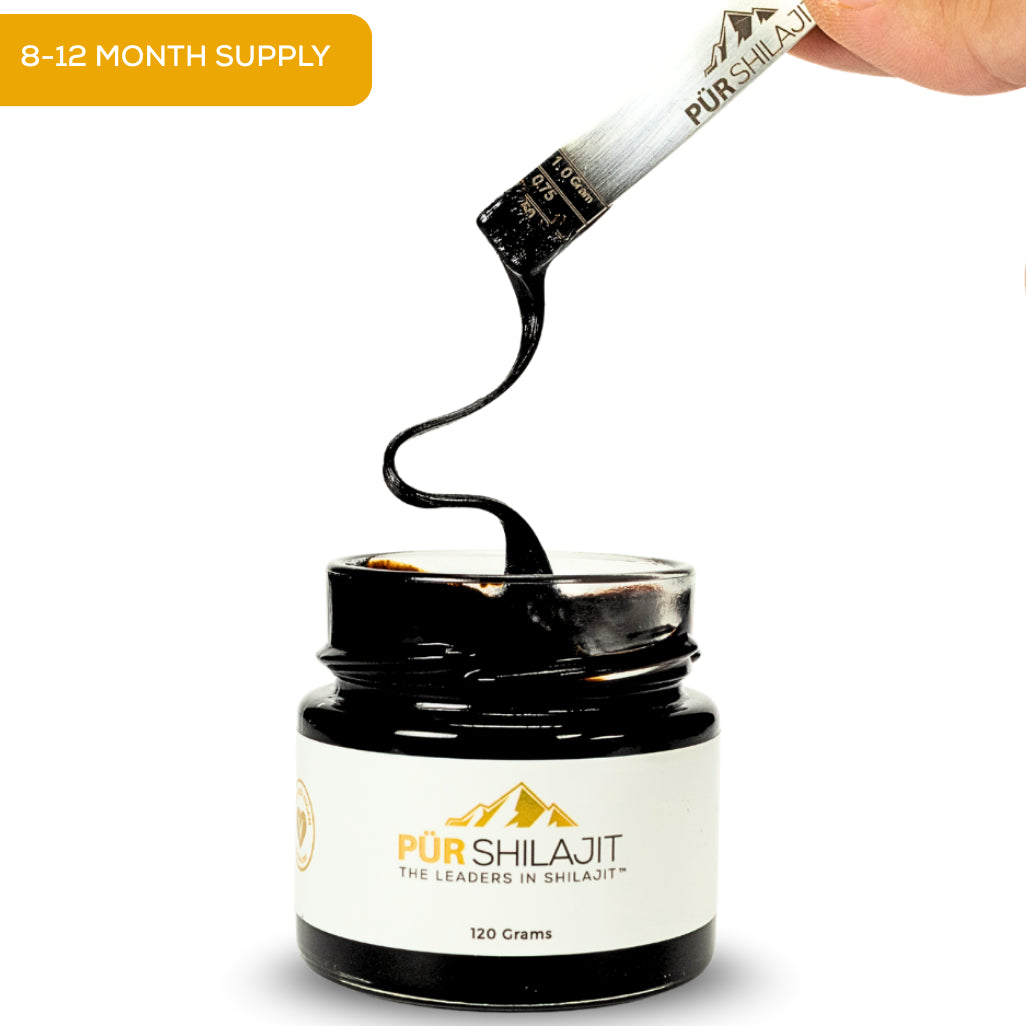
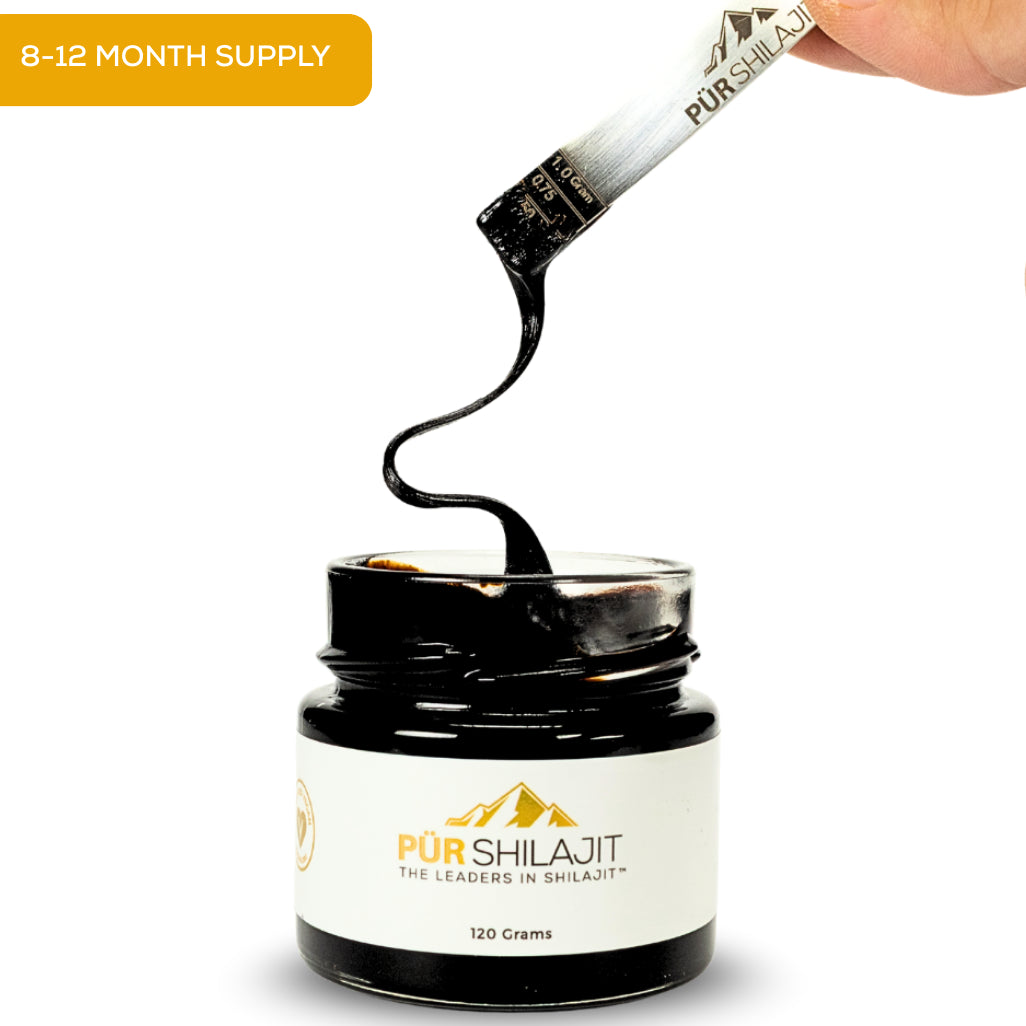
On a jar of pure shilajit resin, that second line should be empty. Ours is: no molasses, no water, nothing added. If you want to check texture at home, the 30-second drip test takes less time than reading this paragraph.
4. Different amounts, different measuring tools
Elderberry is measured like food: a teaspoon of syrup, a tablespoon, or a couple of gummies, per the label.
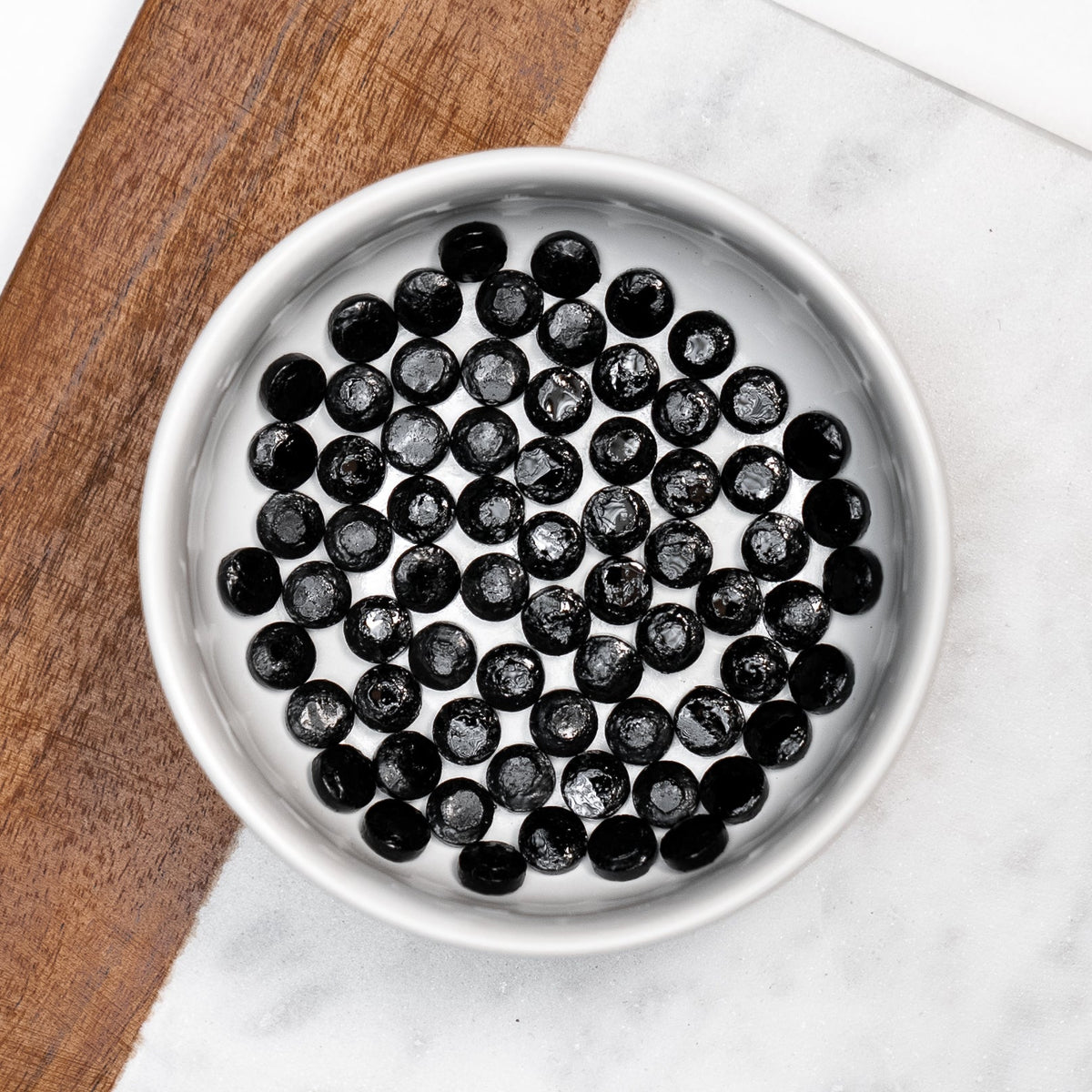
Shilajit is measured in milligrams. That's a pea-sized 300 to 500 mg of resin, two binder-free tablets, or one vegan Daily Drive cap. A big serving of one is a tiny serving of the other, so don't eyeball across the two.
5. A seasonal shelf vs. a daily habit
A lot of people treat elderberry as a seasonal item: it comes out when the weather cools and goes back in the cabinet by spring. Opened syrups often need the fridge, so check the label.
Shilajit tends to be a year-round, same-time-every-day habit, and resin keeps at room temperature. It firms up in the cold and softens with warmth, which is normal for real resin. A 120 g jar runs about $0.57 a day.
Can you take both?
They share no ingredients and come from different categories entirely, a berry and a mineral resin. If your elderberry comes as a tea, a warm mug works for both: dissolve your shilajit in a splash of warm water first, then pour in the tea. If you're on medication or under medical care, ask your doctor about any supplement, elderberry and shilajit included.
The Pür proof
We named the company Pür for a reason. Our resin is single-source from the Altai Mountains, hand-harvested around 14,000 feet, sun-dried for 70+ days and never purified with heat. One ingredient, nothing added. It passes the 30-second upside-down drip test, and it hardens in the cold the way real resin should.
Every batch is tested by Eurofins, an independent ISO 17025-accredited lab network, and the reports are published by lot number. California Prop 65 compliant, with 84+ trace minerals. We've been family-owned since 2019, 155,000+ customers have trusted us, and every order carries a 90-day money-back guarantee. As pür as pure gets.
Quick questions
Does shilajit contain elderberry? No. Pure shilajit is a single mineral resin. A product listing elderberry alongside shilajit is a blend, and the label should show how much of each is in a serving.
Can I stir shilajit resin into elderberry tea? Yes. Use warm, not boiling, liquid, and dissolve the resin in a small splash first so it mixes evenly.
Which form of shilajit is easiest in winter? Tablets and capsules need no prep at all. Resin works year-round too; it's just firmer on a cold morning, which the tip below solves.
The founder's tip
Every winter I get the same message: "My resin turned into a rock." Good. That's how you know it's real. Here's what I do in my own kitchen. I keep a mug of hot water next to the jar, dip my spoon in for about ten seconds, then dry it completely with a towel before I scoop. The warm spoon slides right through the cold resin. Dry matters, though: never let water drip into the jar. And if the lid itself won't budge, run the closed jar under hot tap water for two or three minutes and it'll twist right off.
— Jason Reese, founder
A thank-you for reading this far: add any resin jar and The Spoon to your cart and use code RESINREPORT — the spoon's on me.
These statements have not been evaluated by the Food and Drug Administration. This product is not intended to diagnose, treat, cure, or prevent any disease. Talk to your doctor before starting any supplement if you're pregnant, nursing, or under medical care.

Written by Jason Reese