Shilajit vs. Bee Pollen: 5 Differences (and the Allergy Line to Read on the Jar)
Short answer: Bee pollen and shilajit come from completely different places. Bee pollen is flower pollen that honeybees pack into small granules, while shilajit is a mineral-rich resin that seeps from high mountain rock. They differ in source, makeup, serving size, taste and what to check on the label, so one doesn't stand in for the other, and plenty of people keep both in the same morning routine.
You already know the wellness shelf is crowded with "natural" jars that all promise the same thing. You've probably also noticed that the smart move isn't picking a winner, it's understanding what each jar actually is. That's the whole point of this one.
Stick around for the founder's tip at the bottom; there's a little thank-you waiting there too. And No. 5 is the one most people skip.
1. Where each one comes from
Bee pollen starts in flowers. Honeybees gather pollen, pack it with a little nectar into tiny pellets, and carry it home on their legs. Beekeepers collect some of those pellets with a trap at the hive entrance.
Shilajit starts in rock. It's a resin that forms over long stretches of time from alpine plant matter and seeps out of cracks in high mountains. Ours is single-source from the Altai Mountains, hand-harvested around 14,000 feet and never below 13,500.
One is gathered by bees in a season. The other is gathered by hand on a mountainside. But that's only half of it.
2. What's actually inside
Bee pollen is a food. It carries protein, carbohydrates, some fats and small amounts of vitamins, and its makeup shifts with the flowers the bees visited and the time of year.
Shilajit is better known for fulvic acid and minerals. Every Pür batch shows 84+ trace minerals on independent testing. Different jar, different job.
3. Serving size and form
Bee pollen comes as loose golden granules, and the serving is usually a spoonful measured per the label. Shilajit resin is dense, so the serving is tiny: 300 to 500 mg daily, about the size of a pea.
That size gap matters when you're comparing price. A spoonful of granules and a pea of resin aren't the same unit, so compare cost per serving, not cost per jar.
| Bee pollen | Pür Shilajit Resin | |
|---|---|---|
| Source | Flower pollen packed by honeybees | Mountain resin, Altai, ~14,000 ft |
| Form | Loose granules | Dense resin |
| Typical serving | A spoonful, per the label | 300 to 500 mg (pea-size) |
| Taste | Floral, slightly sweet, crunchy | Earthy, smoky, a little bitter |
| Storage | Many labels say refrigerate | Cool, dry, lid tight |
| Label line to read | The allergy warning | Source, ingredients, lab report |
4. Taste and how people take them
Bee pollen is crunchy and floral. Most people sprinkle it raw over yogurt, oatmeal or a smoothie bowl, because heat changes it.
Shilajit tastes earthy and smoky. The easiest way in is to dissolve it in warm, not boiling, water, tea or coffee. Different textures, different moments of the morning.
5. The allergy line on the jar
This is the one most people skip. Bee pollen labels commonly carry a warning for anyone sensitive to pollen or bee products. Read it before the first spoonful, and if you've ever reacted to bees or pollen, ask your doctor first.
For shilajit, the lines worth reading are different: where it's from, whether anything was added, and whether the lab report is published by lot number. On a Pür jar, the ingredient list is one word long.
The Pür proof
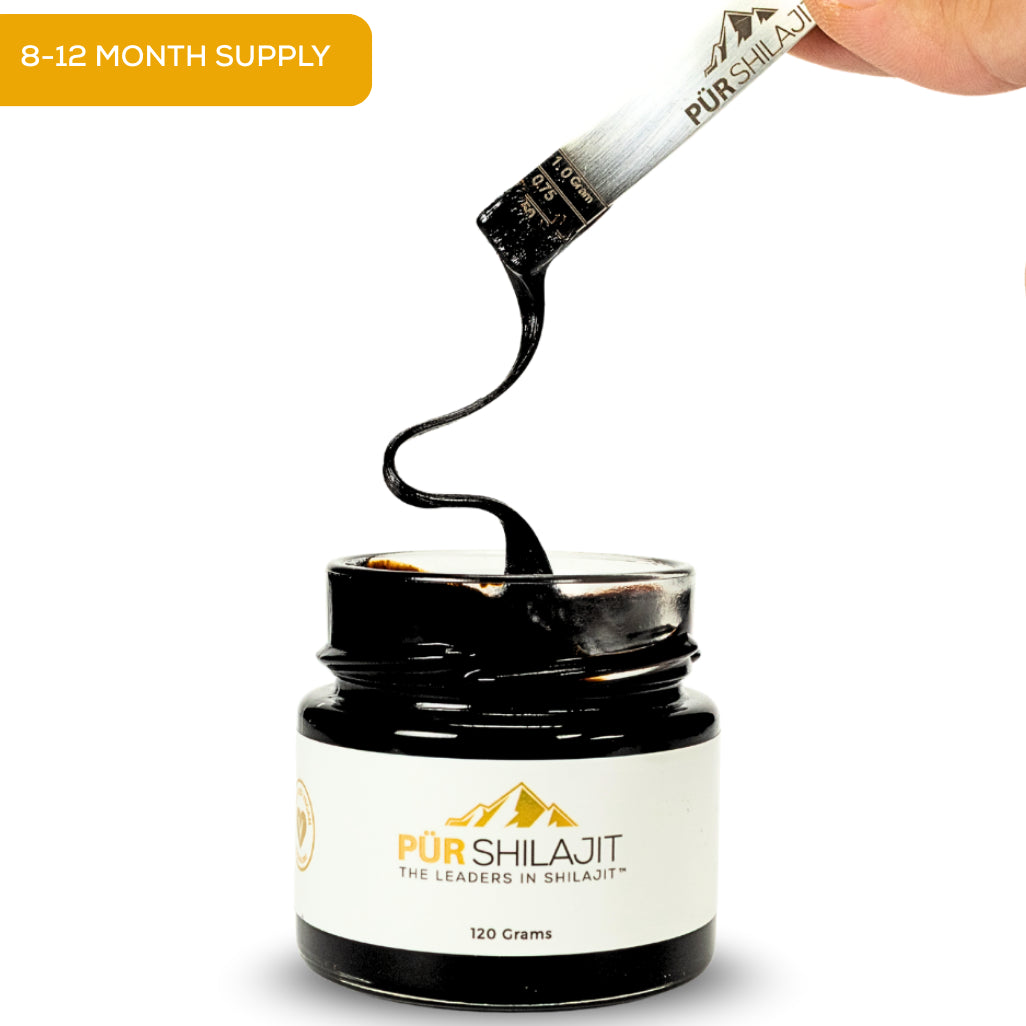
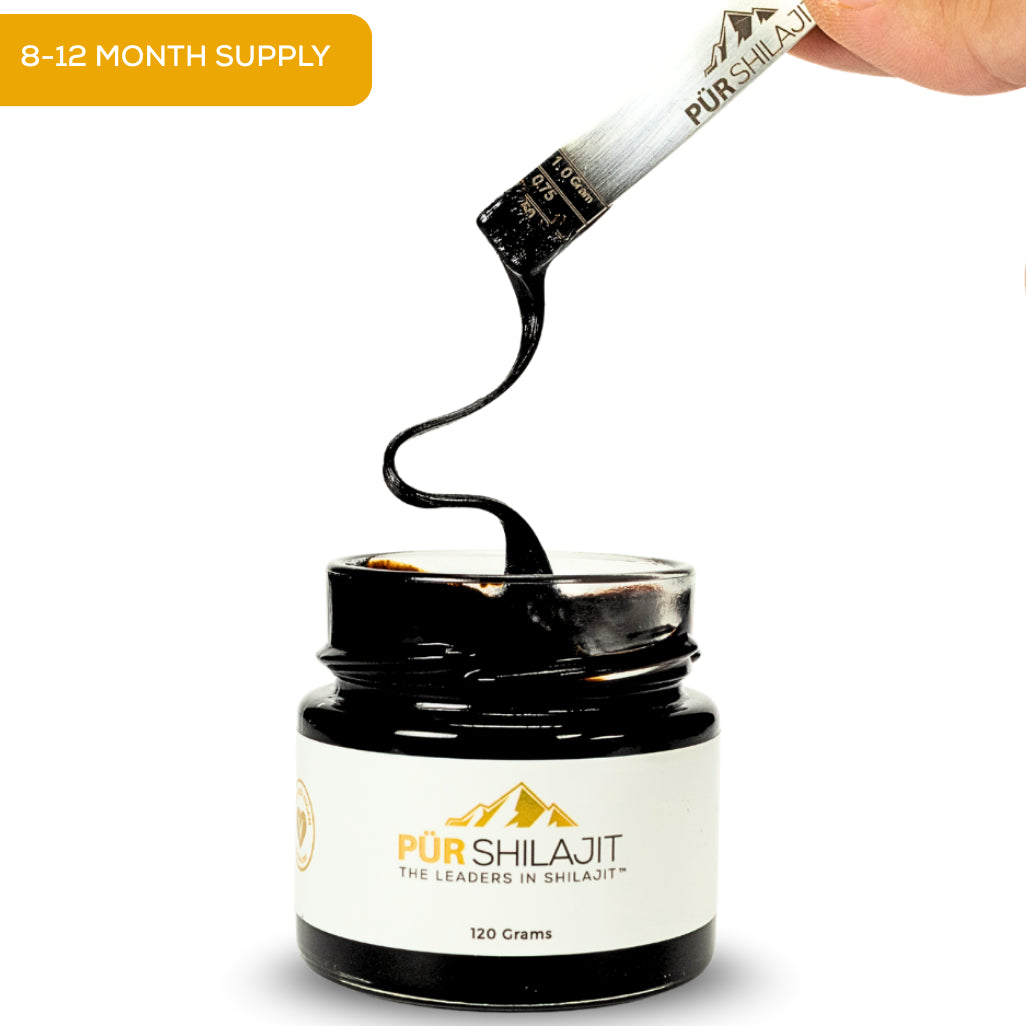
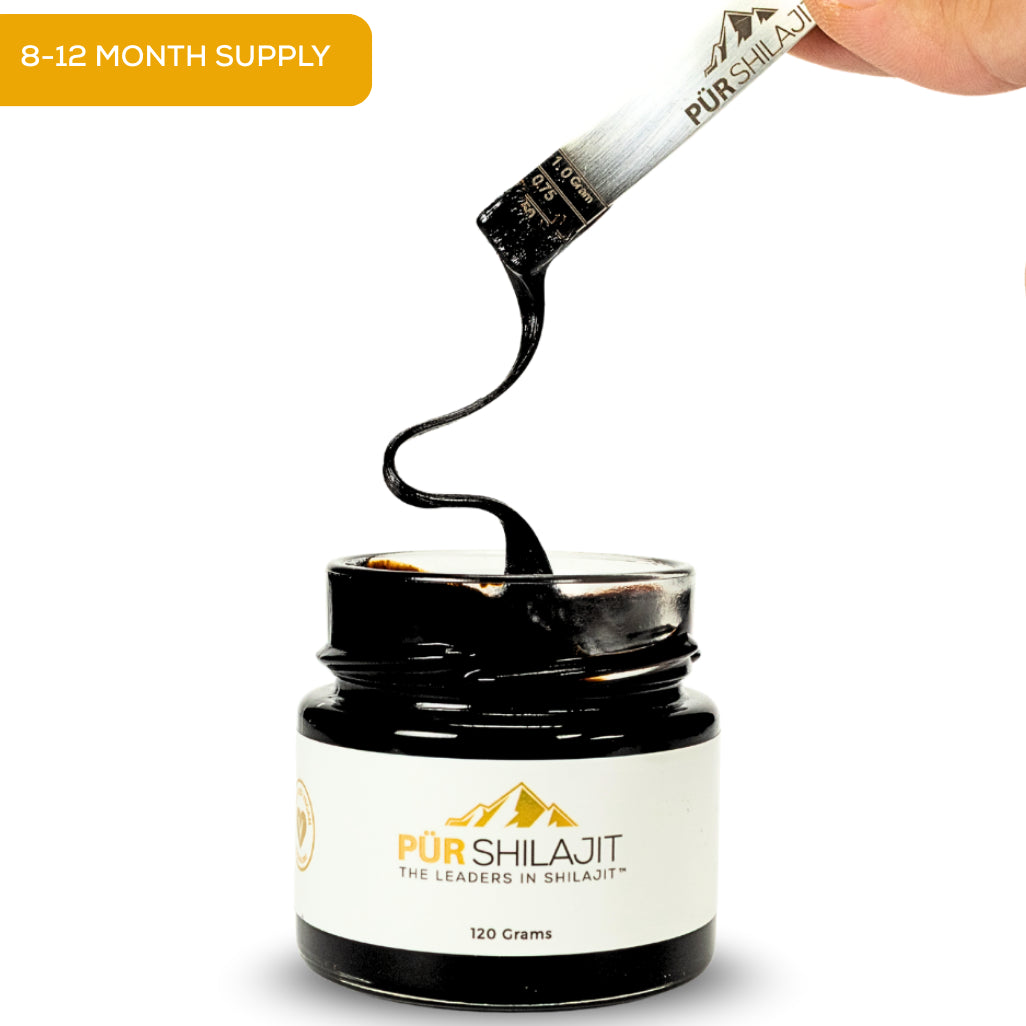
We named the company Pür for a reason. Our resin is single-source from the Altai Mountains, hand-harvested around 14,000 feet, sun-dried for 70+ days and never purified with heat. No molasses, no water, nothing added. One ingredient.
Every batch is tested by Eurofins, an independent ISO 17025-accredited lab network, and you can read the reports by lot number on our lab results page. It's California Prop 65 compliant, and it passes the 30-second upside-down drip test. It hardens in the cold and softens with warmth, the way real resin should.
We've been family-owned since 2019, with 155,000+ customers, and every jar is backed by our 90-day money-back guarantee. As pür as pure gets. A 120 g resin jar is $209, about $0.57 a day.
Quick questions
Can you take shilajit and bee pollen on the same day? Many people keep both in one morning routine, since they're different products with different serving sizes. If you're pregnant, nursing, under medical care or allergic to bee products, talk to your doctor first.
Is bee pollen the same as honey? No. Honey is made from nectar; bee pollen is the pollen bees collect from flowers and pack into granules. They often sit next to each other on the shelf, but they're different things.
How much shilajit resin is one serving? 300 to 500 mg daily, about the size of a pea. A 120 g jar covers a long stretch of mornings at that amount.
The founder's tip
Here's how I'd put these two together without fighting either one. Dissolve your pea of resin in a splash of warm water first, give it a minute to cool, then stir it into your yogurt or smoothie bowl. Sprinkle the pollen on last so it stays crunchy and never sees the heat. And keep one dry spoon just for the resin jar. A wet spoon is the fastest way to turn a clean jar into a sticky mess.
— Jason Reese, founder
A thank-you for reading this far: add any resin jar and The Spoon to your cart and use code RESINREPORT — the spoon's on me.
These statements have not been evaluated by the Food and Drug Administration. This product is not intended to diagnose, treat, cure, or prevent any disease. Talk to your doctor before starting any supplement if you're pregnant, nursing, or under medical care.

Written by Jason Reese