Shilajit vs. Multivitamin: 5 Differences (and the Label Detail Most People Never Check)
Short answer: A multivitamin and shilajit do different jobs. A multivitamin is a formulated product that delivers set amounts of specific vitamins and minerals, listed per the label with a % Daily Value. Shilajit is a natural mountain resin with 84+ trace minerals in the amounts nature left them, and it isn't built to hit Daily Values. One doesn't replace the other, and many people keep both in the same morning.
You already know the multivitamin drill: one tablet with breakfast, a long list on the back of the bottle, and a quiet hope that it's covering the gaps. That instinct to read the label is the right one. It's also exactly where these two products stop looking alike.
Stick around for the founder's tip at the bottom; there's a little thank-you waiting there too. No. 3 is the one most people never think to check.
1. One is made, the other is found
A multivitamin is designed in a lab and assembled in a facility. Someone picks the nutrients, the forms and the amounts, then presses or fills them into a tablet, capsule, gummy or powder.
Shilajit isn't formulated at all. It forms slowly in mountain rock from ancient plant matter, and it's harvested, not manufactured. Ours is hand-harvested around 14,000 feet in the Altai Mountains and sun-dried for 70+ days.
But where it comes from is only half of it.
2. What's inside: a recipe vs. a resin
A multivitamin's contents are a recipe. Formulas vary by brand, age group and sex, and each nutrient appears at a specific amount, per the label.
Shilajit is one ingredient. Its 84+ trace minerals and its fulvic acid come together, as a whole resin, in naturally occurring proportions. Nothing is chosen or dosed in. Nothing is added, either: no molasses, no water, no fillers.
3. How the label reads (the one people skip)
Flip a multivitamin over and you'll see a Supplement Facts panel: a line for each nutrient, an amount, and a % Daily Value. That panel is the whole point of the product.
A pure shilajit label is short because there's only one thing in the jar. So the proof doesn't live on the label. It lives in the lab report. That's why we publish every batch's results by lot number on our lab results page. A long ingredient list and a one-word ingredient list need two different kinds of homework.
| Multivitamin | Pür Shilajit | |
|---|---|---|
| Origin | Formulated and manufactured | Natural resin, hand-harvested in the Altai Mountains |
| Ingredients | Many, each at a set amount, per the label | One: shilajit resin, nothing added |
| Minerals | Selected minerals with a % Daily Value | 84+ trace minerals, in natural proportions |
| Where the proof lives | Supplement Facts panel | Eurofins lab report, published by lot number |
| Daily serving | Per the label (often 1 or more tablets or gummies) | 300 to 500 mg resin, 2 tablets, or 1 Daily Drive cap |
4. Serving size and form
Multivitamins come as tablets, capsules, gummies and powders, and the serving is whatever the label says. Some are one a day; some are several.
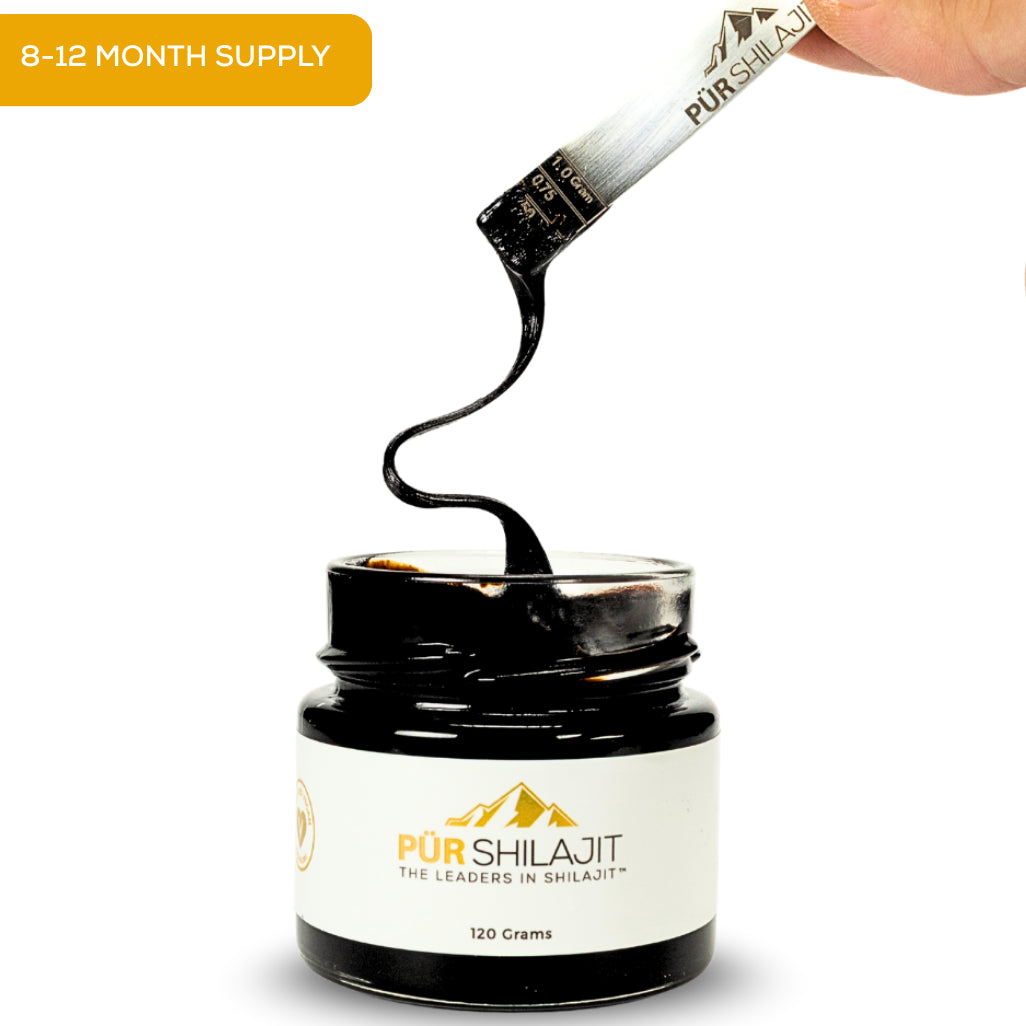
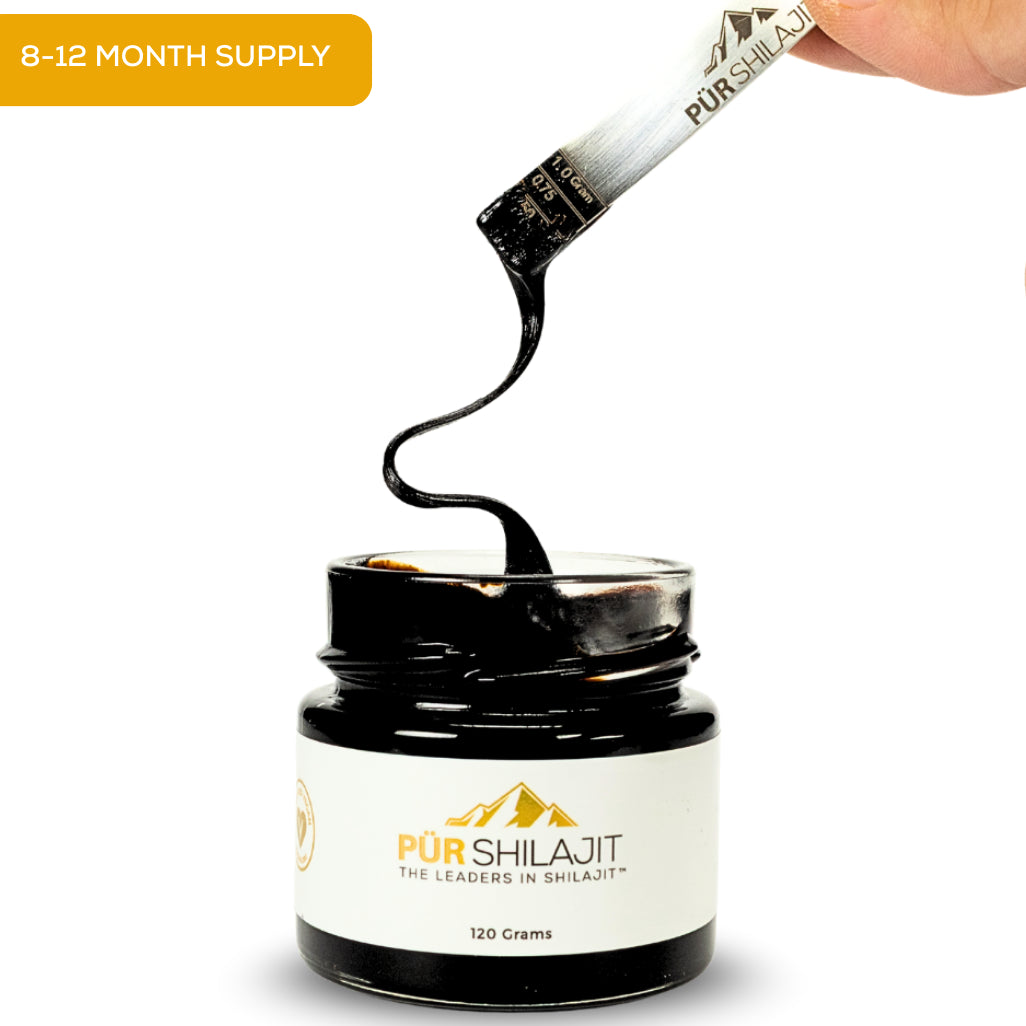
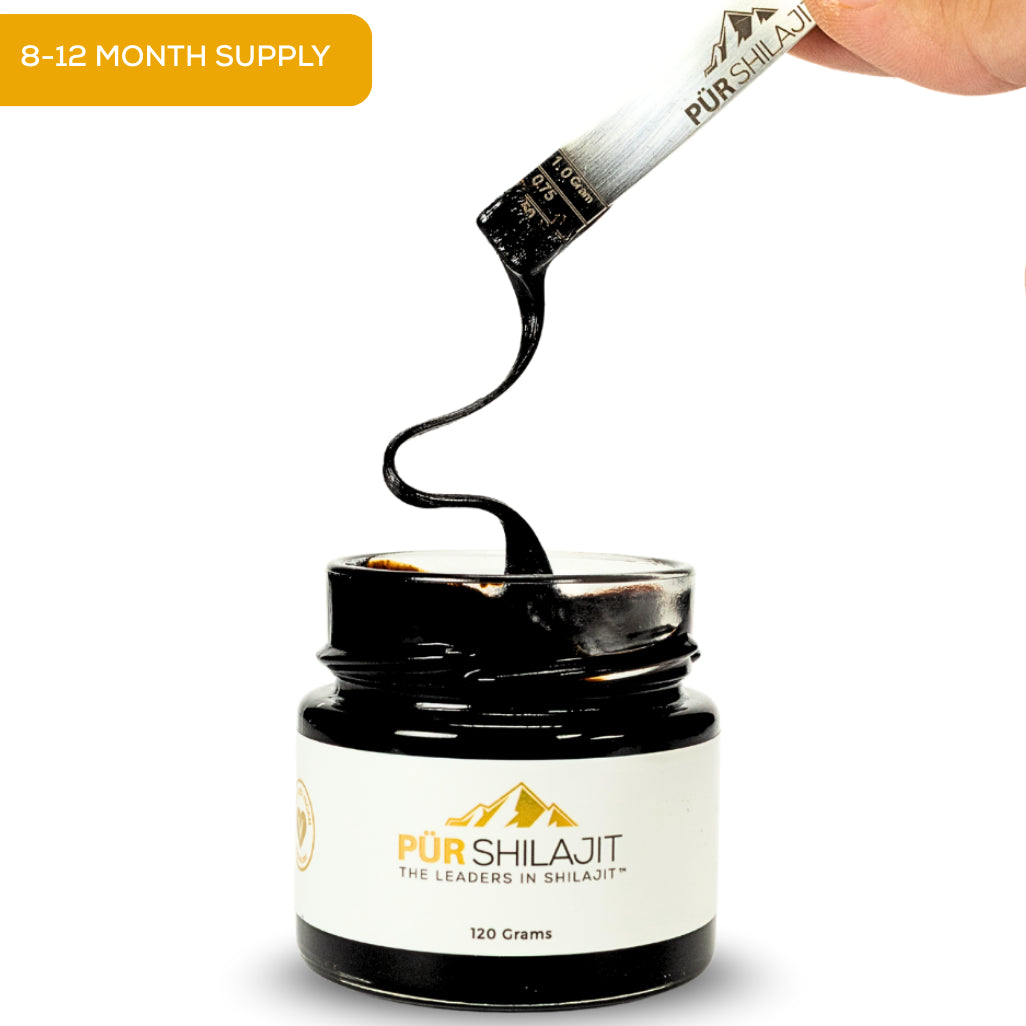
Shilajit has its own simple math. Resin is 300 to 500 mg daily, about 0.33 g, roughly pea-sized. Tablets are 2 a day (0.4 g), binder-free. Daily Drive is 1 vegan cap (500 mg) a day. A 120 g jar of resin works out to about $0.57 a day.
5. The job each one does in your routine
A multivitamin is built to cover a defined list of nutrients at defined amounts. That's its job, and the panel tells you how it does it.
Shilajit is a traditional mountain resin people have kept in their routines for centuries, taken as a small daily ritual. It isn't a vitamin source, and it isn't trying to be one. That's why "which one?" is usually the wrong question. The better one is "what is each doing for me?"
The Pür proof
We named the company Pür for a reason. Our resin is single-source from the Altai Mountains, hand-harvested around 14,000 feet and never below 13,500, sun-dried for 70+ days, and never purified with heat. One ingredient. That's as pür as pure gets.
Every batch is tested by Eurofins, an independent ISO 17025-accredited lab network, and the reports are published by lot number. It's California Prop 65 compliant, carries 84+ trace minerals, and passes the 30-second upside-down drip test. It hardens in the cold and softens with warmth, like real resin should.
Family-owned since 2019, trusted by 155,000+ customers, and backed by a 90-day money-back guarantee.
Quick questions
Can I take shilajit and a multivitamin on the same day? Many people keep both in their routine. Follow each product's label, and check with your doctor if you take other supplements or medications.
Does shilajit replace a multivitamin? No. A multivitamin delivers specific vitamins and minerals at set amounts per its label. Shilajit is a single-ingredient mountain resin with naturally occurring trace minerals, not a vitamin formula.
Which shilajit form is easiest next to a multivitamin? Resin dissolves in warm water or tea. If you'd rather swallow everything at once, tablets (2 a day) or Daily Drive (1 cap a day) sit right next to your multi.
The founder's tip
Give each one its own anchor. My resin goes into the first warm mug of the morning, before I've touched my phone. Anything that says "take with food" on its label lives next to the breakfast plates instead. Two products, two habits I already had, and I never stand at the counter wondering whether I took something. One more thing: keep a dry spoon just for the jar. A wet spoon leaves a little moisture behind every time, and that's how a good jar gets sticky.
— Jason Reese, founder
A thank-you for reading this far: add any resin jar and The Spoon to your cart and use code RESINREPORT — the spoon's on me.
These statements have not been evaluated by the Food and Drug Administration. This product is not intended to diagnose, treat, cure, or prevent any disease. Talk to your doctor before starting any supplement if you're pregnant, nursing, or under medical care.

Written by Jason Reese