Shilajit vs. Matcha: 5 Differences (and How to Pair Them in One Morning Cup)
Short answer: Shilajit and matcha do different jobs. Matcha is powdered green tea leaf that brings caffeine and L-theanine to your morning; shilajit is a one-ingredient mountain resin that brings fulvic acid and trace minerals and isn't a source of caffeine. Nothing about one replaces the other, and plenty of people take both in the same cup.
You already know your morning cup is the one ritual you never skip. You've probably also noticed that matcha and shilajit keep showing up in the same feeds, sometimes in the same mug. Fair question, then: are they doing the same thing? They aren't, and the differences are more useful than the overlap.
Stick around for the founder's tip at the bottom; it's the exact way to get resin and matcha into one smooth cup, and there's a little thank-you waiting there too. No. 4 is the one most people never think about.
1. One grows on a tea bush. The other seeps from rock.
Matcha comes from the leaves of the tea plant, Camellia sinensis. The plants are typically shaded for a few weeks before harvest, then the leaves are dried and stone-ground into a fine powder.
Shilajit isn't grown at all. It's a resin that forms over centuries as alpine plant matter breaks down in mountain rock, then seeps out in warm months. Ours is hand-harvested in the Altai Mountains around 14,000 feet, never below 13,500.
2. Caffeine: matcha has it, shilajit doesn't
This is the big one for your schedule. Matcha contains caffeine, and because you drink the whole ground leaf, a serving can carry a real amount of it. Check the label for the figure on yours.
Shilajit is not a caffeine source. That's why people who are cutting back on caffeine, or who take something in the afternoon, often reach for resin instead of a second cup. But that's only half of it.
3. What each one actually brings
Matcha is best known for L-theanine, an amino acid found in tea, and for green tea catechins. That pairing is a big part of why matcha drinkers describe it differently from coffee.
Shilajit brings fulvic acid and minerals. Every Pür batch shows 84+ trace minerals and is tested by Eurofins, an independent ISO 17025-accredited lab network. Different compounds, different reasons to take them.
| Pür Shilajit Resin | Matcha | |
|---|---|---|
| Source | Mountain resin, Altai, ~14,000 ft | Shade-grown tea leaf, stone-ground |
| Known for | Fulvic acid, 84+ trace minerals | L-theanine, catechins |
| Caffeine | None | Yes, per the label |
| Daily serving | 300 to 500 mg (about a pea-sized 0.33 g) | Usually a gram or more of powder, per the label |
| Ingredients | One. Nothing added | Pure matcha is one; lattes and mixes vary |
| Quality proof | Lab reports published by lot number | Grade names and origin on the label |
4. The "grade" on the label is doing a lot of work
Matcha is sold as "ceremonial" or "culinary" grade. Those are useful hints about color, texture and intended use, but they're trade terms, not a regulated standard. Shilajit labels have the same habit with words like "pure" and "premium."
The move is the same for both: look past the grade word to what's documented. For tea, that's harvest and origin details. For shilajit, it's a lab report tied to your lot number. Here's where ours live.
5. Serving size and what a day really costs
Matcha is a scoop of powder whisked into liquid, and how much a day costs depends heavily on the tin and how generous your scoop is.
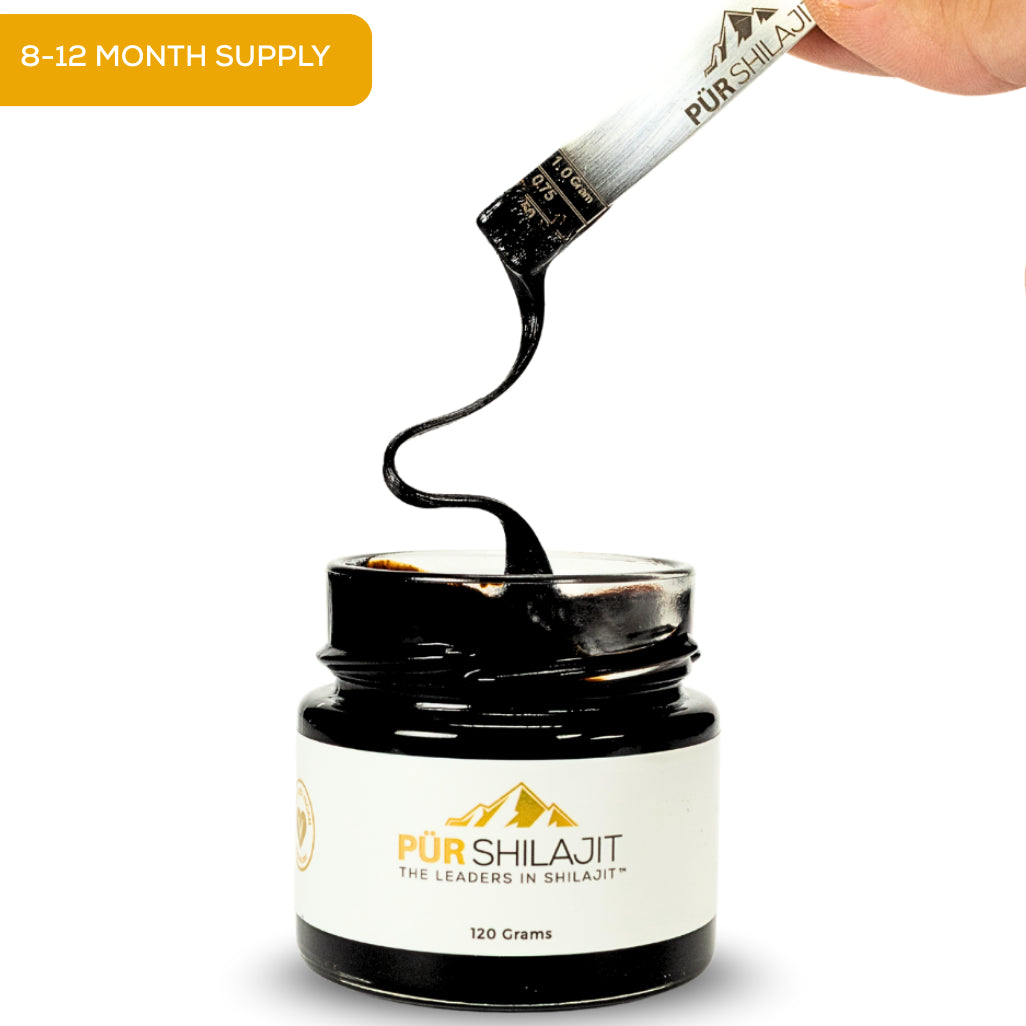
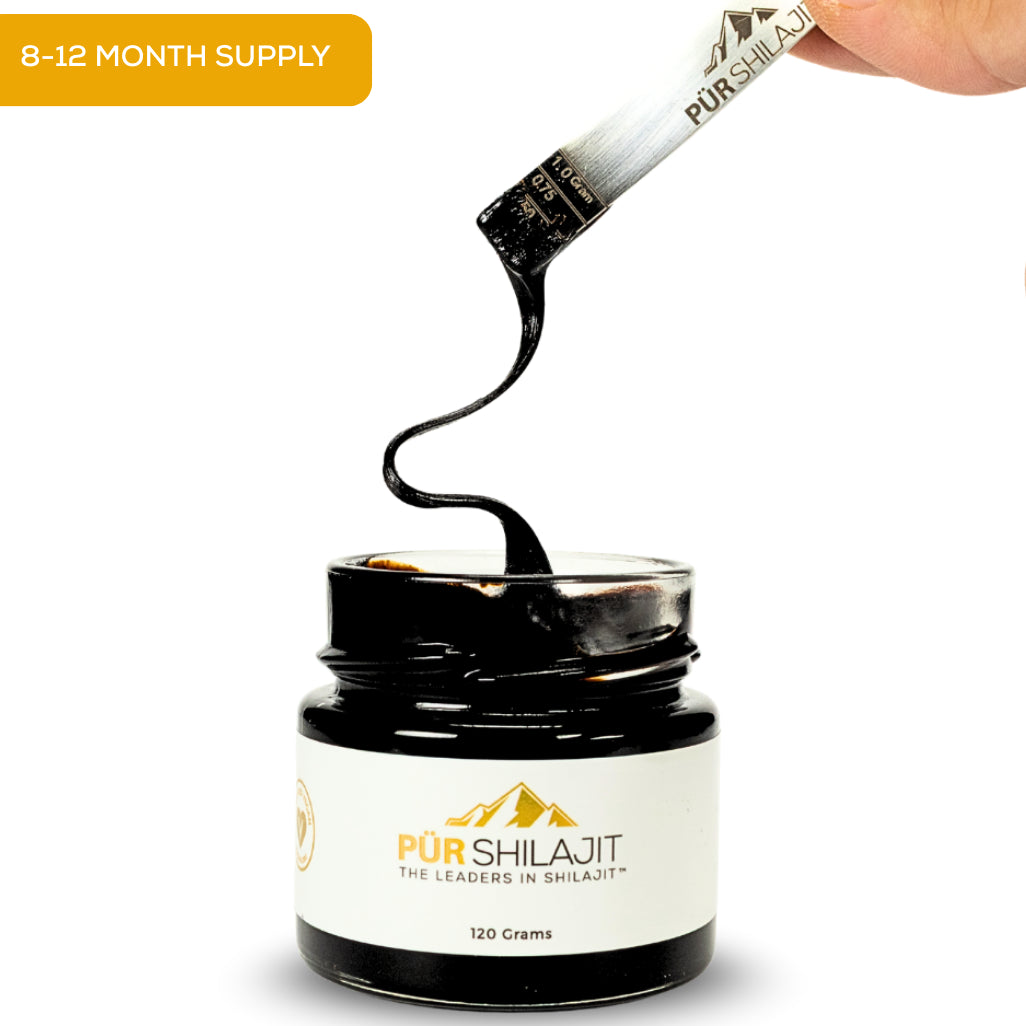
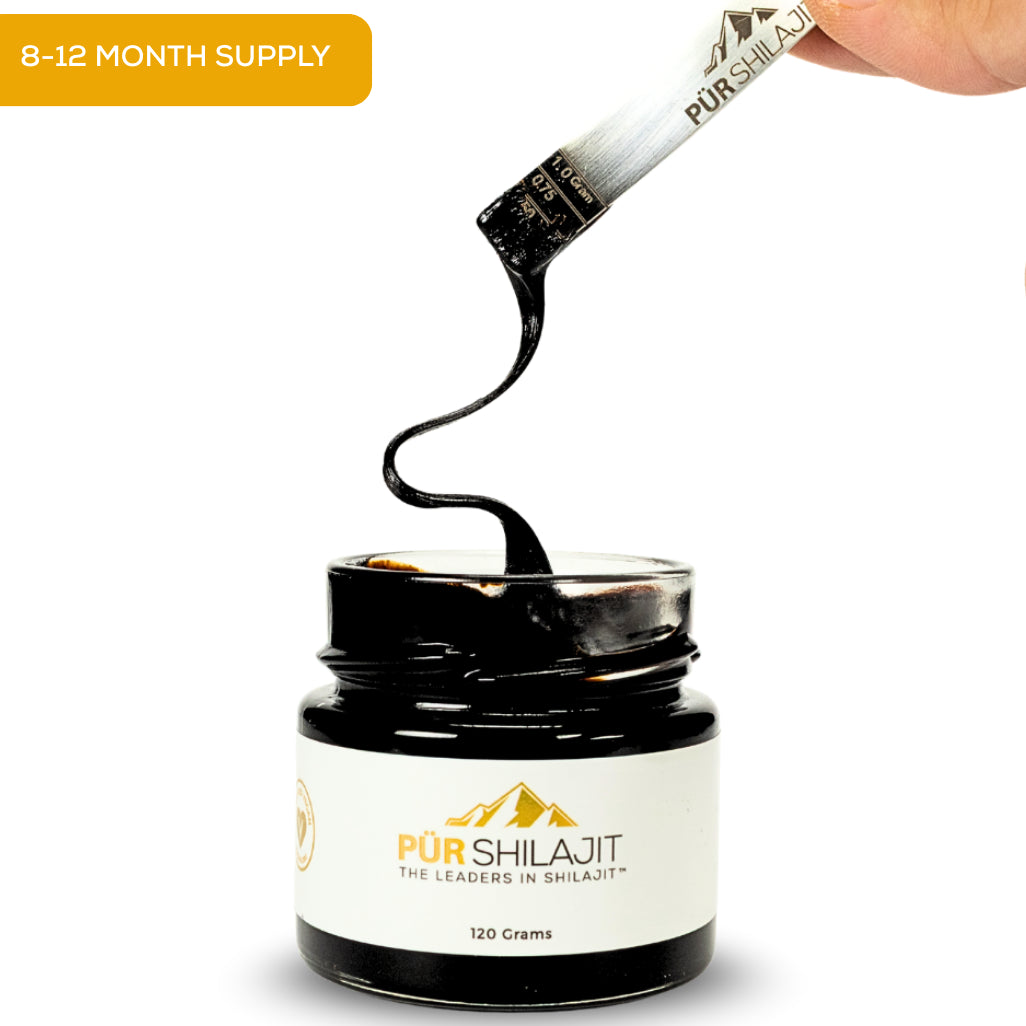
Shilajit is a tiny amount. A 120 g jar of Pür resin is $209 at list price, which works out to about $0.57 a day at a typical serving. The full breakdown across every form is in our cost-per-day math.
The Pür proof
We named the company Pür for a reason. Our resin is single-source from the Altai Mountains, hand-harvested around 14,000 feet, sun-dried for 70+ days and never purified with heat. No molasses, no water, nothing added: one ingredient.
It passes the 30-second upside-down drip test, hardens in the cold and softens with warmth. Every batch goes to Eurofins, and the reports are published by lot number. It's California Prop 65 compliant, from a family-owned company that's been doing this since 2019 for 155,000+ customers.
If it doesn't earn a spot in your morning, our 90-day money-back guarantee has you covered. As pür as pure gets, with the paperwork to prove it. See the resin.
Quick questions
Can you mix shilajit into matcha? Yes. Dissolve the resin in a little warm water first, then add it to your matcha. It blends in rather than sitting in a lump.
Does shilajit have caffeine like matcha? No. Shilajit is a mineral-rich resin and isn't a source of caffeine, so it doesn't add to the caffeine already in your matcha.
Should I take shilajit instead of matcha? They aren't substitutes. Matcha is a tea you drink for its caffeine and L-theanine; shilajit is a daily resin people take for its fulvic acid and trace minerals. Many people keep both.
The founder's tip
Here's how I make the two play nice. Before I touch the whisk, I drop my pea-sized piece of resin into about two tablespoons of warm water and let it sit while I sift the matcha. Thirty seconds of stirring and it's fully dissolved. Then I whisk the matcha in the same bowl with water that's hot but not boiling, which is how most tea folks recommend making it anyway. The resin's earthy note actually rounds out the grassy edge of the tea. One bowl, one spoon, one ritual. And keep that spoon dry when it goes back in the jar; a wet spoon is the fastest way to a sticky lid.
— Jason Reese, founder
A thank-you for reading this far: add any resin jar and The Spoon to your cart and use code RESINREPORT — the spoon's on me.
These statements have not been evaluated by the Food and Drug Administration. This product is not intended to diagnose, treat, cure, or prevent any disease. Talk to your doctor before starting any supplement if you're pregnant, nursing, or under medical care.

Written by Jason Reese