Shilajit vs. Cordyceps: 5 Differences (and the Mountain Story They Share)
Short answer: Shilajit and cordyceps aren't the same kind of thing. Shilajit is a mineral-rich resin that seeps from high mountain rock; cordyceps is a fungus, and most cordyceps supplements today are cultivated rather than wild-harvested. They come in different formats, carry different label details, and many people simply keep both in the same morning cup.
You already know the mushroom aisle has exploded. Mushroom coffee, mushroom gummies, mushroom everything, and cordyceps is usually somewhere on the label. What most people don't know is how differently it's made from the resin in a shilajit jar, and that difference changes what you should check before you buy either one.
Stick around for the founder's tip at the bottom; there's a little thank-you waiting there too. No. 4 is the one most people skip.
1. One comes from rock, one is a fungus
Shilajit forms over centuries as alpine plant matter breaks down and is pressed into mountain rock. It seeps out as a dark, sticky resin that carries trace minerals and fulvic acid.
Cordyceps is a genus of fungi. The famous wild species grows on insect larvae on high plateaus, which is part of why it became legendary, and expensive.
That's the mountain story they share: both earned their reputations high up, where very little grows. But one is a mineral resin and the other is a mushroom. That's the first fork in the road.
2. Where they come from today
Real shilajit still has to be gathered from the mountain. Ours is hand-harvested in the Altai Mountains around 14,000 feet, never below 13,500.
Wild cordyceps is rare and costly, so most cordyceps supplements are cultivated. You'll usually see Cordyceps militaris grown as fruiting bodies, or a strain grown as mycelium by fermentation. Both are common, legitimate ways to make it at scale.
But that's only half of it. How it's grown shows up on the label, which brings us to format.
3. Format and serving size
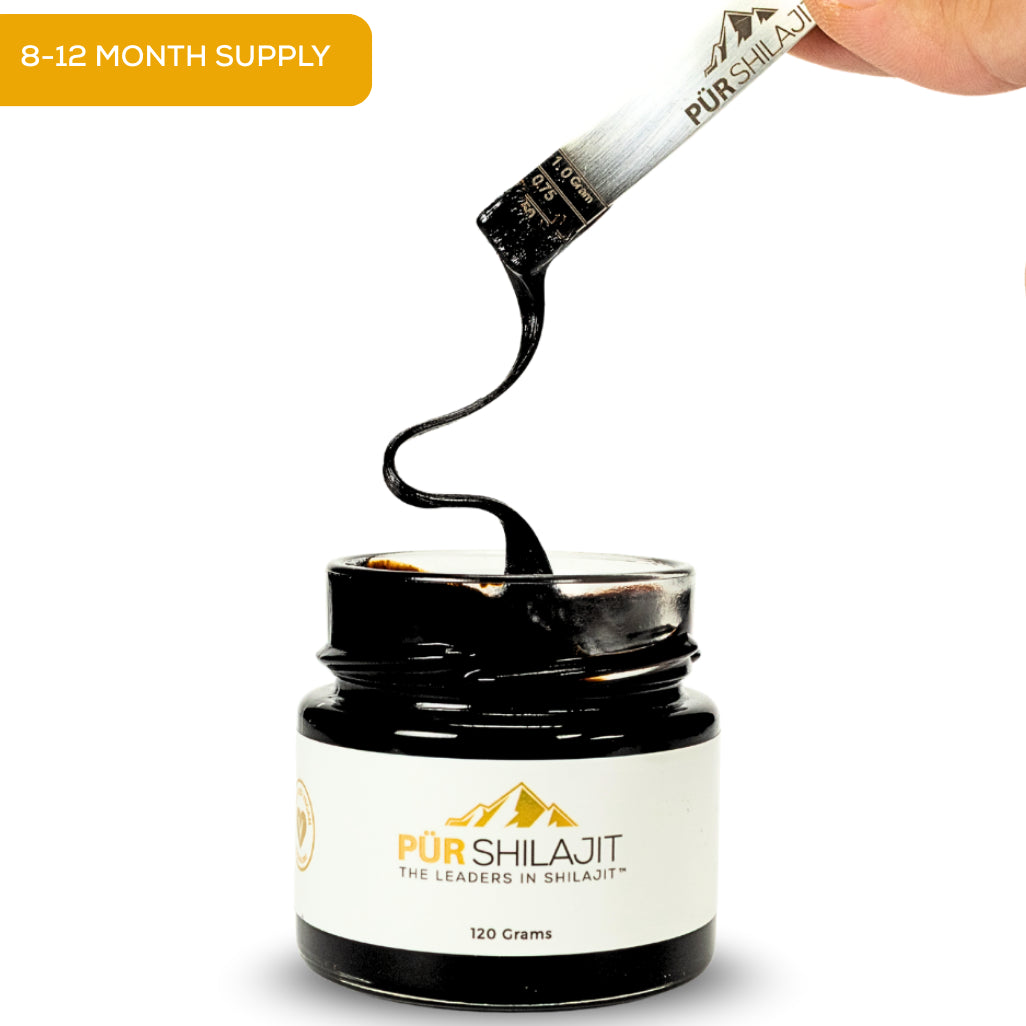
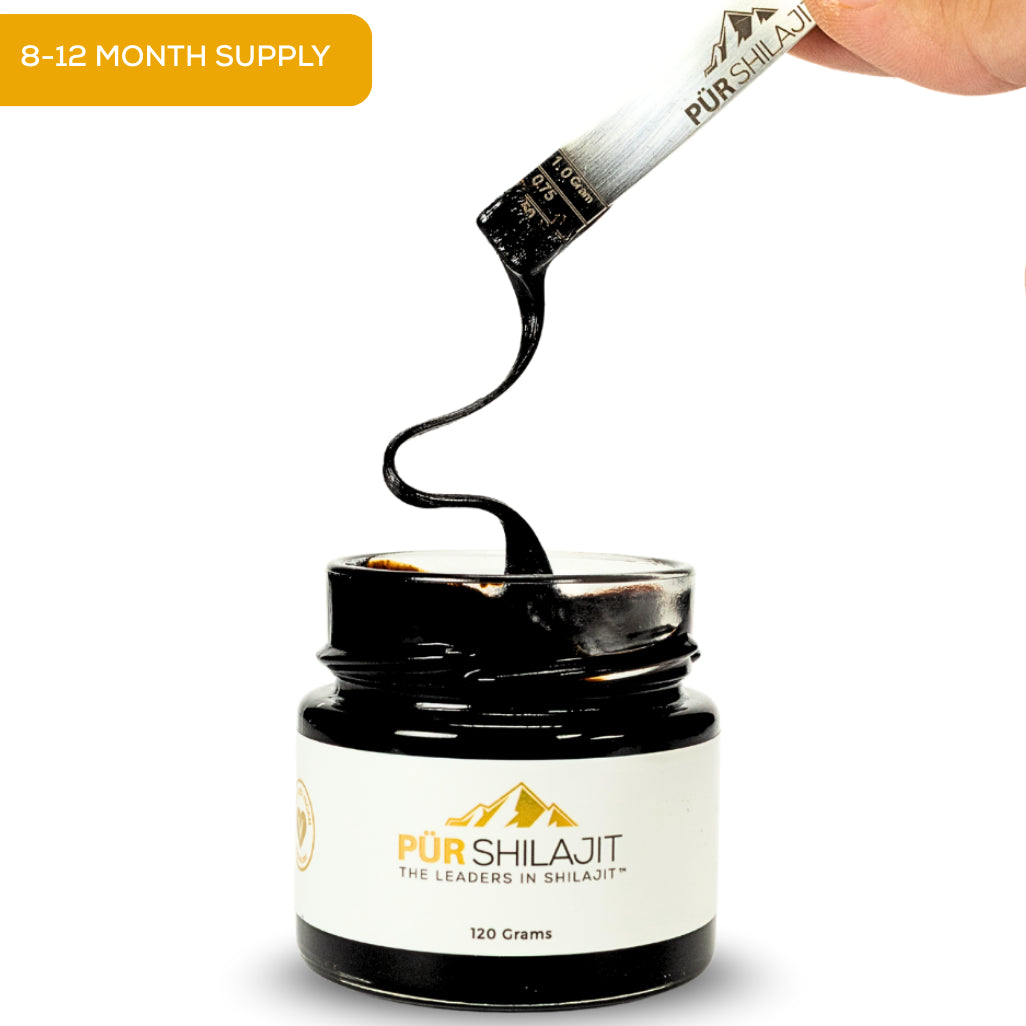
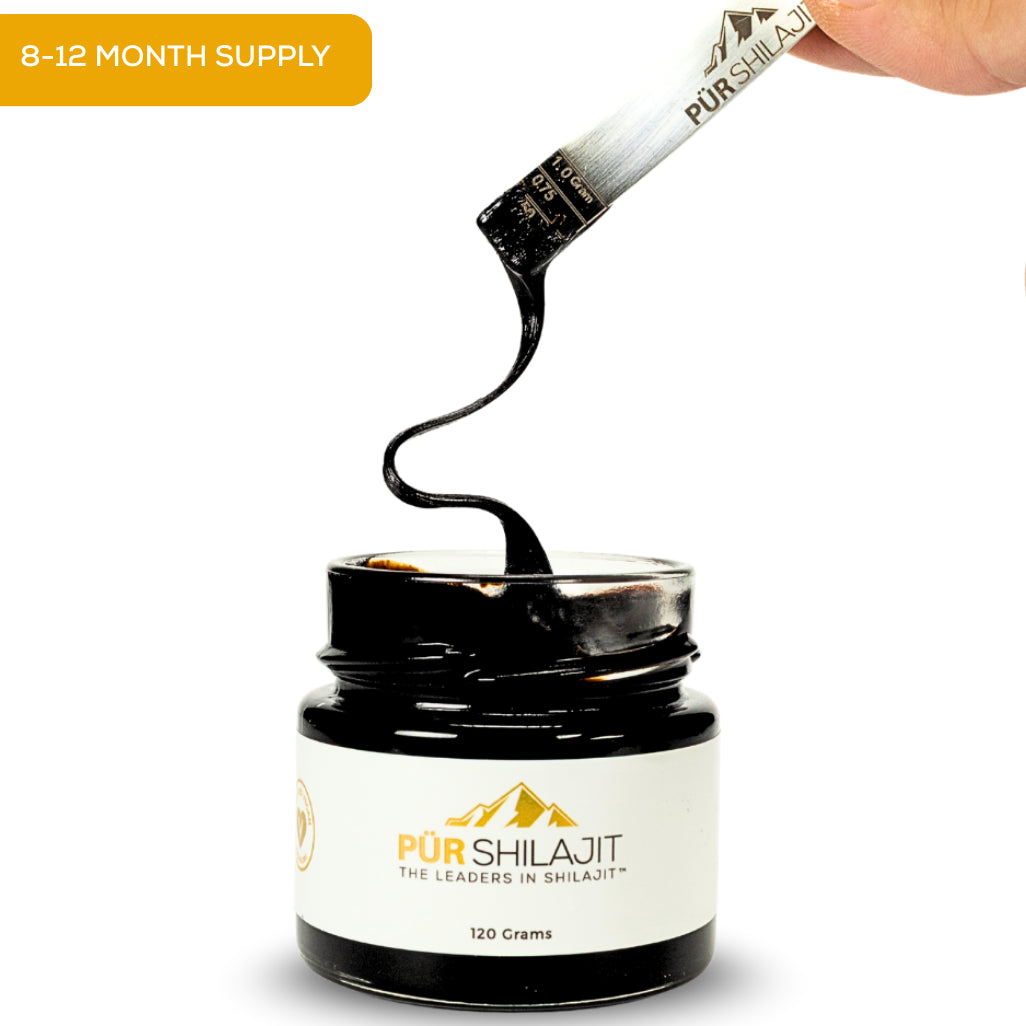
Shilajit resin is taken in tiny amounts: about a pea-sized portion, 300 to 500 mg, dissolved in warm water or tea. Tablets and capsules are the grab-and-go versions.
Cordyceps usually comes as a powder, a capsule, a liquid extract, or blended into coffee or cocoa. Serving size varies a lot, so go by the amount per the label.
| Shilajit resin | Cordyceps | |
|---|---|---|
| What it is | Mineral-rich resin from mountain rock | A fungus (mushroom) |
| How it's sourced | Hand-harvested from the mountain | Mostly cultivated (fruiting body or mycelium) |
| Common formats | Resin, tablets, capsules | Powder, capsules, extracts, coffee blends |
| Typical serving | 300 to 500 mg (pea-sized) | Varies; per the label |
| Label details worth reading | Origin, ingredient list, lab report by lot | Species, fruiting body vs. mycelium, what it's grown on, beta-glucan amount |
4. What the label should tell you (the one people skip)
Here's the part most people skip, for both products.
For shilajit, look for a named single source, a one-ingredient list, and a third-party lab report you can match to your jar's lot number. Our guide to single-source vs. blended shilajit walks through it.
For cordyceps, look for the species name, whether it's fruiting body or mycelium, and what the mycelium was grown on. Mycelium is often grown on grain, so some of the powder can be that grain. A labeled beta-glucan amount tells you more than the word "mushroom" alone.
Same rule for both: specifics beat adjectives.
5. Can you keep both in one routine?
Plenty of people do. Because they're different categories, one doesn't stand in for the other, and they fit naturally into the same warm morning drink.
The simple way: dissolve your shilajit first, then add your mushroom coffee or cordyceps powder at the serving on its label. If you take medication or have a health condition, check with your doctor before adding either.
The Pür proof
We named the company Pür for a reason. Our resin is one ingredient: single-source Altai shilajit, hand-harvested around 14,000 feet, sun-dried for 70+ days, and never purified with heat. No molasses, no water, nothing added.
Every batch is tested by Eurofins, an independent ISO 17025-accredited lab network, and we publish the reports by lot number on our lab results page. It's California Prop 65 compliant and carries 84+ trace minerals.
It passes the 30-second upside-down drip test, hardens in the cold and softens with warmth. We've been family-owned since 2019, 155,000+ customers have trusted us, and every jar is backed by our 90-day money-back guarantee. As pür as pure gets.
Quick questions
Is shilajit a mushroom like cordyceps? No. Shilajit is a mineral-rich resin that forms in mountain rock from ancient plant matter. Cordyceps is a fungus.
Can I take shilajit and cordyceps together? Many people keep both in one morning routine since they're different categories. Follow each product's serving size, and talk to your doctor first if you're on medication or under medical care.
Which is cheaper per day? It depends on the cordyceps product and its serving per the label. Our 120 g shilajit resin jar is $209 at list, which works out to about $0.57 a day.
The founder's tip
If you drink mushroom coffee, don't drop the resin straight into the full mug. Sticky resin plus powder makes little clumps at the bottom. I put my pea-sized portion in the empty mug with a couple tablespoons of warm water, stir for ten seconds until it's gone, then pour the coffee over it. Smooth every time, and nothing left stuck to the spoon.
— Jason Reese, founder
A thank-you for reading this far: add any resin jar and The Spoon to your cart and use code RESINREPORT — the spoon's on me.
These statements have not been evaluated by the Food and Drug Administration. This product is not intended to diagnose, treat, cure, or prevent any disease. Talk to your doctor before starting any supplement if you're pregnant, nursing, or under medical care.

Written by Jason Reese