Shilajit vs. Chaga: 5 Differences (and the Morning Tea Ritual They Share)
Short answer: Shilajit is a mineral-rich resin that seeps from high mountain rock; chaga is a fungus that grows on birch trees in cold northern forests. They come from different worlds, are sold in different forms and get checked in different ways. Neither replaces the other, and plenty of people keep both in the same morning routine.
You already know the mushroom aisle has exploded. Chaga, lion's mane, cordyceps: every jar promises a ritual. You also know shilajit isn't a mushroom at all, even when it sits on the same shelf. What nobody tells you is how differently the two are made, and what to look for on each label.
Stick around for the founder's tip at the bottom; there's a little thank-you waiting there too. No. 5 is the one most people skip.
1. One grows on a tree, one seeps from rock
Chaga (Inonotus obliquus) is a fungus that grows mostly on birch trees in cold climates across northern Europe, Russia, Canada and the northern US. On the bark it looks like a lump of burnt charcoal, with a rusty orange interior.
Shilajit forms over centuries as plant matter breaks down and gets pressed into mountain rock. Ours is hand-harvested in the Altai Mountains around 14,000 feet, never below 13,500.
2. What's inside is a different story
Chaga is best known for its polysaccharides, including beta-glucans, and for the dark pigments that give its tea that deep color.
Shilajit is known for fulvic acid and minerals. Our Eurofins reports show 84+ trace minerals. Different compounds, different profiles, which is why "which one is better" is the wrong question.
3. How each one gets from nature to your cup
Raw chaga is woody and tough. Its cell walls are built from chitin, so it's usually sold as chunks for simmering, ground powder, or a hot-water or dual extract.
Shilajit, done right, needs no extraction step at all. Ours is sun-dried for 70+ days and never purified with heat. No molasses, no water, nothing added. One ingredient.
But that's only half of it.
4. Serving size and daily rhythm
Chaga servings vary widely by form. A chunk simmered for tea is a very different thing from a concentrated extract, so follow the amount per the label. Chaga is also naturally high in oxalates; if you've been told to watch oxalates, ask your doctor before making it a daily habit.
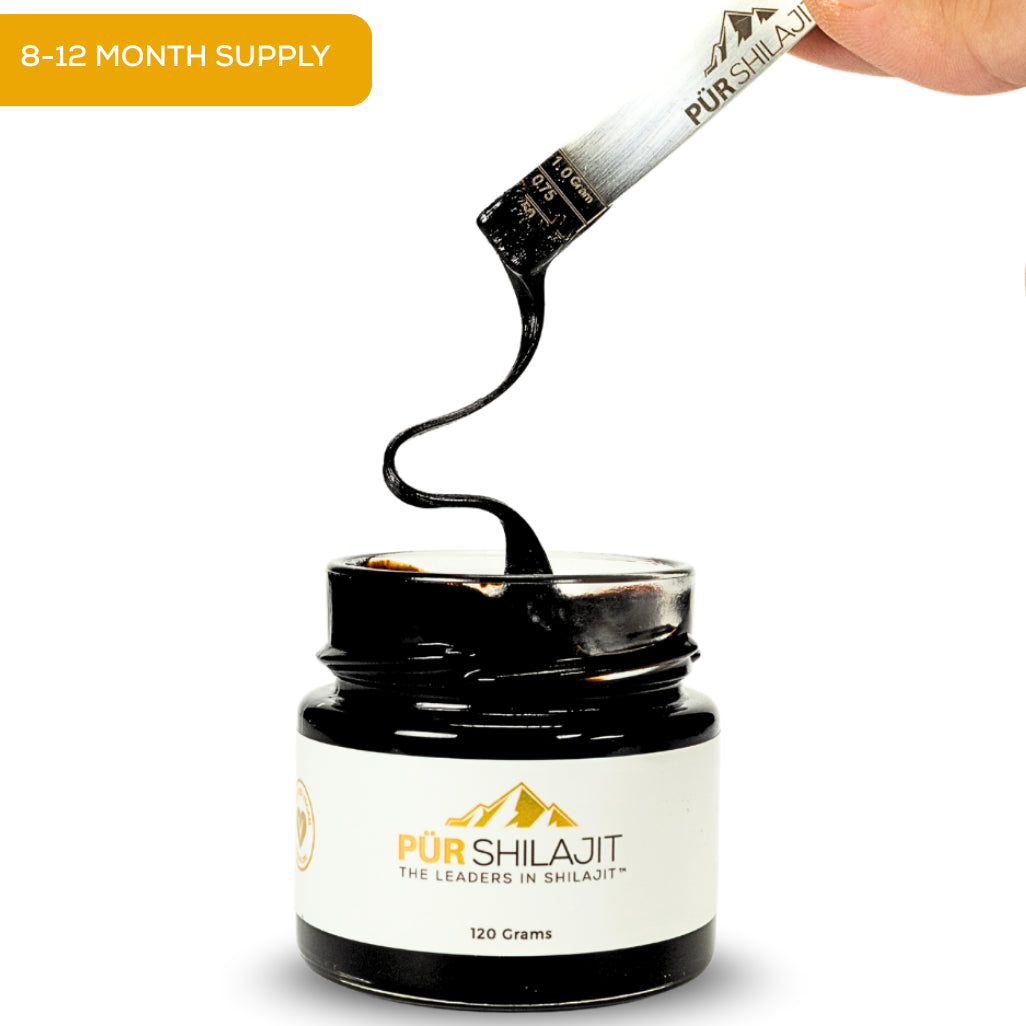
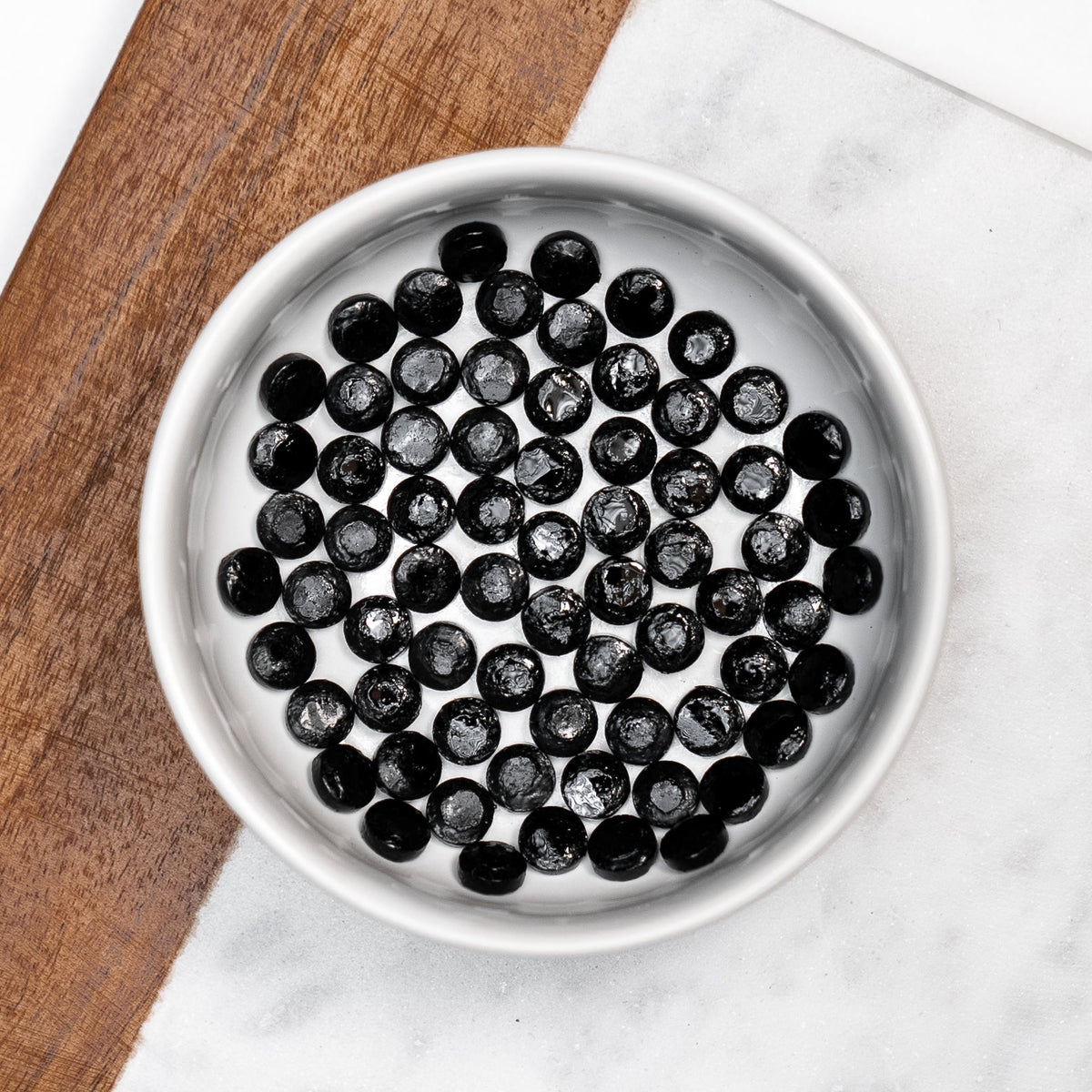
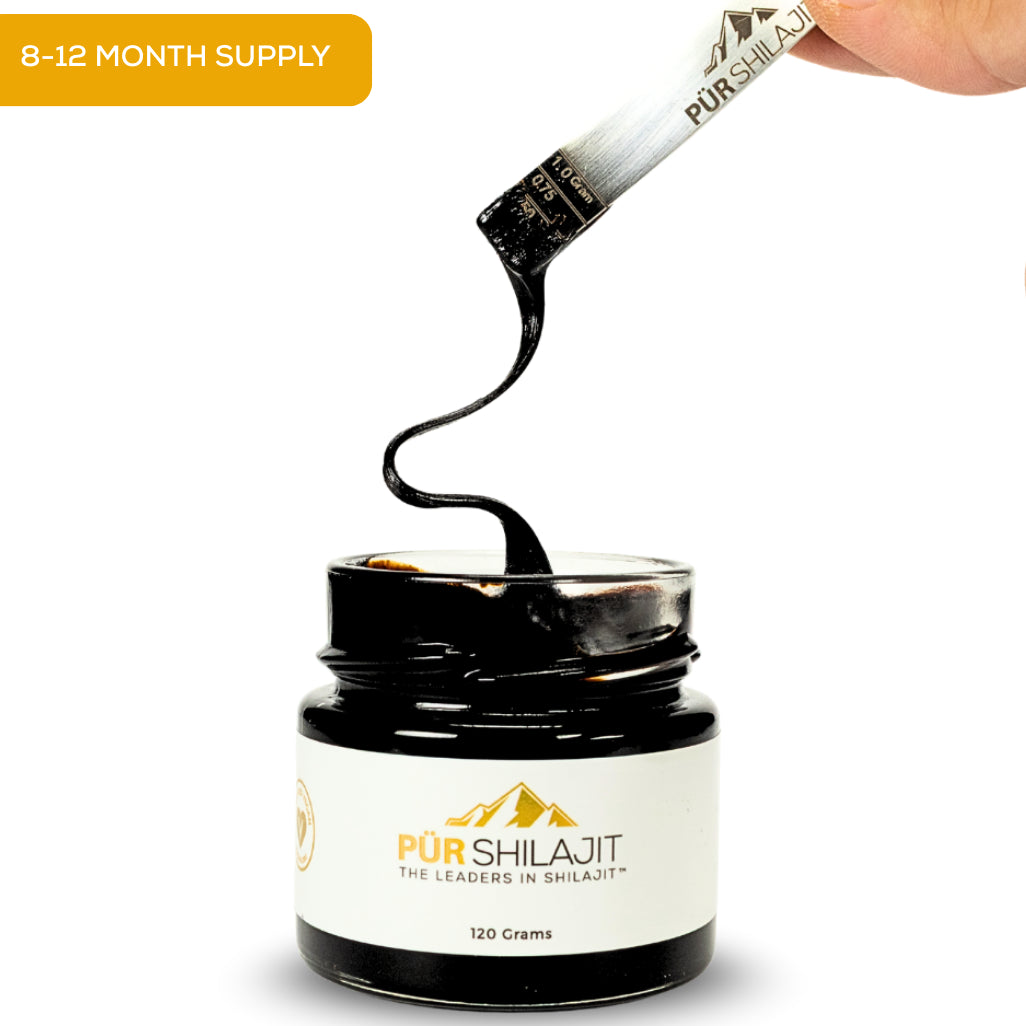
Shilajit resin is simple: 300 to 500 mg a day, about a pea-size piece (about 0.33 g). Prefer not to measure? Two binder-free tablets (0.4 g) cover the same daily serving.
| Shilajit (Pür) | Chaga | |
|---|---|---|
| Source | Resin from Altai mountain rock, around 14,000 ft | Fungus growing on birch trees in cold climates |
| Known for | Fulvic acid and 84+ trace minerals | Polysaccharides, including beta-glucans |
| Common forms | Resin, tablets, capsules | Chunks, powder, hot-water or dual extracts |
| Processing | Sun-dried 70+ days, never heat-purified | Often hot-water or alcohol extracted |
| Daily serving | 300 to 500 mg resin | Per the label (varies by form) |
| What to verify | A lab report matched to your lot number | Wild chaga vs. mycelium on grain; extraction method |
5. The label check most people skip
For chaga, look for two things. First, is it the chaga itself, or mycelium grown on grain, which can carry a lot of grain starch? Second, does it state an extraction method or ratio? A good label says both plainly.
For shilajit, look for a lab report you can match to the lot number on your jar, from an accredited lab. A badge without a lot number doesn't tell you which batch was tested. Want to go deeper? Here's the full 8-point scorecard.
The Pür proof
We named the company Pür for a reason. Every jar is single-source resin from the Altai Mountains, hand-harvested around 14,000 feet, sun-dried for 70+ days and never purified with heat. One ingredient, nothing added.
Every batch is tested by Eurofins, an independent ISO 17025-accredited lab network, and we publish the reports by lot number on our lab results page. It's California Prop 65 compliant, passes the 30-second upside-down drip test, hardens in the cold and softens with warmth.
Family-owned since 2019, trusted by 155,000+ customers and backed by a 90-day money-back guarantee. The 120 g resin jar works out to about $0.57 a day. As pür as pure gets.
Quick questions
Can you take shilajit and chaga together? Many people keep both in one morning routine, since they come from different sources and are sold in different forms. Start one at a time so you know how each sits with you, and talk to your doctor first if you take medication or are under medical care.
Is shilajit a mushroom? No. Shilajit is a resin that seeps from mountain rock; chaga is a fungus. They sometimes share a shelf, but they're entirely different things.
Can I stir shilajit into chaga tea? Yes. Resin dissolves easily in warm liquid, so a mug of chaga tea makes a natural carrier. Let it cool to a comfortable drinking temperature first.
The founder's tip
Here's what I do on cold mornings. I brew the tea, then let the mug sit for two or three minutes before the shilajit goes in. It doesn't need to be boiling; warm is plenty to melt a pea-size piece in about a minute of stirring. And I keep one dry spoon just for the jar, so no moisture ever goes back in with it.
Small habits, done every single day, beat a perfect plan you only follow on Mondays.
— Jason Reese, founder
A thank-you for reading this far: add any resin jar and The Spoon to your cart and use code RESINREPORT — the spoon's on me.
These statements have not been evaluated by the Food and Drug Administration. This product is not intended to diagnose, treat, cure, or prevent any disease. Talk to your doctor before starting any supplement if you're pregnant, nursing, or under medical care.

Written by Jason Reese