Shilajit History: 5 Things Mountain Cultures Knew Centuries Before the Lab Report
Short answer: Shilajit has been gathered from mountain rock for centuries. It appears in classical Ayurvedic texts under the Sanskrit name shilajatu, and across Central Asia, Russia and the Altai it is known as mumijo. The traditions differ in detail, but they share a pattern: a small daily amount, taken in warm liquid, gathered by hand from high cliffs.
You already know shilajit isn't a lab invention. It has the look of something old: dark, sticky, a little strange. What most people don't know is how many cultures found it on their own, gave it their own name, and landed on nearly the same way of taking it.
Stick around for the founder's tip at the bottom; there's a little thank-you waiting there too. No. 4 is the one that explains why our resin is made the way it is.
1. A name that comes from the rock itself
The Sanskrit word shilajatu is usually translated as "rock-born" or "born of the rock." That's an accurate description. Shilajit seeps from cracks in high mountain stone during warm months.
People named it for where they found it, not for what it looked like. That tells you how it was first understood: as something the mountain makes.
2. A place in classical Ayurvedic texts
Shilajit is described in classical Ayurvedic writings, including the Charaka Samhita. It sits in the category called rasayana, the Ayurvedic grouping for substances taken steadily over time as part of a daily routine.
The texts describe small amounts, often dissolved in warm milk or water. That's the same habit most people follow today, centuries later.
But that's only half of it.
3. Many names across Central Asia and the Altai
Thousands of miles north, in Central Asia, Siberia and the Altai Mountains, the same substance has a different name: mumijo (also written mumie or moomiyo). Herders and mountain families knew where it collected on cliff faces and gathered it in summer.
Two cultures, separated by mountains and languages, prized the same resin and used it the same way. That overlap is part of what makes shilajit's history worth knowing.
| Region | Common name | Traditional way of taking it |
|---|---|---|
| South Asia (Ayurveda) | Shilajatu, shilajit | Small amount in warm milk or water |
| Central Asia, Russia, Altai | Mumijo, mumie, moomiyo | Small amount dissolved in water |
| Your kitchen, today | Shilajit resin | 300 to 500 mg in warm water, tea or coffee |
4. Gathered and cleaned by hand, then dried slowly
Raw shilajit comes off the rock mixed with stone and plant debris. Every tradition had to clean it. Methods varied: some dissolved it in water, strained it, and let the sun slowly dry it back down; others used herbal decoctions and heat.
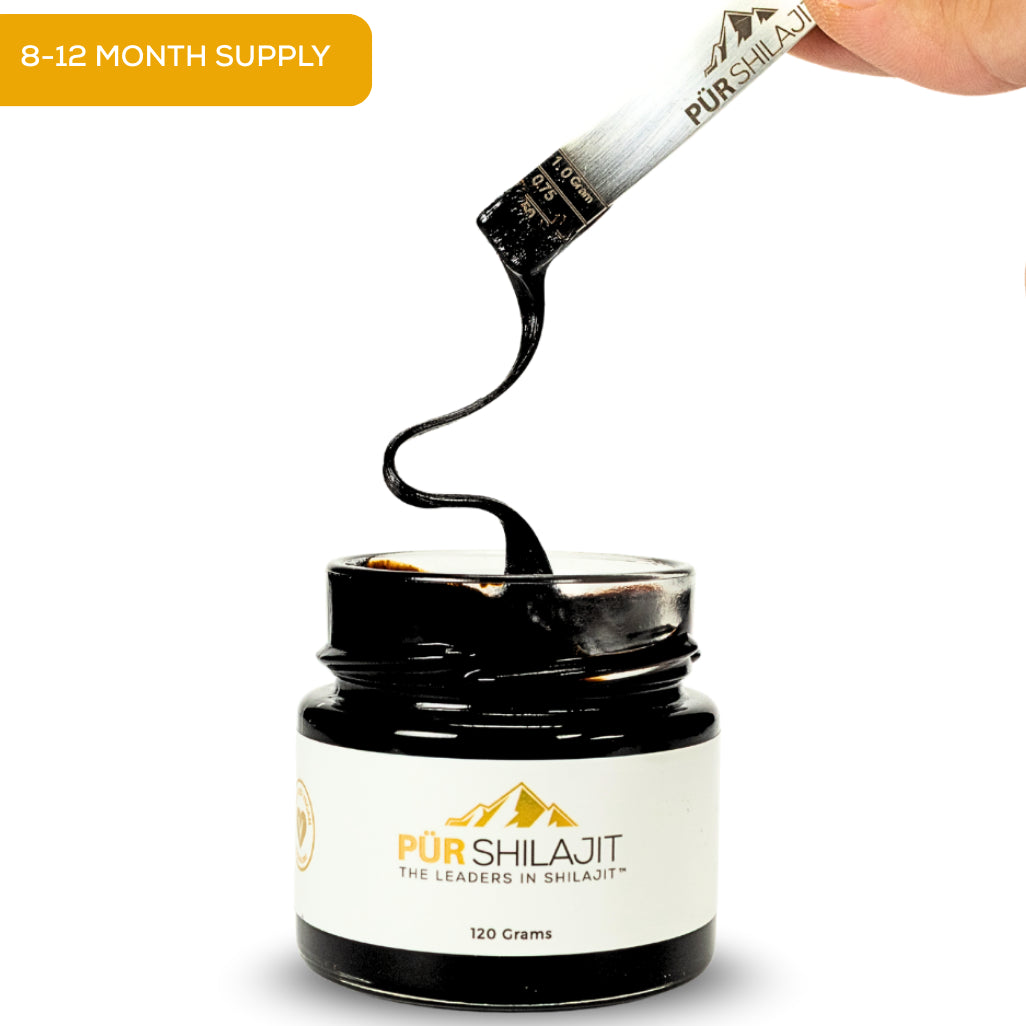
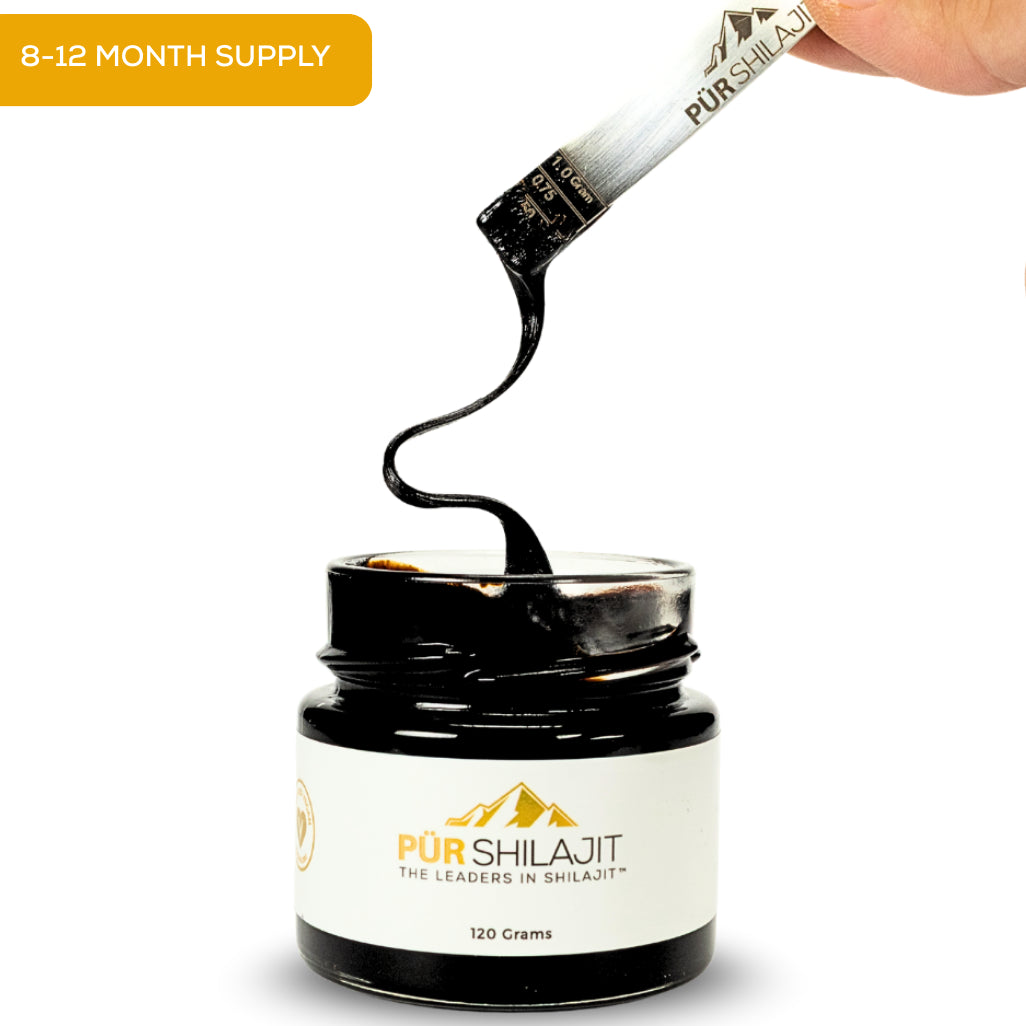
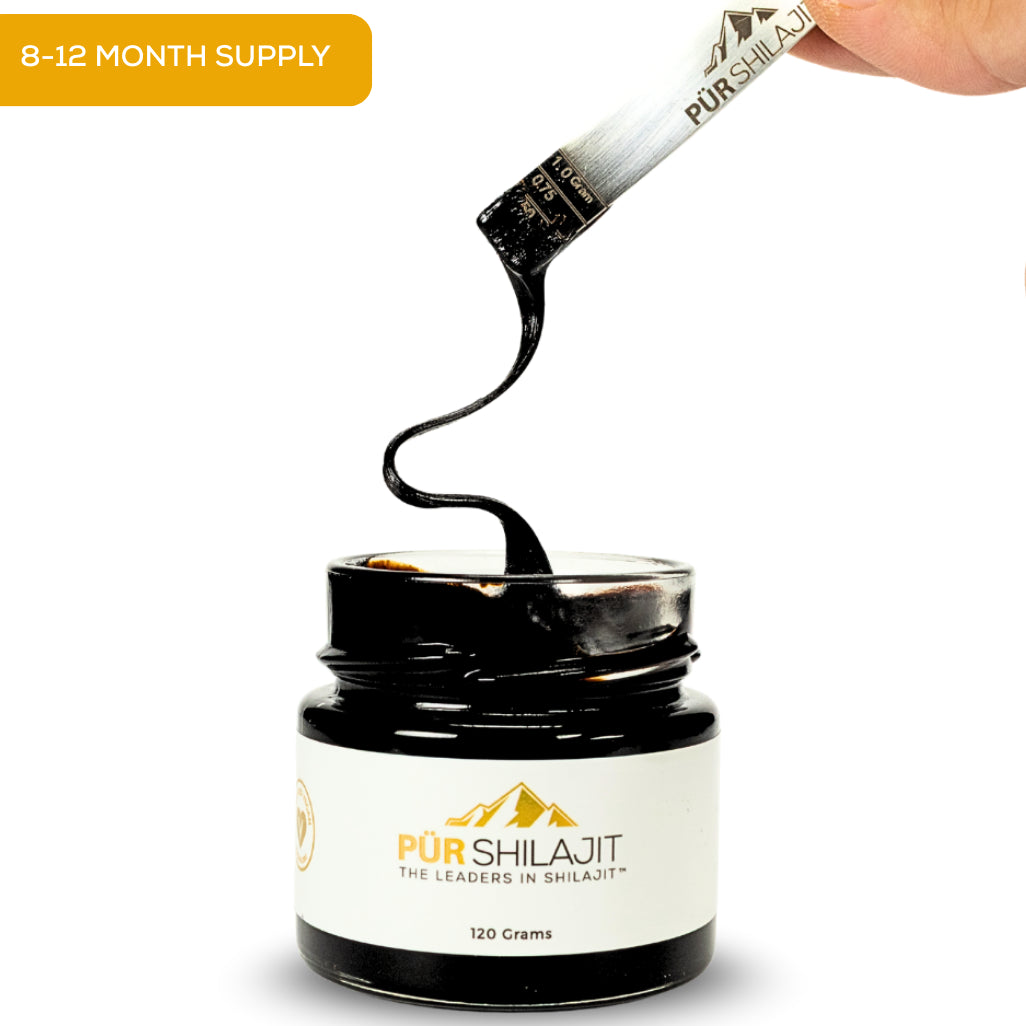
We chose the slow path. Our resin is hand-harvested in the Altai around 14,000 feet, then sun-dried for 70+ days and never purified with heat. If you want the full reasoning, we wrote about why some shilajit is purified with heat.
5. From folk tradition to a lab report
In the 20th century, researchers in the Soviet Union and elsewhere began studying mumijo in laboratories. Shilajit moved from village knowledge into published papers.
Today, trust works differently. A buyer can't walk up to the cliff. What they can do is read an independent lab report tied to the exact batch in their hands. That's the modern version of knowing your source.
The Pür proof
History is the reason shilajit exists in your cabinet. Documentation is the reason you can trust a specific jar. Here's what ours carries:
- One source: single-source resin from the Altai Mountains, hand-harvested around 14,000 feet and never below 13,500.
- One ingredient: no molasses, no water, nothing added. Sun-dried 70+ days, never heat-purified.
- Every batch tested: by Eurofins, an independent ISO 17025-accredited lab network, with reports published by lot number. California Prop 65 compliant, with 84+ trace minerals.
- The old-fashioned checks still work: it passes the 30-second upside-down drip test, hardens in the cold and softens with warmth.
- Backed for real: family-owned since 2019, 155,000+ customers, and a 90-day money-back guarantee.
We named the company Pür for a reason. The mountain cultures got the resin right; we just added the paperwork.
Quick questions
Where does the word shilajit come from? From the Sanskrit shilajatu, usually translated as "rock-born," because it seeps from mountain rock.
Is mumijo the same as shilajit? Mumijo is the name used across Central Asia, Russia and the Altai for the same kind of mountain resin. Different language, same substance.
How was shilajit traditionally taken? In small amounts, usually dissolved in warm milk or water. Today a typical serving of Pür resin is 300 to 500 mg (about 0.33 g) daily in a warm drink.
The founder's tip
The old way is still the best way to start. Every morning I put a pea-sized bit of resin in a mug, pour in a splash of hot water, and stir for about 20 seconds until it's fully dissolved. Then I top it off with tea, or let it cool and add it to coffee. No fancy gear. It's the same move people were making with warm water and a clay cup a long time before any of us showed up, and there's something I like about that.
— Jason Reese, founder
A thank-you for reading this far: add any resin jar and The Spoon to your cart and use code RESINREPORT — the spoon's on me.
These statements have not been evaluated by the Food and Drug Administration. This product is not intended to diagnose, treat, cure, or prevent any disease.

Written by Jason Reese