How Shilajit Forms in Mountain Rock: 5 Stages From Alpine Plant to the Resin in Your Jar
Short answer: Shilajit forms when alpine plant matter gets trapped in mountain rock and is slowly broken down by microbes over a very long time, picking up minerals from the stone around it. In warm months it softens and seeps out of cracks in the rock as a dark, sticky resin, which is then gathered by hand, cleaned and dried. That slow, strange origin is why real resin behaves the way it does in your jar.
You already know shilajit comes from mountains. Most people can tell you that much, and they're right. What almost nobody can tell you is how a plant ends up as a tar-dark resin oozing out of solid rock, and that story explains more about your jar than any label does.
Stick around for the founder's tip at the bottom; there's a little thank-you waiting there too. No. 4 is the one that explains why your jar changes with the seasons.
1. It starts as plant life, not rock
Shilajit begins as organic matter: mosses, lichens and small alpine plants that grow in the thin soil and cracks of high mountain slopes.
Over time, some of that material gets buried and pressed into fissures between layers of rock. That's the starting point. Everything after this is patience.
2. Microbes do the slow work
Once it's trapped, the plant matter is broken down by microbes in a process called humification, the same general process that turns fallen leaves into rich, dark soil.
This is where shilajit's signature compounds come from. Fulvic and humic substances are what's left when plant material is broken down this thoroughly. Most accounts describe the process as taking centuries, and there's no simple way to put an exact age on any one seep.
But that's only half of it.
3. The rock adds the minerals
While the organic matter breaks down, it sits pressed against stone for a very long time. Minerals from the surrounding rock become part of the material.
That's why shilajit is often described as part plant, part mountain. It's also why where it comes from matters: the rock it formed in shapes what ends up in it. Ours carries 84+ trace minerals, and the full numbers for each batch are on our published lab reports.
4. Summer warmth pushes it out of the rock
Here's the part most people never hear. In the warm months, the resin softens enough to seep out of cracks and crevices in the rock face, where it collects as dark, glossy streaks. In the cold, it firms up again.
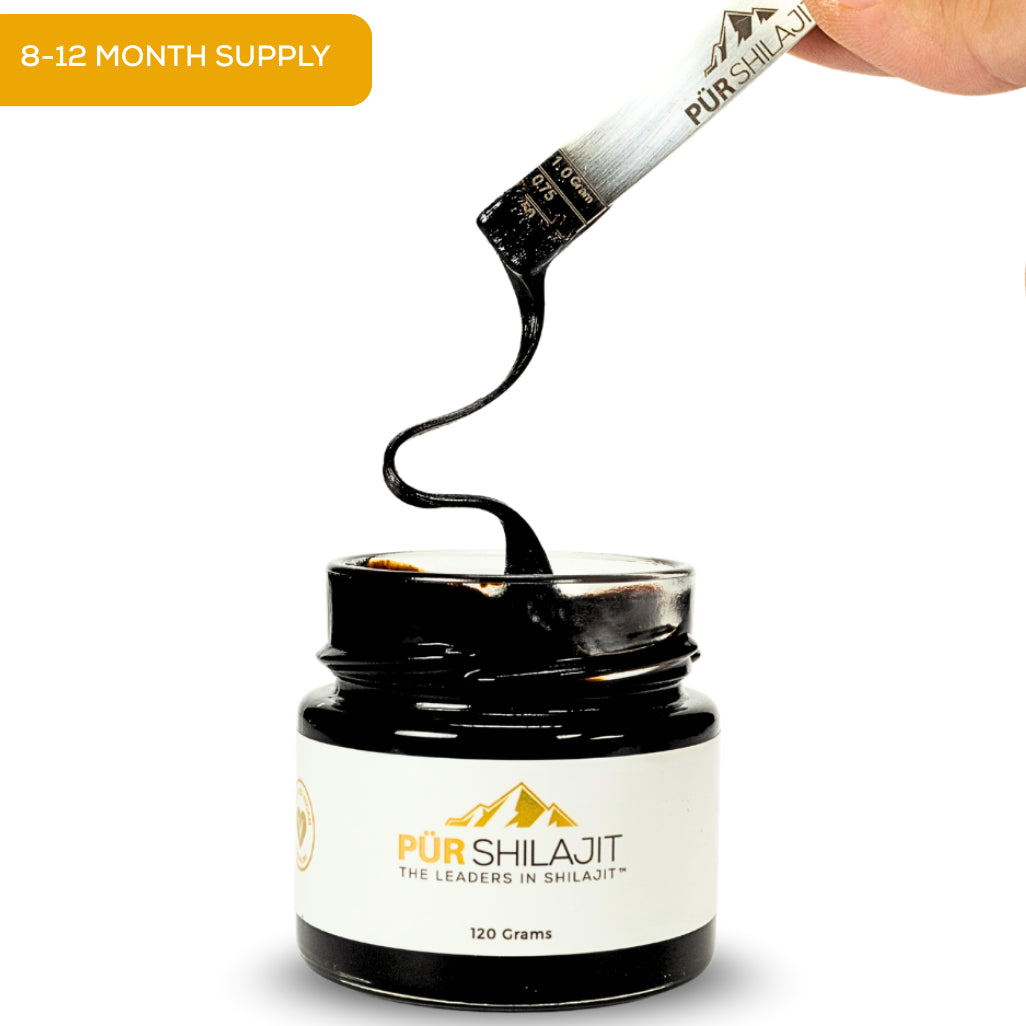
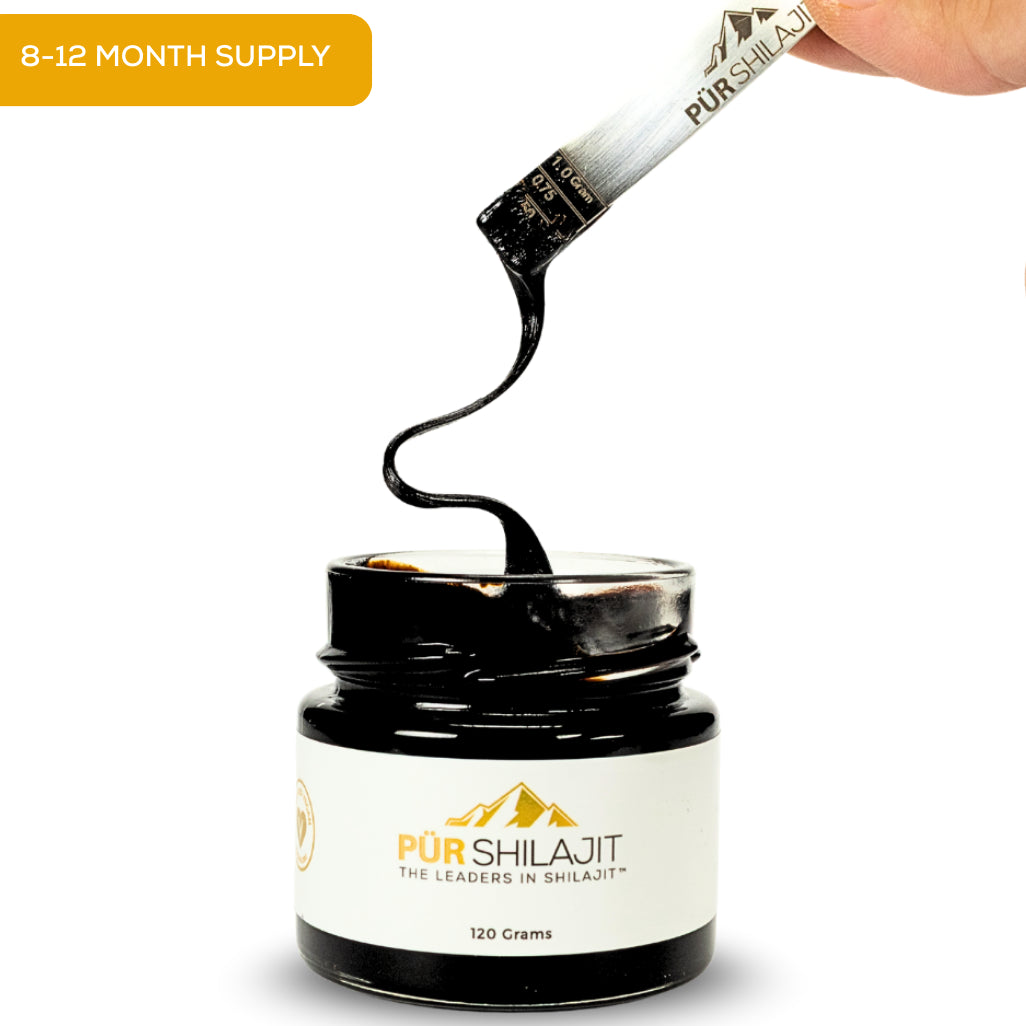
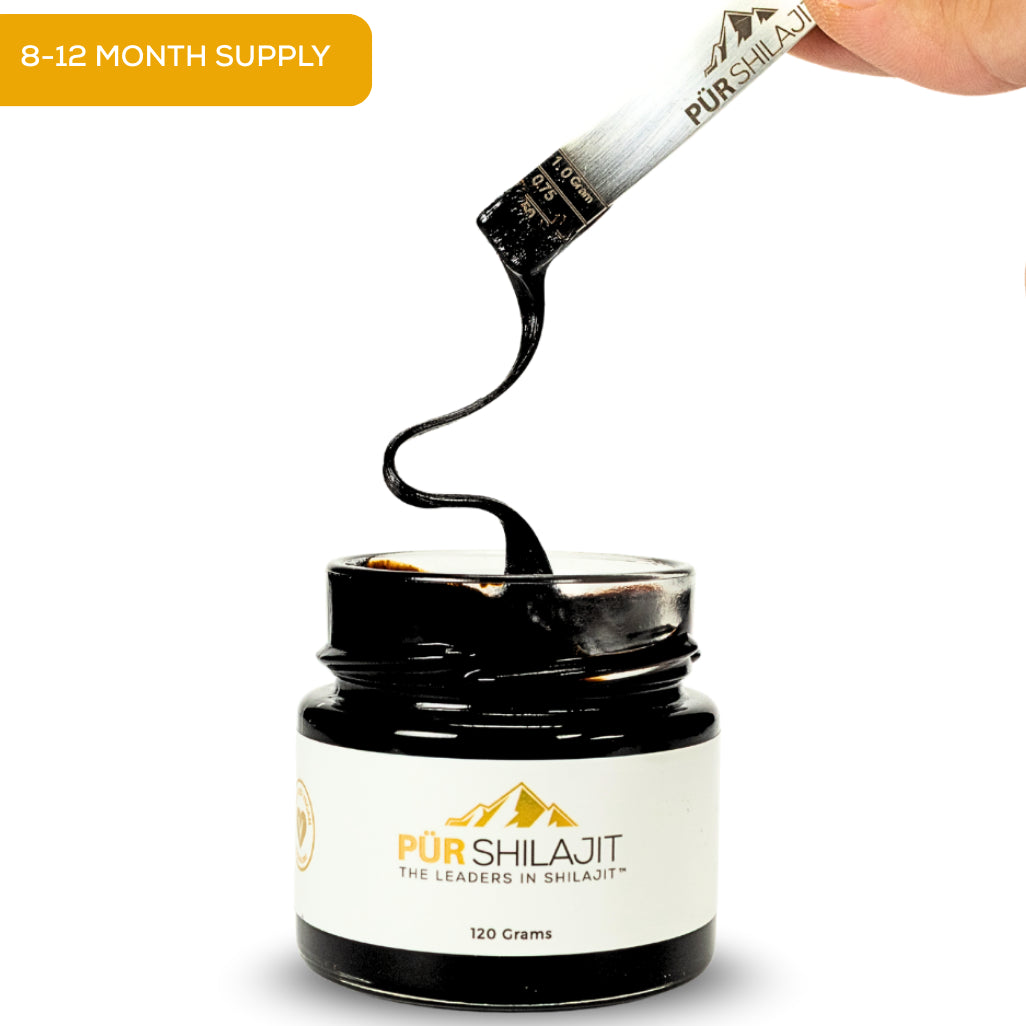
That same behavior is still there when it reaches your kitchen. Real resin hardens in the cold and softens with warmth. It's not a defect or a sign something went wrong. It's the mountain's original personality showing up on your spoon. It's also part of why real resin holds together in the 30-second drip test.
5. People finish the job by hand
Raw shilajit is gathered mixed with grit, stone and plant debris, so it has to be cleaned and the water removed before it's ready to eat.
This is the step where producers make different choices: how high they harvest, how they dry it, and whether anything gets added. Ours is hand-harvested around 14,000 feet, never below 13,500, then sun-dried for 70+ days with no heat purification and nothing added.
| Stage | What happens | What it means for your jar |
|---|---|---|
| 1. Plant life | Alpine mosses, lichens and plants get trapped in rock | Shilajit is organic in origin, not just a mineral |
| 2. Microbes | Slow breakdown (humification) over a very long time | Source of fulvic and humic substances |
| 3. Rock contact | Minerals from surrounding stone become part of it | Trace minerals, which is why source matters |
| 4. Seasonal seep | Warmth softens it and it seeps from cracks | Hardens in cold, softens with warmth at home |
| 5. Harvest and finish | Gathered by hand, cleaned, dried | Ask how it was harvested and dried, then check the lab report |
The Pür proof
Nature takes a very long time to make shilajit. Our job is to change it as little as possible on the way to you. We named the company Pür for a reason.
Our resin is single-source from the Altai Mountains, hand-harvested around 14,000 feet and never below 13,500. It's sun-dried for 70+ days and never purified with heat. No molasses, no water, nothing added: one ingredient. It passes the 30-second upside-down drip test, hardens in the cold and softens with warmth, just like it did on the rock.
Every batch is tested by Eurofins, an independent ISO 17025-accredited lab network, and we publish the reports by lot number. It's California Prop 65 compliant and carries 84+ trace minerals. We're family-owned since 2019 with 155,000+ customers, and every order comes with a 90-day money-back guarantee. The 120 g resin jar is $209, about $0.57 a day at a 300 to 500 mg serving. As pür as pure gets, straight from the mountain.
Quick questions
How long does shilajit take to form? Most accounts describe it forming over centuries as plant matter slowly breaks down inside mountain rock. There's no simple way to date the resin in any single jar.
Is shilajit a plant or a mineral? Both, in a sense. It starts as plant matter broken down by microbes, and it picks up minerals from the rock it forms in. That's why it contains fulvic acid and trace minerals together.
Where is shilajit found? In high mountain ranges across Asia, including the Altai, the Himalayas and the Caucasus. No range is automatically better; what separates one jar from another is documentation: a clear source, an honest process, and a lab report you can match to your lot number.
The founder's tip
Once you know resin seeps out of rock when it's warm, the summer mess in your kitchen makes a lot more sense. On a hot day, if your resin is stringing off the spoon and won't let go, pop the jar in the fridge for ten minutes before you scoop. It firms right up, you get a clean pea-sized portion, and the jar rim stays clean. In winter, it's the opposite: let it sit near a warm mug for a minute. I've been doing it this way for years. You're not fighting the resin, you're just working with the same seasons that brought it out of the mountain.
— Jason Reese, founder
A thank-you for reading this far: add any resin jar and The Spoon to your cart and use code RESINREPORT — the spoon's on me.
These statements have not been evaluated by the Food and Drug Administration. This product is not intended to diagnose, treat, cure, or prevent any disease.

Written by Jason Reese