What Is ISO 17025 Accreditation? 5 Things It Tells You About a Lab Report (and Where It Stops)
Short answer: ISO/IEC 17025 is the international standard for the competence of testing and calibration laboratories. When a lab is accredited to it, an outside accreditation body has audited its methods, equipment, staff and quality system, and keeps re-checking them. For a shilajit buyer, it tells you the lab behind a report is held to a recognized bar. It doesn't tell you anything about the product until you match a report to your lot.
You already know a "lab tested" badge on its own doesn't mean much. You've probably also seen "ISO 17025" in small print on a results page and wondered whether it's a real distinction or just more alphabet soup. It's real. But it's narrower than most people assume, and that's exactly what makes it useful.
Stick around for the founder's tip at the bottom; there's a little thank-you waiting there too. No. 3 is the one most people skip.
1. It certifies the lab, not the product
ISO 17025 is a standard for laboratories. It covers how a lab runs tests: validated methods, calibrated instruments, trained analysts, documented procedures and traceable records.
So when you see "ISO 17025," read it as a statement about who did the testing. It is never a stamp on the jar itself. A product can't be "ISO 17025 certified." A lab can be ISO 17025 accredited.
2. Accreditation means someone outside the lab checks the work
A lab doesn't grant itself accreditation. An accreditation body audits it on site, reviews its records and its results on proficiency tests (blind samples sent to many labs to compare answers), then reassesses it on a regular cycle.
That ongoing outside scrutiny is the whole point. It's the difference between "trust us" and "someone qualified keeps checking us."
But that's only half of it.
3. Accreditation has a scope, and the scope is specific
This is the part almost nobody looks at. A lab's accreditation lists the specific tests and methods it covers, called its scope. A lab can be accredited for some tests and not others.
For shilajit, the tests most buyers care about are heavy metals (lead, arsenic, cadmium and mercury) and microbial counts. The useful question isn't only "is the lab accredited?" It's "are the tests on my report the kind the lab is accredited to run?" Accredited labs publish their scopes, and a careful seller can tell you which tests were covered.
| What you see | What it covers | What it doesn't tell you |
|---|---|---|
| "Lab tested" with no lab named | That a test of some kind happened | Which lab, which tests, which batch |
| ISO 9001 certified | A general quality-management system for any type of organization | Whether a lab's test results are technically sound |
| ISO 17025 accredited lab | The lab's technical competence for the tests in its scope | Anything about your jar until you see a matching report |
| Accredited lab + report matched to your lot | Who tested it, what was measured, and for which batch | Texture and handling, which you check at home |
4. Accredited and independent are two separate questions
Accreditation is about competence. Independence is about who the lab works for. An in-house lab owned by a manufacturer can, in principle, hold accreditation too.
So ask both: is the lab accredited, and is it a separate company from the seller? When the answer to both is yes, you've got a report from a qualified outside party with no stake in the result.
5. A great lab only helps if the report matches your jar
Shilajit is a natural material, and batches vary. A report from the best lab in the world tells you about the batch it tested, not every batch since.
Look for a report with the lab's name, a test date, the results in numbers, and a lot number you can match to your own jar. Our guide on how to compare shilajit brands puts this check alongside seven others.
The Pür proof
We named the company Pür for a reason, and testing is where that name has to earn its keep. Every batch of our resin is tested by Eurofins, an independent ISO 17025-accredited lab network, and we publish the reports by lot number so you can match yours. It's California Prop 65 compliant and carries 84+ trace minerals.
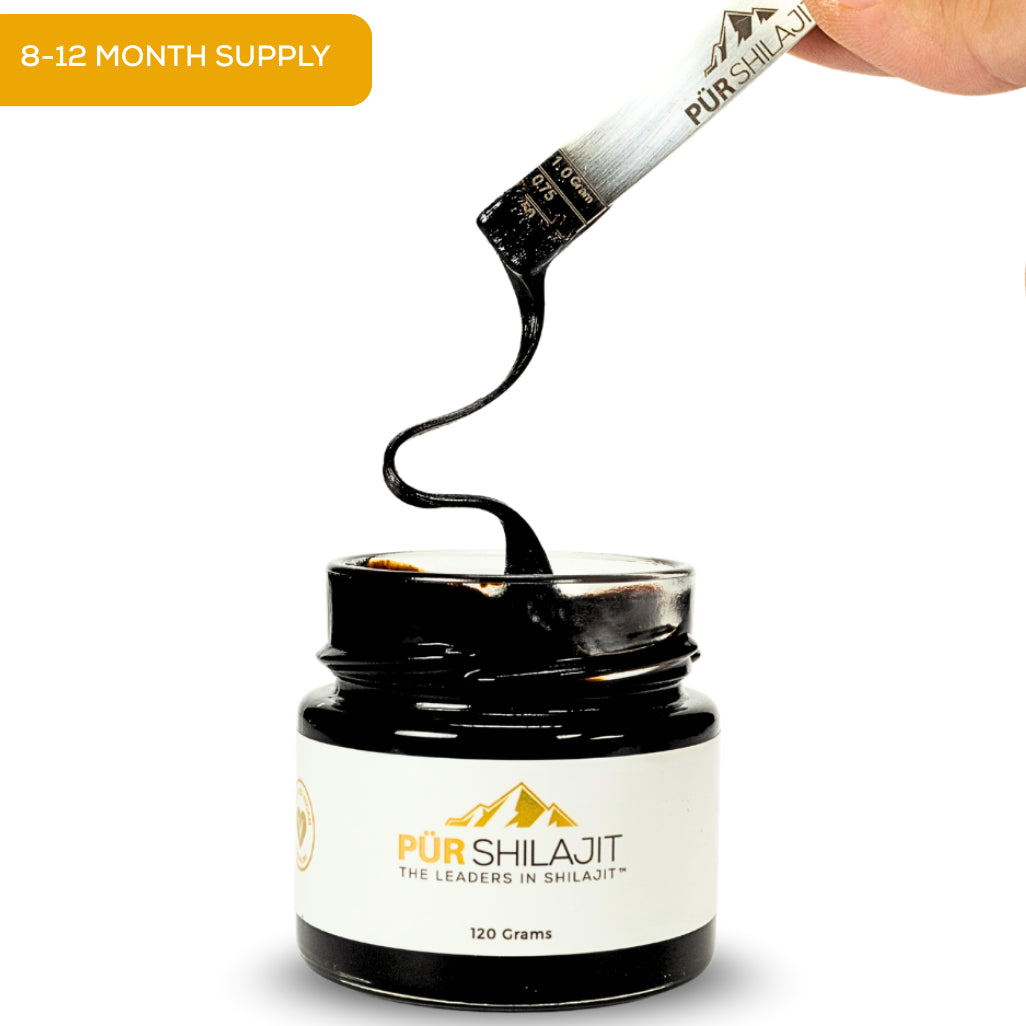
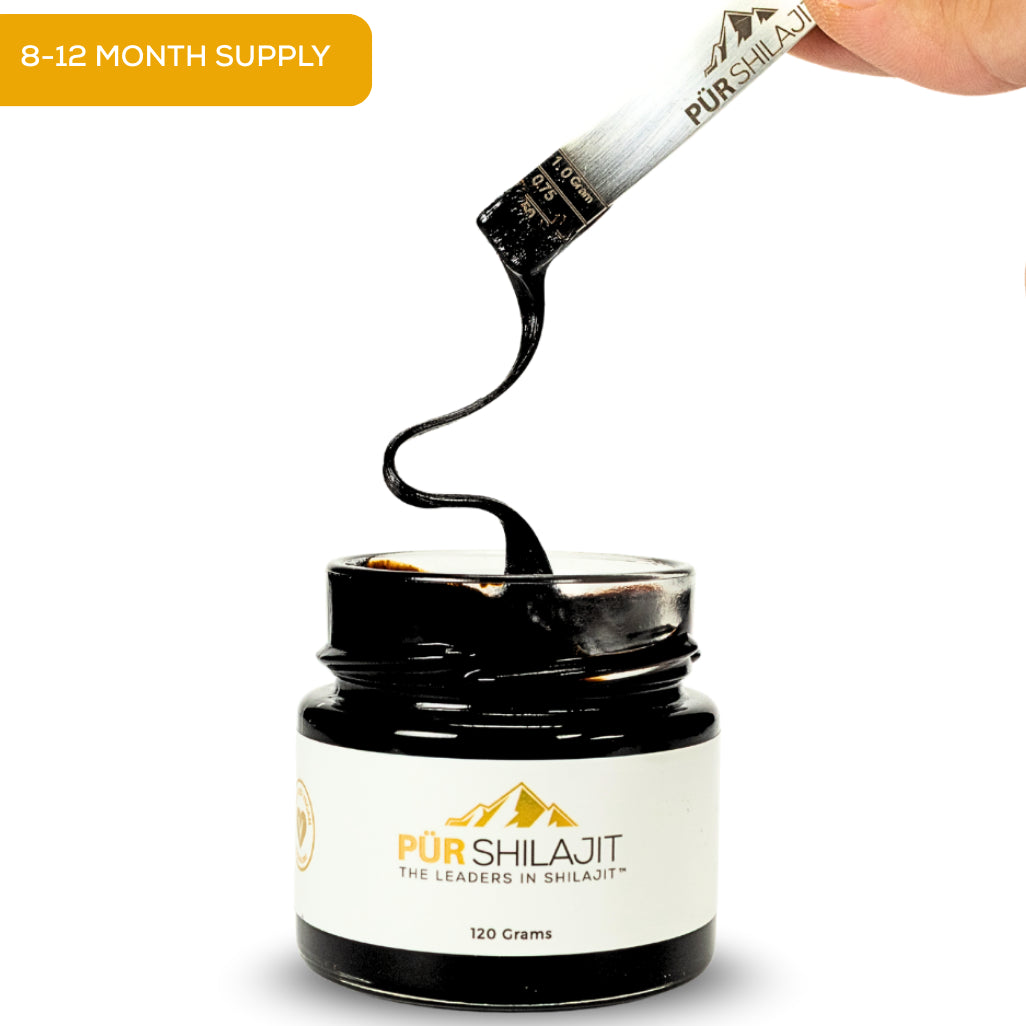
What goes into the jar is just as simple. Single-source resin from the Altai Mountains, hand-harvested around 14,000 feet and never below 13,500. Sun-dried 70+ days, never purified with heat. No molasses, no water, nothing added: one ingredient. It passes the 30-second upside-down drip test, hardens in the cold and softens with warmth.
We've been family-owned since 2019, with 155,000+ customers, and every order is covered by a 90-day money-back guarantee. The 120 g resin jar is $209, about $0.57 a day. As pür as pure gets, with the paperwork to back it up.
Quick questions
What does ISO 17025 mean on a supplement lab report? It means the lab that ran the tests is accredited to the international standard for testing-lab competence. It speaks to the lab's methods and quality system, not to the product itself.
Is ISO 17025 the same as ISO 9001? No. ISO 9001 is a general quality-management standard any organization can be certified to. ISO 17025 is specific to testing and calibration labs and assesses their technical competence for the tests in their scope.
How do I check a shilajit lab report myself? Find the lab's name, the test date, the measured results and the lot number, then match that lot number to the one on your jar. If any of those pieces is missing, ask the seller for them.
The founder's tip
The day your jar shows up, before you even open it, snap a quick photo of the lot number with your phone. I know, it sounds fussy. But jars get sticky, labels get smudged, and three months later you'll be glad you have it. Then pull up our lab results page, find your lot, and read the report with the jar right there next to you. It takes about two minutes, and it's the moment most people stop wondering and start trusting what's in the spoon. That's exactly why we publish them.
— Jason Reese, founder
A thank-you for reading this far: add any resin jar and The Spoon to your cart and use code RESINREPORT — the spoon's on me.
These statements have not been evaluated by the Food and Drug Administration. This product is not intended to diagnose, treat, cure, or prevent any disease.

Written by Jason Reese