Shilajit vs. Saffron: 5 Differences (and the Hand-Harvest Habit They Share)
Short answer: Shilajit and saffron are different things that happen to share a habit: both are still gathered by hand. Shilajit is a mineral resin that seeps from high mountain rock and is taken as a small daily serving, 300 to 500 mg. Saffron is the dried stigma of the saffron crocus flower, used mostly as a cooking spice and sometimes as an extract in capsules, per the label. They don't do the same job, so plenty of people keep both in the kitchen.
You already know a tiny amount of something can cost a lot, because you've looked at the price of saffron on a spice rack. You've probably noticed shilajit has the same reputation: small jar, serious price tag. That instinct is worth following, because when a product is precious, how it's harvested and documented matters more than the label.
Stick around for the founder's tip at the bottom; there's a little thank-you waiting there too. No. 5 is the one most people skip.
1. Where they come from: rock vs. flower
Shilajit forms slowly inside high-altitude mountain rock as plant matter breaks down under pressure, then seeps out as a dark, sticky resin. It naturally contains fulvic acid and trace minerals.
Saffron comes from a plant you could grow in a garden bed. Each saffron crocus flower holds three thin red stigmas, and those threads, dried, are the spice.
2. How they're harvested: both by hand
This is the surprising overlap. Saffron flowers bloom for a short window in autumn, and the stigmas are picked out by hand, flower by flower. It takes a huge number of blossoms to make a small amount of spice, which is why it's priced like it is.
Our shilajit is hand-harvested too, around 14,000 feet in the Altai Mountains, never below 13,500. Then it's sun-dried for 70+ days. No machines rushing either one.
But how they're harvested is only half of it. How you use them is where they split.
3. What they're for: daily ritual vs. kitchen spice
Shilajit is a daily supplement. You dissolve a pea-sized serving in warm water, tea or coffee, at the same time every morning. Consistency is the whole game.
Saffron is mostly a cooking ingredient. It gives rice dishes, stews and baked goods their golden color and floral aroma. Saffron extract also comes in capsules; the amount varies by product, so go by the label.
4. How much you use: milligrams, not spoonfuls
Neither is used by the scoop. A shilajit serving is 300 to 500 mg of resin, about 0.33 g. A saffron recipe often calls for just a pinch of threads for a whole pot.
Small serving, big price per gram, and a jar that lasts. That's why both are best judged by cost per use, not cost per jar. Here's the real daily math for shilajit.
| Shilajit | Saffron | |
|---|---|---|
| What it is | Mineral resin from mountain rock | Dried stigmas of the saffron crocus |
| Harvest | By hand, at altitude | By hand, flower by flower |
| Main use | Daily supplement ritual | Cooking spice; extracts in capsules |
| Typical amount | 300 to 500 mg daily | A pinch per dish; extracts per the label |
| Paper trail to ask for | Batch lab report matched to the lot number | Grade or category on the label, origin, harvest year |
5. How you check quality: the paper trail
This is the one people skip. Saffron has its own international standard, ISO 3632, which sorts it into categories using lab-measured qualities such as coloring strength. Whole threads are also easier to inspect by eye than powder.
Shilajit doesn't have a grading system like that, so the paper trail falls on the seller. Ask for a batch-specific report from an independent lab and match the lot number to your jar. Then check the resin itself: it should harden in the cold, soften with warmth and pass the 30-second drip test. Our 8-point scorecard walks through the rest.
The Pür proof
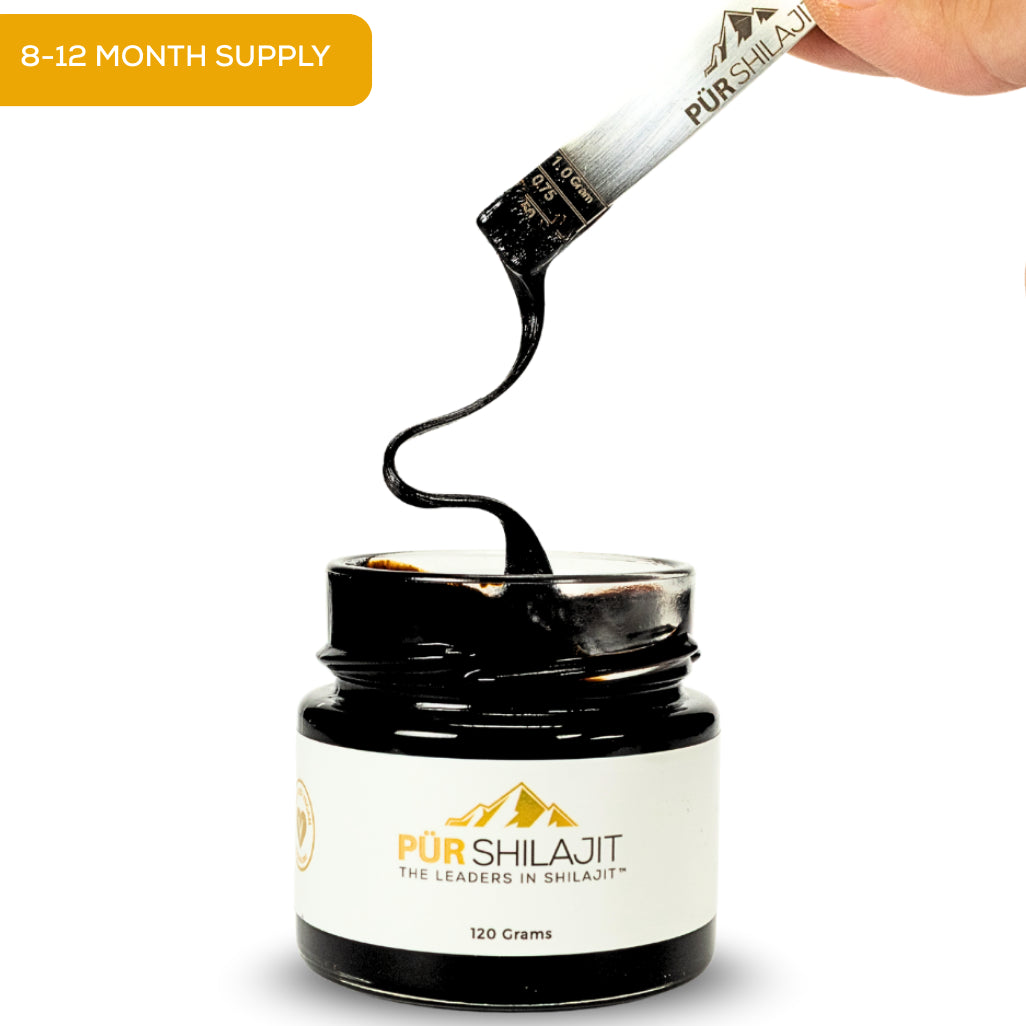
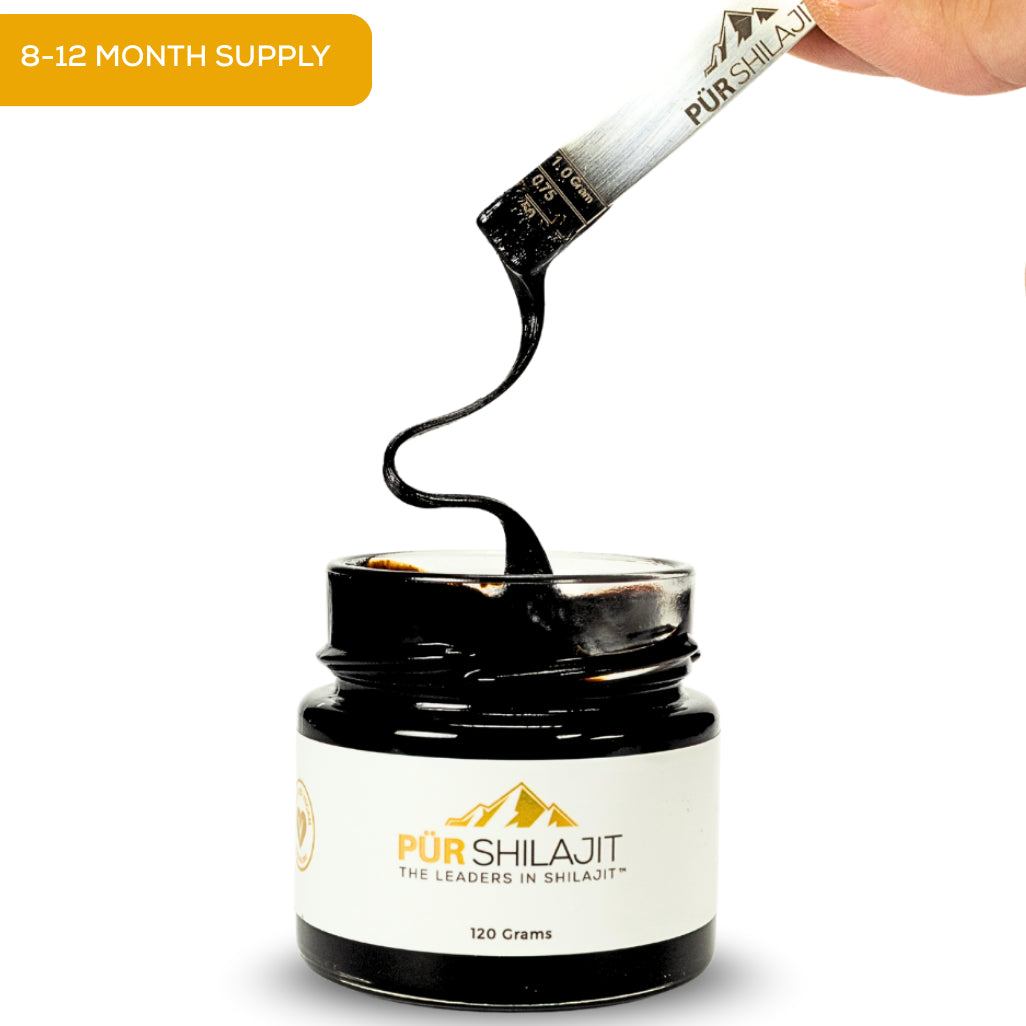
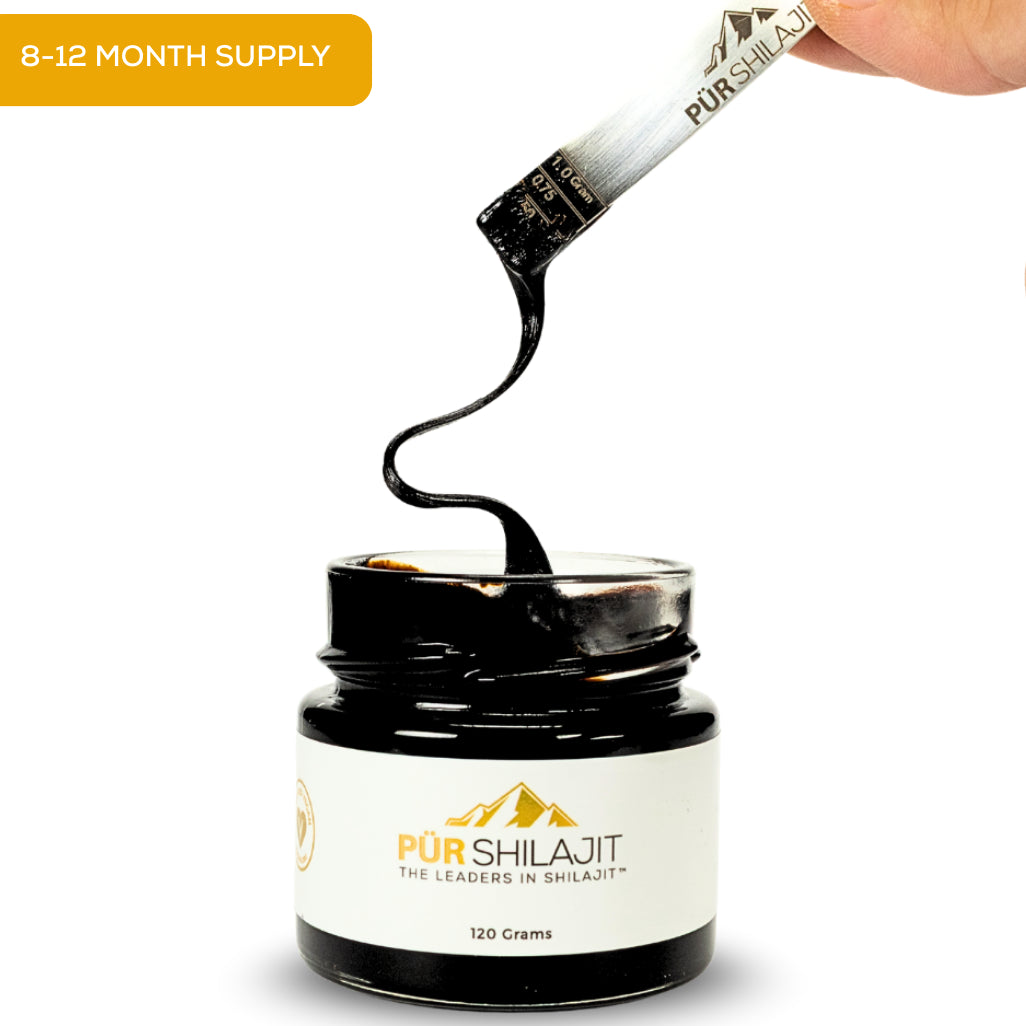
Precious ingredients deserve receipts, and we named the company Pür for a reason. Our resin is single-source from the Altai Mountains, hand-harvested around 14,000 feet, sun-dried 70+ days and never purified with heat. No molasses, no water, nothing added: one ingredient, with 84+ trace minerals.
Every batch is tested by Eurofins, an independent ISO 17025-accredited lab network, and we publish the reports by lot number. It's California Prop 65 compliant and passes the 30-second upside-down drip test. Family-owned since 2019, 155,000+ customers, and every order is backed by our 90-day money-back guarantee.
The 120 g resin jar is $209, about $0.57 a day, or try the 10 g jar at $34.99. Prefer no spoon? Two binder-free tablets a day do the same job. As pür as pure gets.
Quick questions
Is shilajit the same as saffron? No. Shilajit is a mineral resin that forms in mountain rock; saffron is the dried stigma of a flower. They share hand harvesting and a high price per gram, not a category.
Can you take shilajit and saffron together? Many people cook with saffron and take shilajit as a separate morning ritual. If you use a saffron extract supplement, follow its label and talk to your doctor before combining supplements.
Why are both so expensive? Both are gathered by hand in small amounts. Saffron takes many flowers per gram; our shilajit is hand-harvested at altitude and sun-dried for 70+ days. Per serving, the 120 g resin jar works out to about $0.57 a day.
The founder's tip
If you've ever cooked with saffron, you already know the trick: you don't throw the threads straight into the pot, you steep them in a little warm water first so the color blooms. Do the exact same thing with your resin. Put your pea-sized piece in the bottom of the mug with a splash of warm water, give it a minute and a stir, then pour in the rest of your tea or coffee. It dissolves completely instead of sitting at the bottom like a pebble, and you get the whole serving. Same patience, same payoff.
— Jason Reese, founder
A thank-you for reading this far: add any resin jar and The Spoon to your cart and use code RESINREPORT — the spoon's on me.
These statements have not been evaluated by the Food and Drug Administration. This product is not intended to diagnose, treat, cure, or prevent any disease. Talk to your doctor before starting any supplement if you're pregnant, nursing, or under medical care.

Written by Jason Reese