Shilajit vs. Ginseng: 5 Differences (One Seeps From Rock, One Grows Underground)
Short answer: Shilajit and ginseng are two very different things. Shilajit is a mineral-rich resin that seeps from high mountain rock and naturally contains fulvic acid and trace minerals; ginseng is the root of plants in the Panax genus, valued for compounds called ginsenosides. They don't replace each other, and plenty of people keep both in a morning routine. If you do, check with your doctor or pharmacist first, since ginseng is one of the herbs commonly flagged for medication interactions.
You already know ginseng. It's been on tea shelves and in grandparents' cabinets for generations, and you probably trust it more than anything with a trendy label. That instinct is fair. What most comparisons skip is that ginseng and shilajit aren't even the same kind of thing, and that changes how you should shop for each.
Stick around for the founder's tip at the bottom; there's a little thank-you waiting there too. No. 4 is the one most people skip.
1. One grows underground, one seeps from rock
Ginseng is a slow-growing root. Cultivated roots are typically harvested after several years in the ground, and wild roots take longer still.
Shilajit isn't a plant at all. It's a resin formed over long stretches of time as alpine plant matter breaks down and is pressed in mountain rock, then seeps out in warm months. Ours is hand-harvested in the Altai Mountains around 14,000 feet, never below 13,500.
2. What's actually in each one
Ginseng is known for ginsenosides, a family of plant compounds that researchers use to characterize the root. Different species and preparations carry different ginsenoside profiles.
Shilajit's signature is fulvic acid plus 84+ trace minerals. No single compound defines it; the whole resin is the product.
But that's only half of it. "Ginseng" on a label can mean more than one plant.
3. "Ginseng" covers more than one plant
Asian ginseng (Panax ginseng, often sold as Korean ginseng) and American ginseng (Panax quinquefolius) are both true Panax species. Siberian ginseng, also called eleuthero, is a different plant from a different genus, even though it shares the name.
Preparation matters too. White ginseng is simply dried; red ginseng is steamed and then dried, which changes its color and composition. So two jars that both say "ginseng" can hold quite different things.
| Shilajit resin | Ginseng | |
|---|---|---|
| What it is | Mineral-rich mountain resin | Root of Panax plants |
| Known for | Fulvic acid, 84+ trace minerals | Ginsenosides |
| Common forms | Resin, tablets, capsules | Root slices, tea, powder, extract capsules |
| Processing | Ours: sun-dried 70+ days, never heated | Dried (white) or steamed then dried (red) |
| Serving | 300 to 500 mg resin daily | Varies by form, per the label |
| What to verify | Single source, lot-matched lab report | Species, preparation, standardization |
4. How the label proves what's inside
This is the one people skip. Ginseng extracts are often standardized to a stated percentage of ginsenosides, per the label. That number is the useful part; "ginseng blend" without it tells you very little.
Shilajit works differently. The proof is a single ingredient, a named source, and a batch lab report tied to the lot number on your jar. Here's why single-source matters when you're reading that report.
5. How each one fits into a routine
Ginseng often shows up as a tea or an extract capsule, with amounts that vary widely by form, per the label. Some people take it in stretches rather than continuously; follow the label and your doctor's guidance.
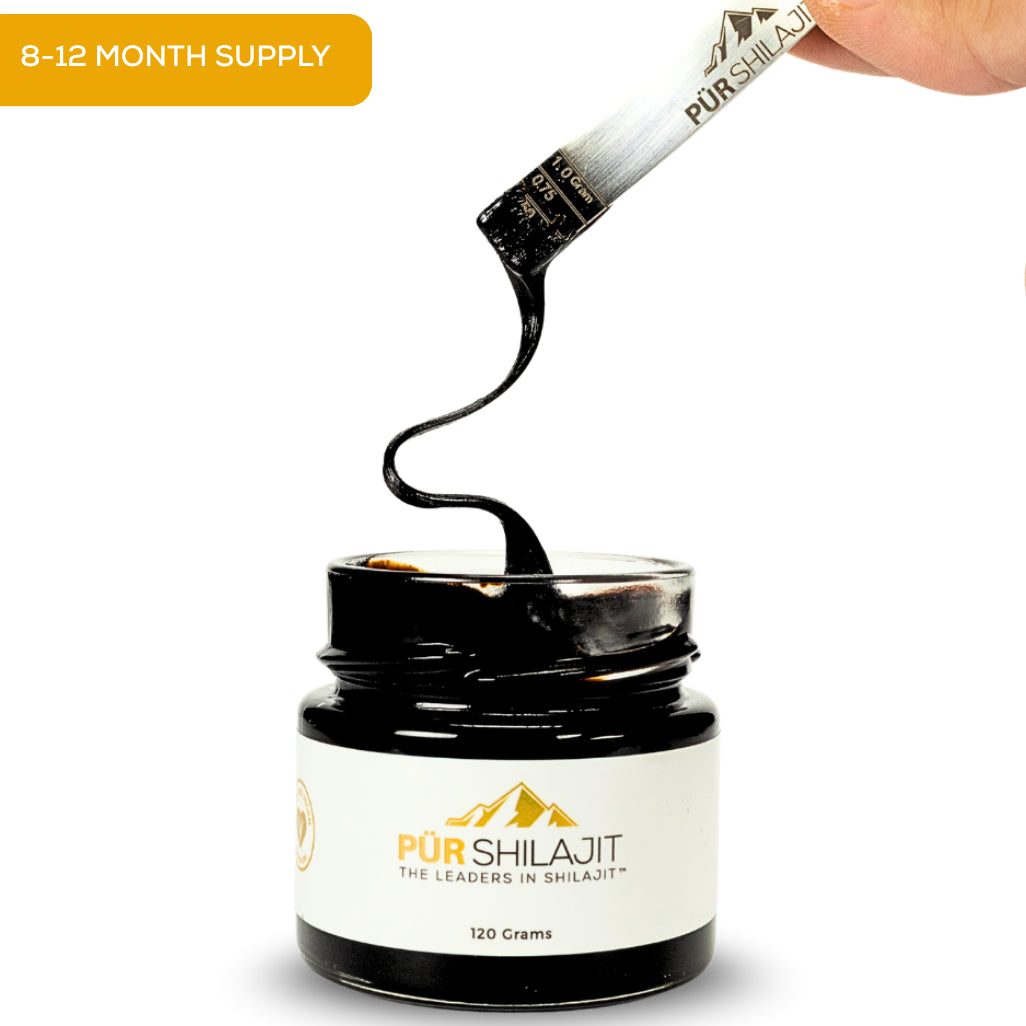
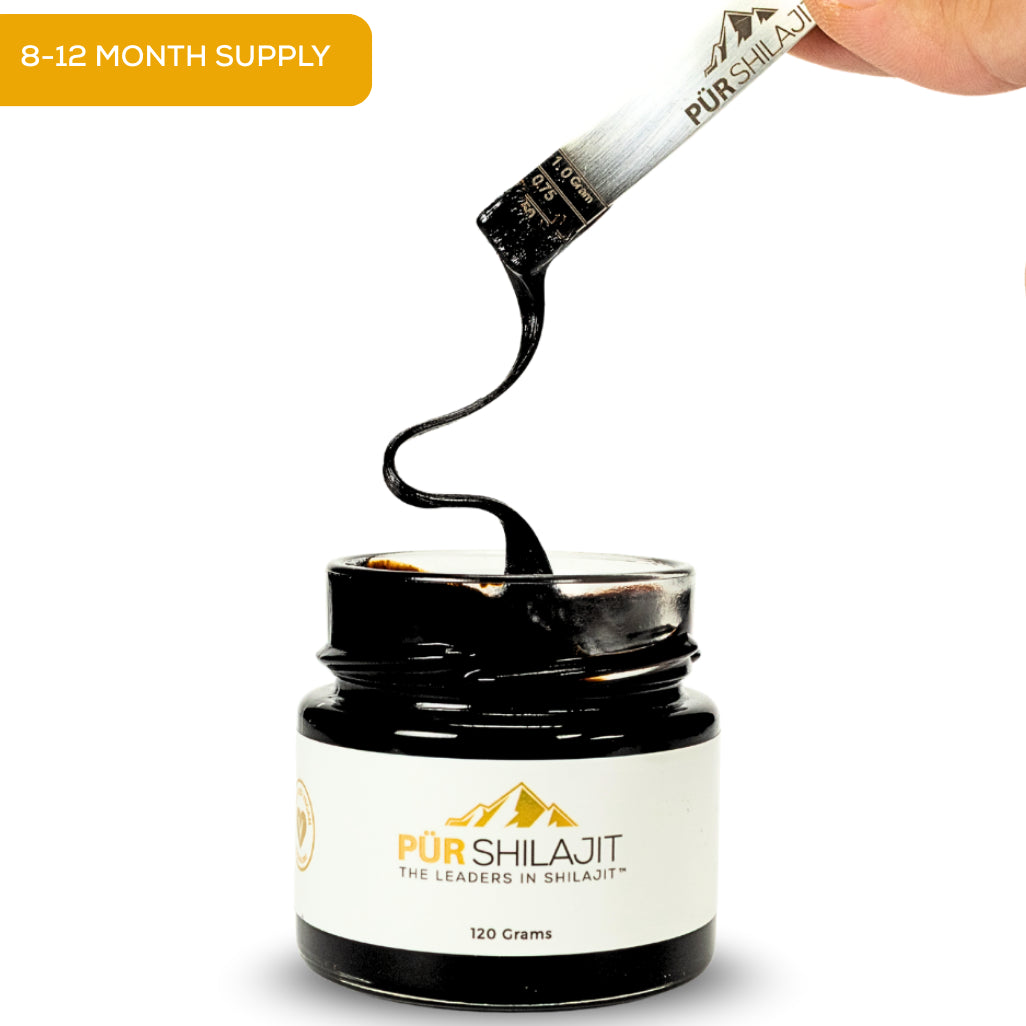
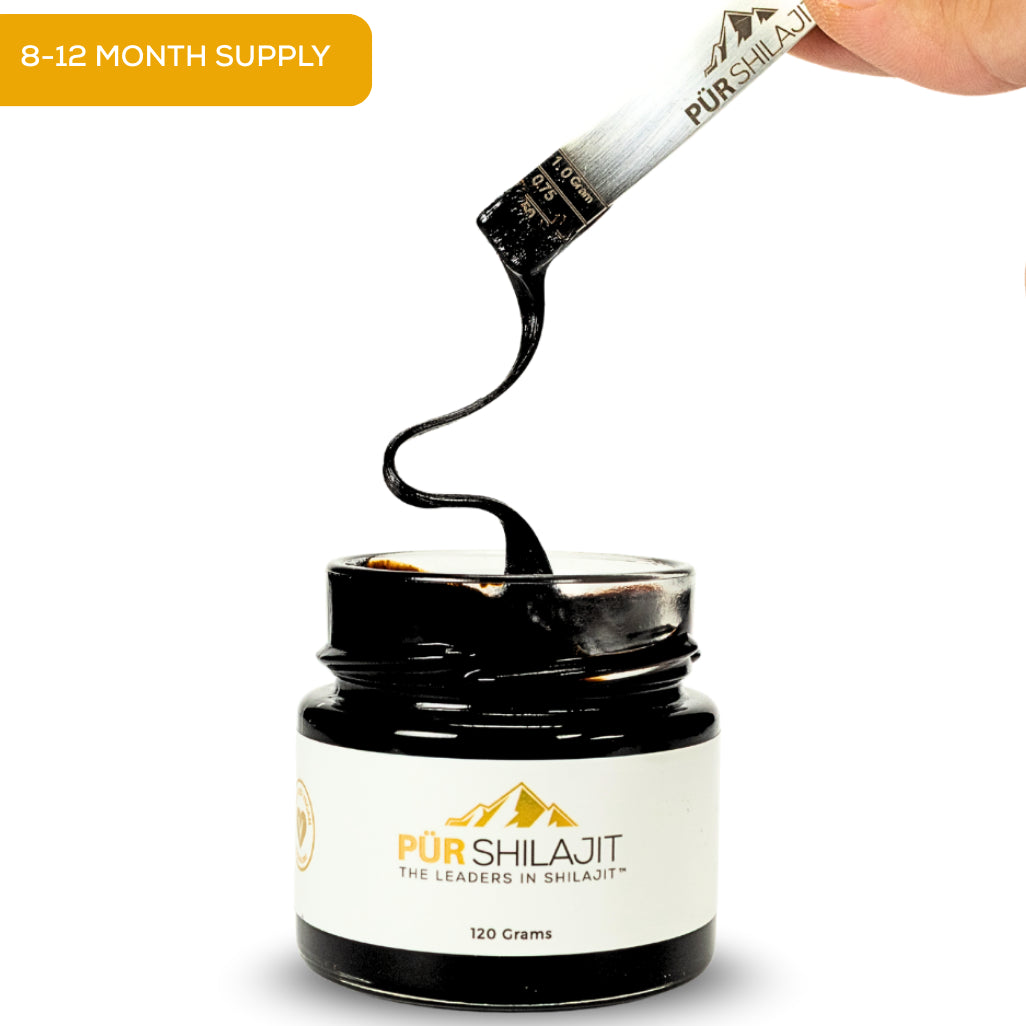
Shilajit is a small daily serving: 300 to 500 mg of resin (about 0.33 g), two binder-free tablets, or one vegan Daily Drive cap. It dissolves in warm water, tea or coffee, so it can ride along with a ginseng tea if you take both.
The Pür proof
We named the company Pür for a reason. Here's what you can check for yourself:
- One source, one ingredient. Single-source Altai resin, hand-harvested around 14,000 feet. No molasses, no water, nothing added.
- Slow and untouched. Sun-dried 70+ days and never purified with heat. It passes the 30-second upside-down drip test, hardens in the cold and softens with warmth.
- Tested every batch. Every lot is tested by Eurofins, an independent ISO 17025-accredited lab network, with reports published by lot number on our lab results page. California Prop 65 compliant.
- Backed by people. Family-owned since 2019, 155,000+ customers, and a 90-day money-back guarantee.
The 120 g resin jar is $209, about $0.57 a day. Prefer no spoon? Tablets start at $44.99. As pür as pure gets.
Quick questions
Can you take shilajit and ginseng together? Many people keep both in one routine since they're different kinds of products. Ginseng is commonly flagged for interactions with some medications, so check with your doctor or pharmacist first, especially if you take any prescription.
Is Siberian ginseng the same as ginseng? No. Siberian ginseng (eleuthero) comes from a different genus than Asian and American ginseng, which are both Panax species.
Which is the better pick, shilajit or ginseng? Neither replaces the other. Ginseng is a root you choose by species and preparation; shilajit is a mineral resin you choose by source and lab report. Pick based on what you want in your routine, and verify whichever you buy.
The founder's tip
If you already drink ginseng tea, don't build a second habit; borrow the one you have. Steep your tea, let it cool for a minute so it's warm, not boiling, then stir in a pea-sized piece of resin with a dry spoon. It dissolves in about the time it takes to find your keys. One mug, one moment, and you'll never wonder whether you took it today.
— Jason Reese, founder
A thank-you for reading this far: add any resin jar and The Spoon to your cart and use code RESINREPORT — the spoon's on me.
These statements have not been evaluated by the Food and Drug Administration. This product is not intended to diagnose, treat, cure, or prevent any disease. Talk to your doctor before starting any supplement if you're pregnant, nursing, or under medical care.

Written by Jason Reese