Shilajit vs. Creatine: 5 Differences (and the One Reason People Stack Them)
Short answer: Yes, many people take shilajit and creatine together, because they don't overlap. Creatine is a single compound, usually taken at 3 to 5 grams per the label. Shilajit is a one-ingredient mountain resin taken at 300 to 500 mg, a fraction of that amount. Different categories, different serving sizes, and both fit into the same daily habit.
You already know creatine. It's probably the tub in your cabinet you've had the longest, and you've read enough to trust it. Shilajit is the newer jar on the shelf, and the natural question is whether the two compete or cooperate. The answer is simpler than most forums make it.
Stick around for the founder's tip at the bottom; there's a little thank-you waiting there too. And No. 5 is the one most people skip.
1. One is a single compound. The other is a whole resin.
Creatine monohydrate is one molecule, built from three amino acids. Your body makes some on its own, and you also get it from foods like red meat and fish.
Shilajit is the opposite of a single molecule. It's a dark mountain resin that naturally contains fulvic acid and 84+ trace minerals. You're not taking an isolate; you're taking the whole thing.
2. One is made in a facility. The other is harvested off a mountain.
Most creatine on the market is synthesized, which is why it's consistent, white and nearly flavorless. That's a feature, not a flaw.
Shilajit can't be manufactured. Ours is hand-harvested around 14,000 feet in the Altai Mountains, never below 13,500, then sun-dried for 70+ days. Where it comes from is part of what you're buying.
But that's only half of it.
3. The serving sizes aren't even close.
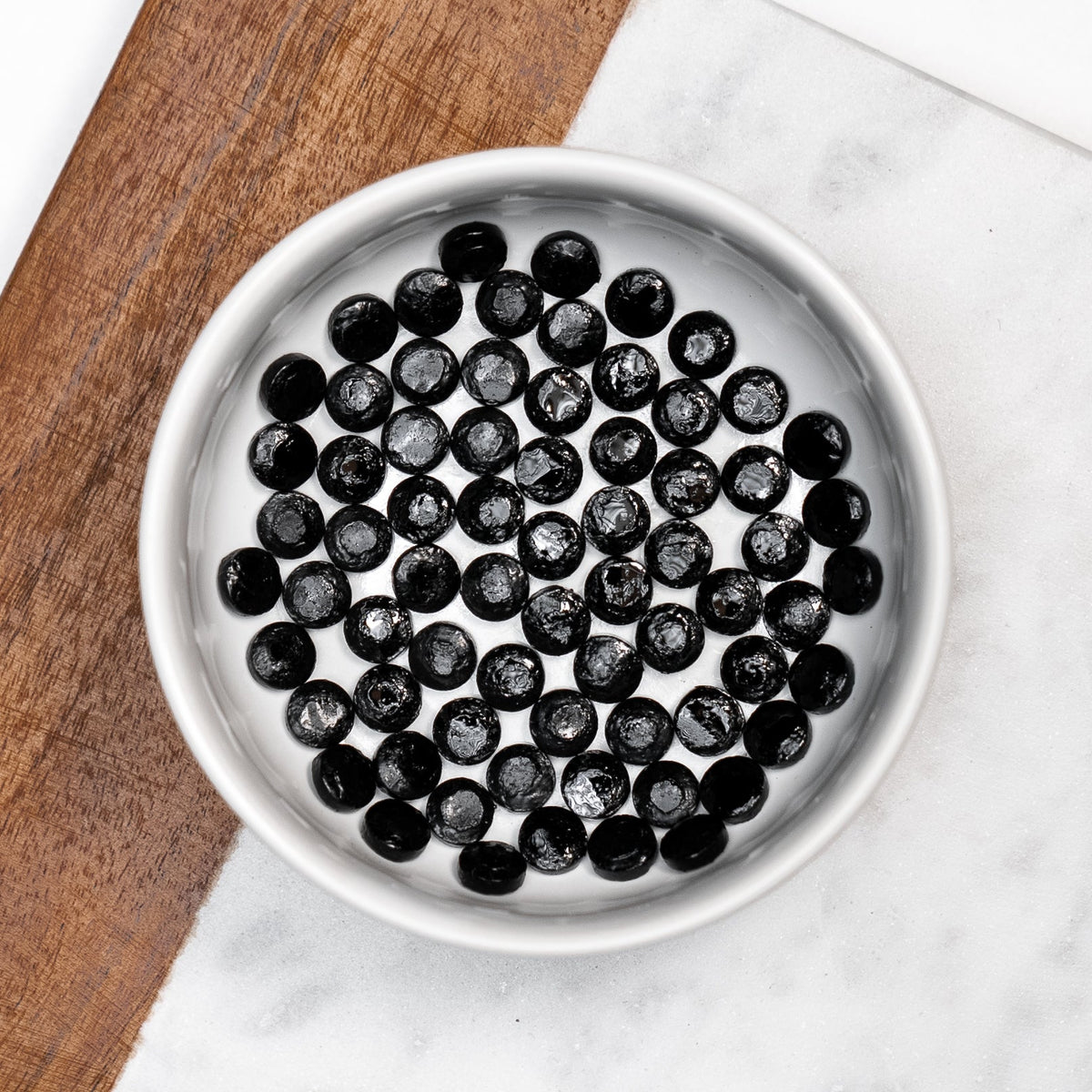
Creatine labels usually list 3 to 5 grams a day (go by the label on your tub). A shilajit resin serving is 300 to 500 mg, about 0.33 g. That's roughly a tenth of a creatine scoop.
Which means stacking them doesn't crowd your glass. The resin is about the size of a pea.
| Creatine monohydrate | Pür Shilajit Resin | |
|---|---|---|
| What it is | A single compound | A one-ingredient mountain resin |
| Source | Usually synthesized | Hand-harvested around 14,000 ft, Altai Mountains |
| Typical daily serving | 3 to 5 g, per the label | 300 to 500 mg (about 0.33 g) |
| Form and taste | White powder, nearly flavorless | Dark resin, earthy and slightly bitter |
| How to take it | Stirred into water or a shake | Dissolved in warm water, tea or coffee |
| What to verify | "Monohydrate" on the label, third-party testing | Single source, one ingredient, lab reports by lot |
4. They behave completely differently in your kitchen.
Creatine is a powder. It sits in a tub, you scoop it, done. It doesn't care about temperature.
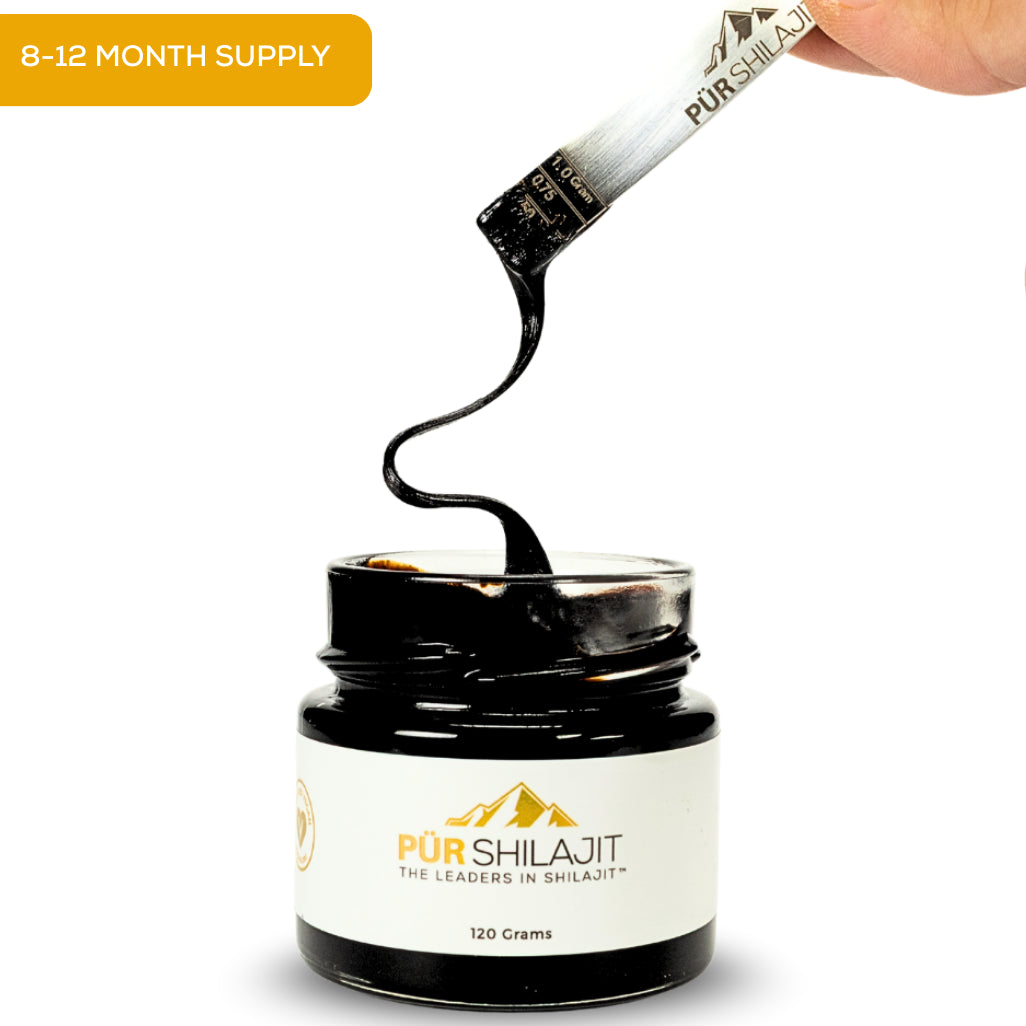
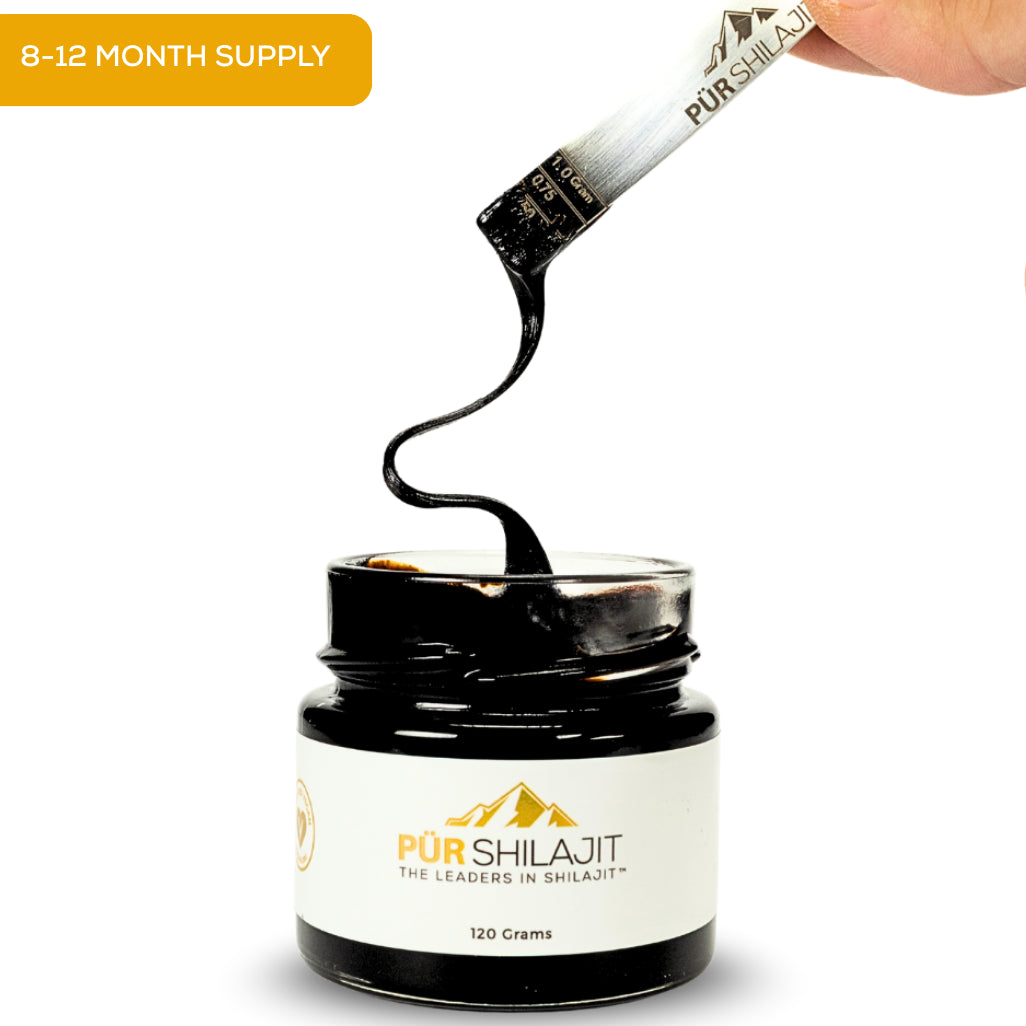
Real shilajit resin does. It hardens in the cold and softens with warmth, and it dissolves best in warm (not boiling) water. If your jar feels like a rock in January, that's normal. Hold it in your hand for a minute.
5. What you check on the label is different, too.
This is the one people skip. With creatine, you mostly want to see "creatine monohydrate" and some form of third-party testing. The ingredient itself is simple.
With shilajit, the ingredient is the question. Check for a single named source, one ingredient with nothing added, and lab reports you can match to your jar's lot number. Then try the 30-second drip test at home: real resin holds together when the jar is turned upside down.
The one reason people stack them
They don't overlap. Creatine is one compound; shilajit is a whole resin with its own mineral profile. You're not doubling up on anything, and the combined serving still fits in one glass.
The practical reason is even simpler: both are daily-consistency supplements. Neither is something you take once and judge. Pairing them means one habit instead of two, and one habit is the kind people actually keep.
The Pür proof
We named the company Pür for a reason. Our resin is single-source from the Altai Mountains, hand-harvested around 14,000 feet, sun-dried 70+ days and never purified with heat. No molasses, no water, nothing added. One ingredient.
Every batch is tested by Eurofins, an independent ISO 17025-accredited lab network, and we publish the reports by lot number. It's California Prop 65 compliant and passes the 30-second upside-down drip test.
We've been family-owned since 2019, with 155,000+ customers, and every order is covered by our 90-day money-back guarantee. The 120 g jar is $209, about $0.57 a day. As pür as pure gets.
Quick questions
Can you take shilajit and creatine at the same time? Many people do, in the same morning drink. Dissolve the resin in warm water first, then add your creatine. If you're under medical care, check with your doctor first.
Does shilajit replace creatine? No. They're different things. Shilajit is a mineral-rich resin; creatine is a single compound. One isn't a substitute for the other.
How much of each should I take? Follow the label on your creatine. For Pür resin, 300 to 500 mg (about 0.33 g) a day. Tablets are 2 a day (0.4 g), and Daily Drive is 1 vegan cap (500 mg) a day.
The founder's tip
Here's what I actually do. I keep my resin jar, the spoon and my creatine tub in the same spot next to the kettle. Water goes on, a pea of resin goes in a mug with a splash of hot water, I give it 30 seconds to melt, then top it off with cold water and stir in the creatine. Under two minutes, and I've never once forgotten either, because they live together. Stack the new habit onto the one you already trust.
— Jason Reese, founder
A thank-you for reading this far: add any resin jar and The Spoon to your cart and use code RESINREPORT — the spoon's on me.
These statements have not been evaluated by the Food and Drug Administration. This product is not intended to diagnose, treat, cure, or prevent any disease. Talk to your doctor before starting any supplement if you're pregnant, nursing, or under medical care.

Written by Jason Reese