Shilajit vs. Ashwagandha: 7 Differences, and Whether You Should Take Both
Short answer: they're completely different things that often get shelved together. Shilajit is a mineral-rich resin that forms in high mountain rock, known for its natural fulvic acid and broad trace-mineral profile, taken in tiny amounts (300–500 mg a day). Ashwagandha is the root of a shrub (Withania somnifera), one of the most used herbs in the Ayurvedic tradition, usually taken as a powdered extract in capsules. They aren't substitutes for each other, many people take both, and the smart buying question is the same for each: can the seller show you what's actually in it?
You already know there's only so much room on one cupboard shelf. Both of these are popular, they are very different things, and whether to take both is a fair question. Seven differences are below, with an answer to that at the end.
Stick around for the founder's tip at the bottom; there's a little thank-you waiting there too.
Side by side
| Shilajit | Ashwagandha | |
|---|---|---|
| What it is | A resin that seeps from high mountain rock | The dried root of a shrub, usually ground or extracted |
| Known for | Natural fulvic acid and 84+ trace minerals | Withanolides, the compounds its extracts are standardized to |
| Tradition | Used for centuries across the mountain cultures of Asia and in Ayurveda | A foundational herb of Ayurveda |
| Typical daily amount | 300–500 mg of resin (pea-sized) | Commonly 300–600 mg of root extract, per the label |
| How it's taken | Dissolved in warm water, coffee or tea; or tablets and capsules | Capsules, powders, gummies |
| Taste | Earthy, slightly bitter — like strong black tea | Bitter, often described as horse-like (the name literally references it) |
| Main thing to check | Dilution and heavy metals — drip test plus a batch lab report | Extract standardization (withanolide %) and third-party testing; root powders vary widely |
The real difference: a mineral complex vs. an herb
The simplest way to hold the distinction: shilajit is geological — centuries of compressed plant matter transformed in rock, carrying the mineral profile of the mountain it came from. Ashwagandha is botanical — a crop, grown in fields, harvested like any root. That's why the quality questions differ. For a crop, you ask how the extract was standardized. For a resin, you ask what mountain it came from, whether anything was added, and what the rock left in it — which is exactly what the drip test and a batch lab report answer.
Can you take both?
Many people do — they come from the same Ayurvedic tradition and serve different roles in a routine. There's no known reason they can't share a morning. As with any supplement, talk to your doctor first if you're pregnant, nursing, taking medication, or under medical care.
The Pür proof
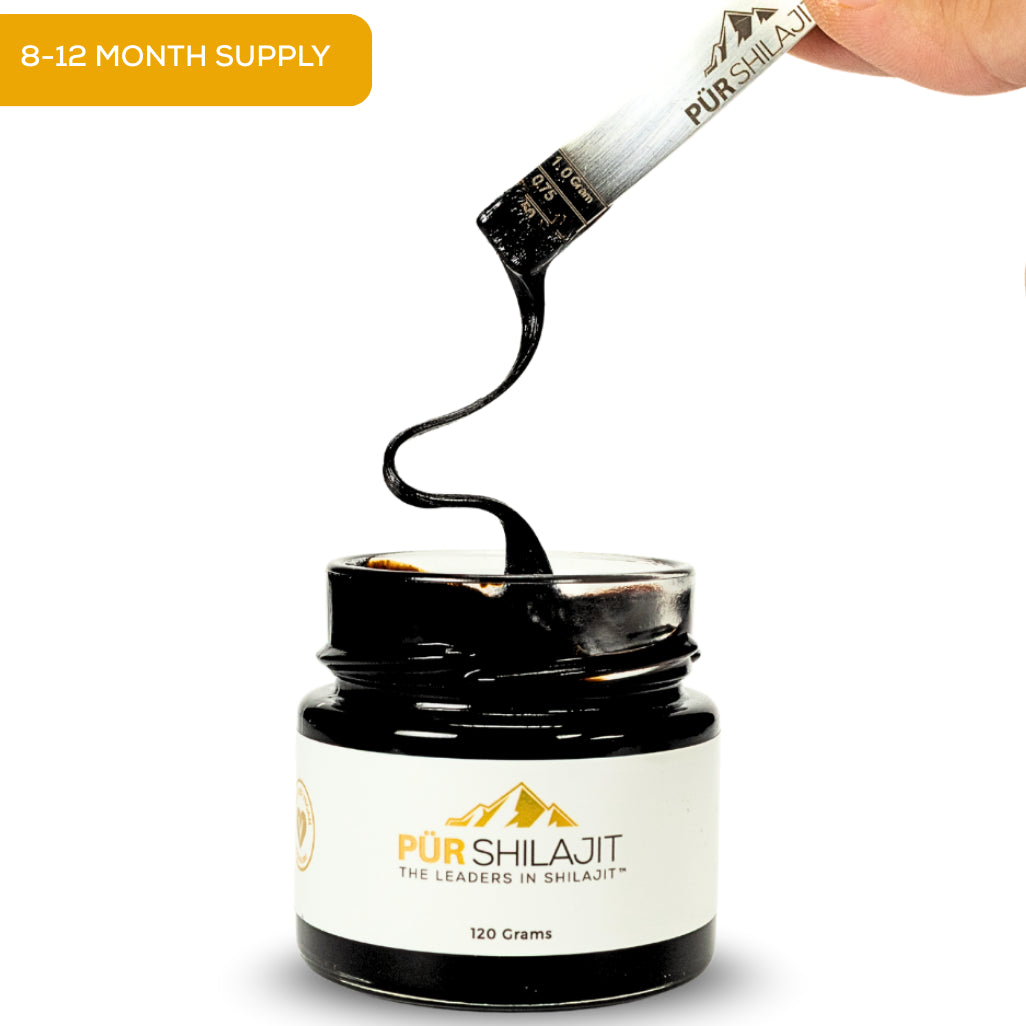
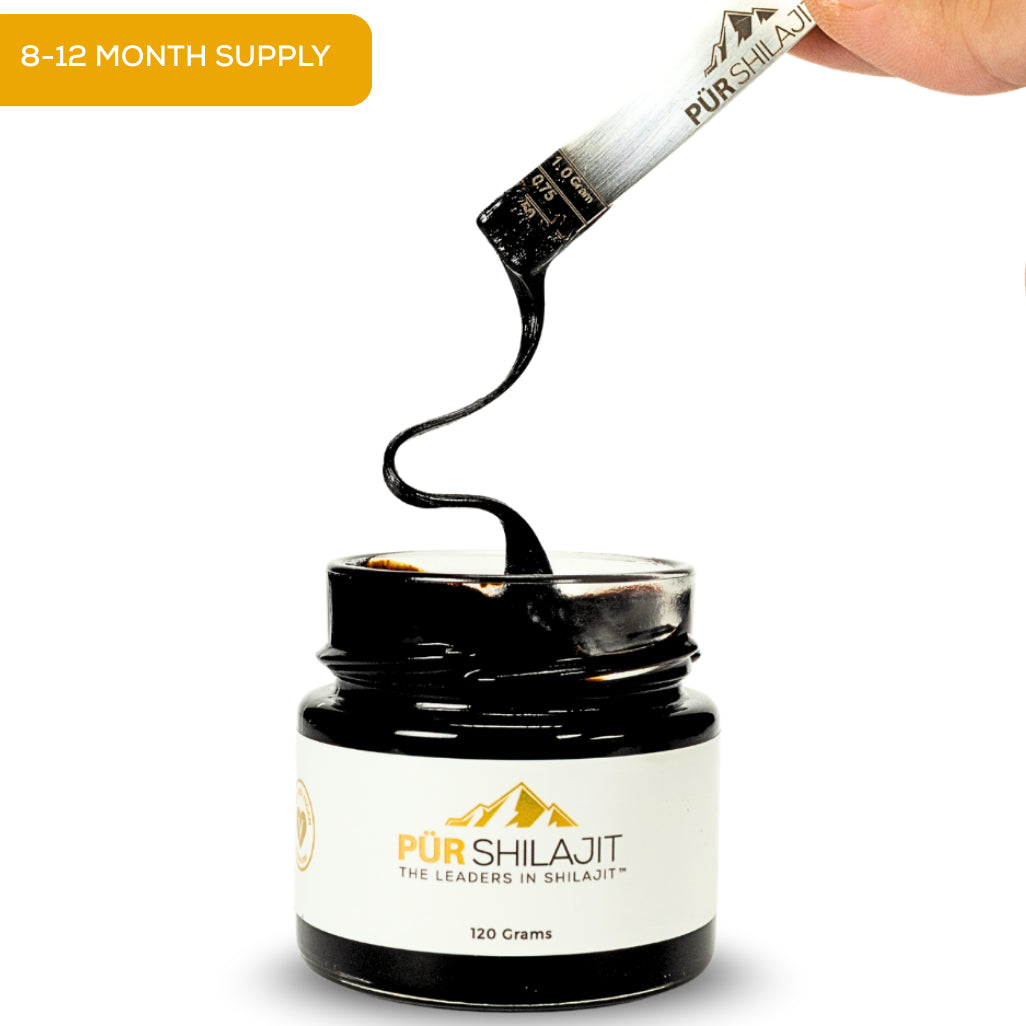
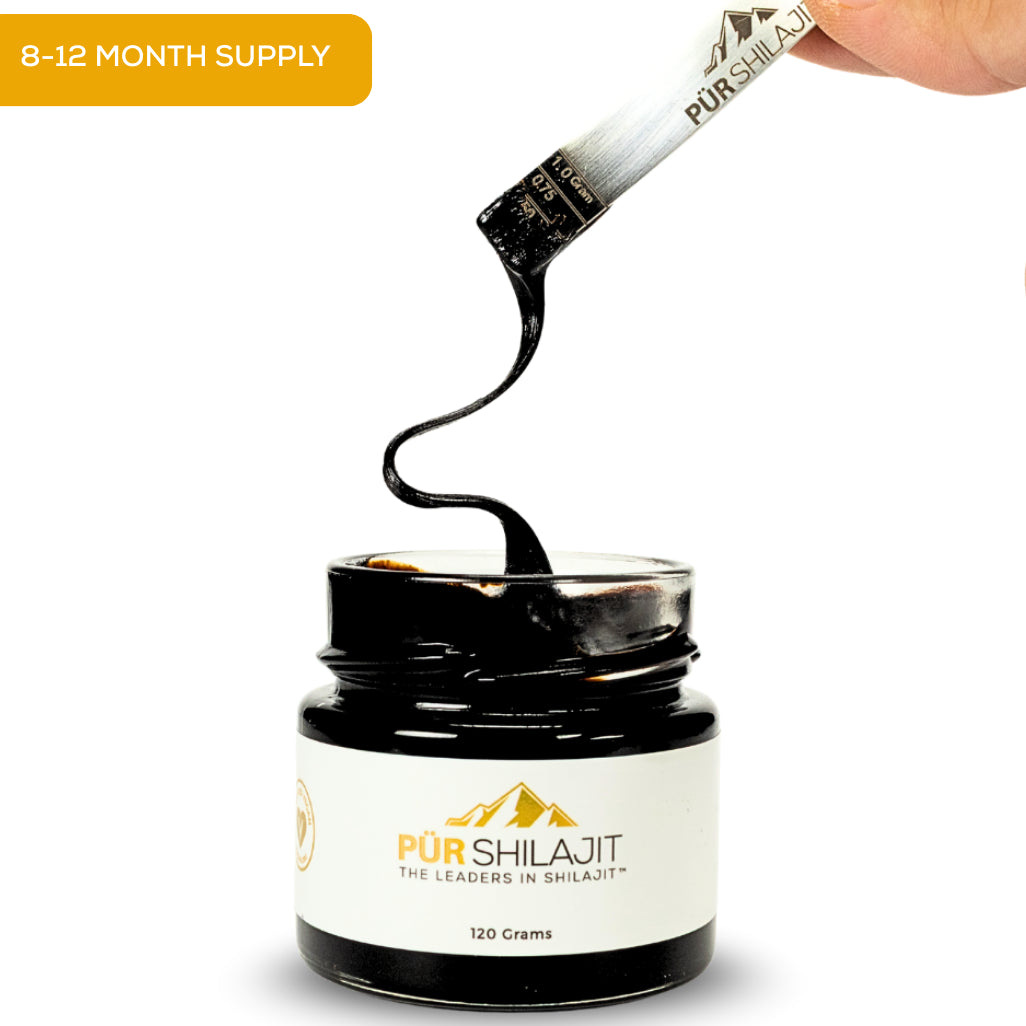
For the shilajit half of the question, here's what we put behind ours: single-source Altai resin, hand-harvested around 14,000 feet, sun-dried for 70+ days, no molasses, no water, nothing added. Every batch is tested by Eurofins, an independent ISO 17025-accredited lab network, and published by lot number. Family-owned since 2019, 155,000+ customers, 90-day money-back guarantee.
Quick questions
Is shilajit a form of ashwagandha? No. They're unrelated — one is a rock-formed resin, the other is a plant root.
Which should I start with? Whichever matches what you're looking for — they do different jobs. If you want the mineral side, that's shilajit's lane.
Do both need lab testing? Yes. Both are natural products that vary by source, and the brands worth buying publish their tests. Ours are here, batch by batch.
The founder's tip
Whatever you take, take it at the same time every day and stack it onto a habit that's already there. Mine is the first cup of coffee. A routine you keep beats a perfect one you don't.
— Jason Reese, founder
A thank-you for reading this far: add any resin jar and The Spoon to your cart and use code RESINREPORT — the spoon's on me.
These statements have not been evaluated by the Food and Drug Administration. This product is not intended to diagnose, treat, cure, or prevent any disease. Talk to your doctor before starting any supplement if you're pregnant, nursing, or under medical care.

Written by Jason Reese