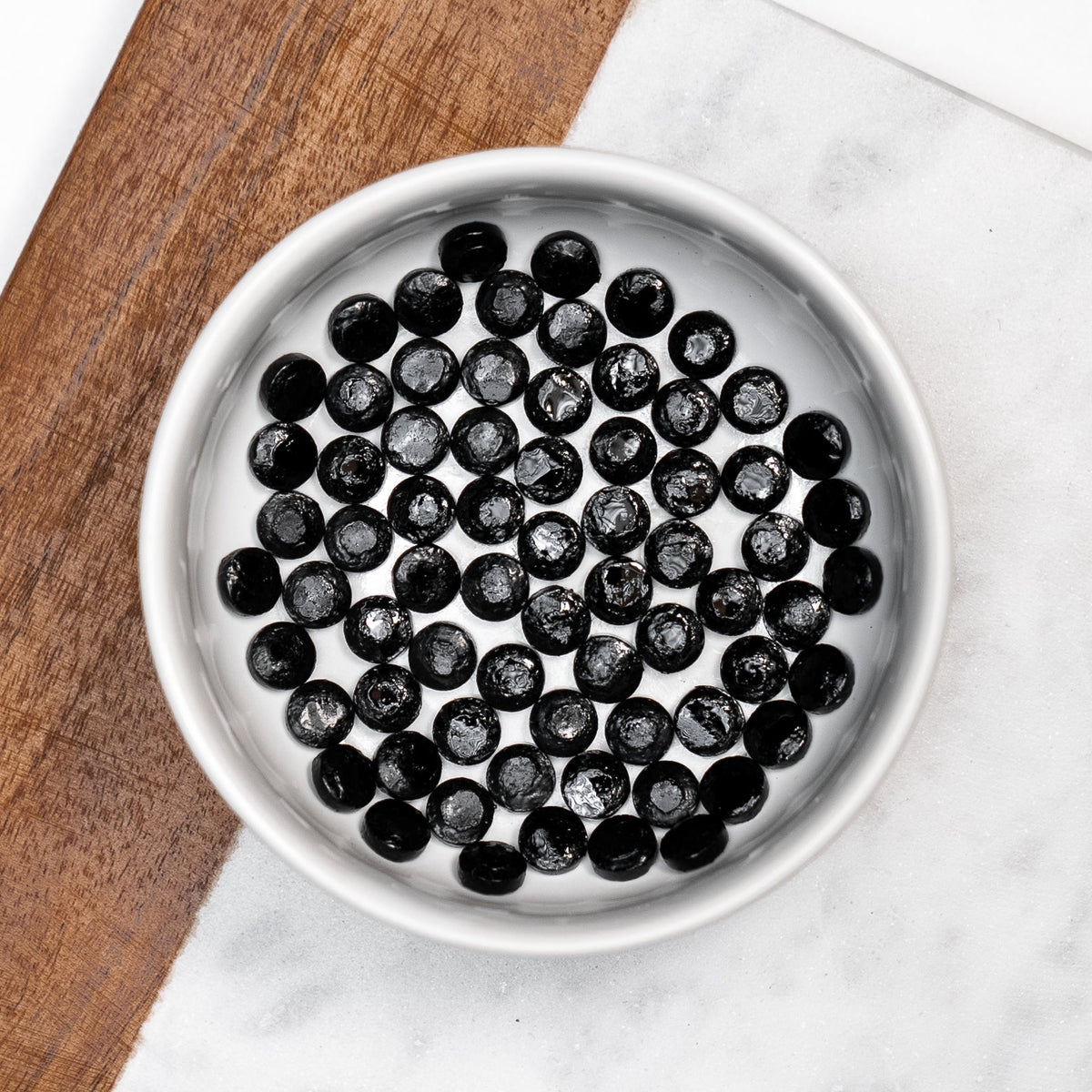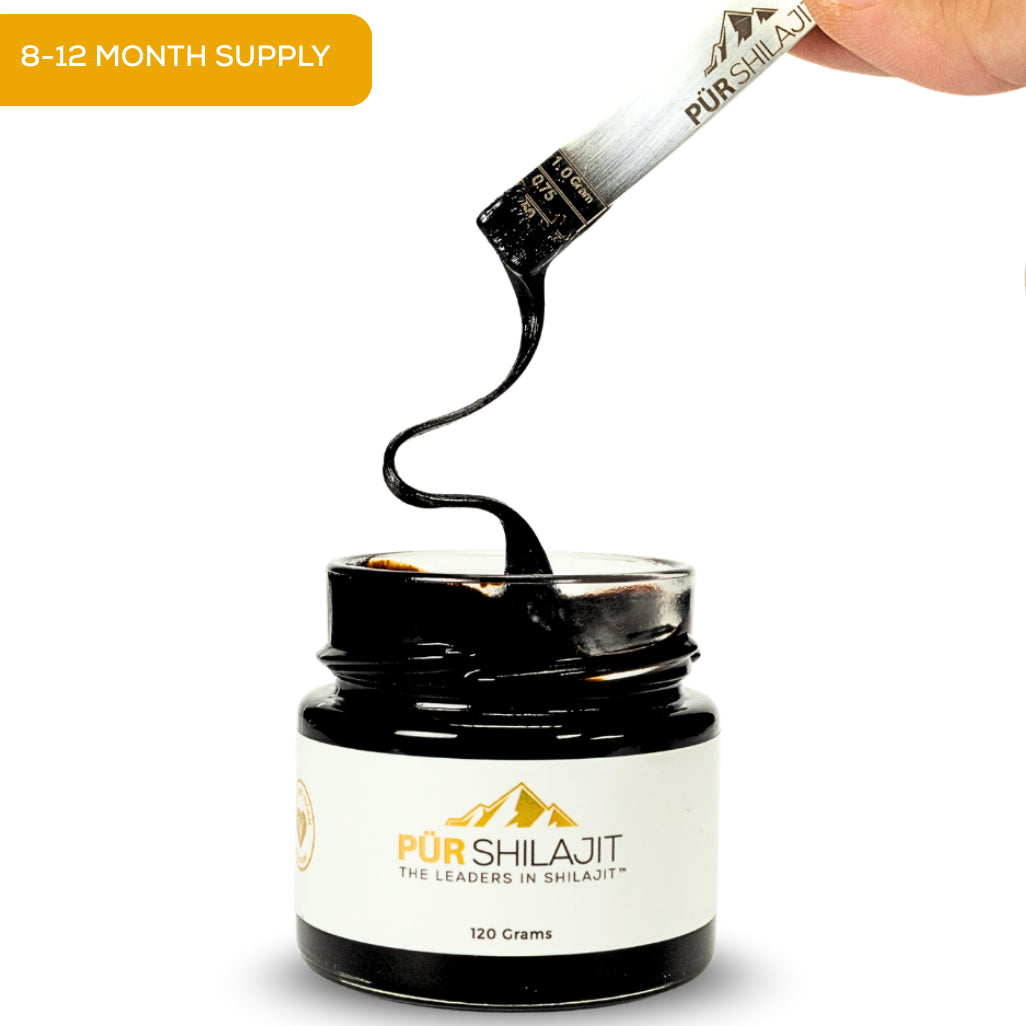
Shilajit Too Hard or Too Sticky? 5 Fixes for Resin That Won't Behave (No Microwave)
Short answer: Real shilajit resin changes texture with temperature: it firms up in the cold and softens with warmth. That's normal, not a defect. If yours is rock-hard, warm the closed jar gently in your hands or a bowl of warm water. If it's too sticky, give it a few minutes somewhere cool and use a clean, dry spoon. Skip the microwave.
You already know the moment. It's a cold morning, the kettle's on, and the spoon bends before the resin does. Or it's the middle of summer and the resin strings off the spoon like warm caramel. You figured that's just how this stuff is, and you're right. What almost nobody tells you is how easy each one is to fix.
Stick around for the founder's tip at the bottom; there's a little thank-you waiting there too. No. 4 is the one most people get wrong.
1. Rock-hard in winter: warm the jar, not the resin
A firm jar on a cold morning is a good sign. Real resin hardens in the cold, and it's one of the simplest things you can watch it do at home.
The fix: hold the closed jar in your hands for a minute, or set it in a bowl of warm tap water for a few minutes. Keep the lid on so no water gets inside. The resin softens from the outside in, and the top layer is ready first.
2. Lid stuck shut: hot water on the lid only
A little resin on the threads is what glues a lid shut, especially in winter.
Run just the lid under hot tap water for 2 to 3 minutes, dry your hands, and twist. It'll come right off. Then wipe the threads with a dry paper towel before you close it again, and it won't happen next time.
But a soft jar is only half of it. Sometimes the problem is the opposite.
3. Too sticky to portion: go cool and dry
In a warm kitchen, resin can cling to everything it touches. Two things help.
First, put the closed jar somewhere cool for a few minutes so the surface firms up. Second, use a clean, dry metal spoon and take your portion in one confident scrape instead of a few small digs. Aim for pea-sized, about 300 to 500 mg. If a strand follows the spoon, twist the spoon a half turn and it breaks off clean.
4. Won't dissolve: a warm splash first, then the rest
This is the one most people get wrong. Drop resin into a full mug of cold or lukewarm liquid and it sits at the bottom like a pebble.
Put your portion in the empty mug, add a small splash of warm (not boiling) water, and stir for about 30 seconds until it's gone. Then top up with water, tea or coffee. For iced coffee or a smoothie, dissolve it in that warm splash first and pour it in. You get the whole serving instead of a sticky lump on the ice.
5. Too soft after a hot day: move it, don't fix it
Left in a hot car or a sunny window, resin softens a lot. That's the same warmth response, just turned up.
Move the sealed jar to a cool, dark cupboard and give it time; it firms back up as it cools. Don't add anything to it, and keep the lid tight. If resin runs freely at normal room temperature, though, that's worth a closer look at the ingredient list. Real resin should pass the 30-second drip test, holding in the jar when you turn it upside down.
| Problem | Why it happens | The fix |
|---|---|---|
| 1. Rock-hard | Cold room or cold season | Warm the closed jar in your hands or warm water |
| 2. Stuck lid | Resin on the threads | Hot water on the lid for 2 to 3 minutes, then wipe the threads |
| 3. Too sticky | Warm kitchen | A few minutes somewhere cool, one scrape with a dry spoon |
| 4. Won't dissolve | Liquid too cold or too much of it | Warm splash first, stir 30 seconds, then top up |
| 5. Too soft | Hot car, sunny window | Cool, dark cupboard; let it firm back up |
Why we say skip the microwave
A microwave heats unevenly and fast, and it's easy to overdo. We never purify our resin with heat at any stage, so there's no reason to start in your kitchen. Gentle, outside-the-jar warmth does the job every time.
The Pür proof
We named the company Pür for a reason. Every jar is single-source resin from the Altai Mountains, hand-harvested around 14,000 feet and never below 13,500, sun-dried 70+ days and never purified with heat. No molasses, no water, nothing added: one ingredient.
That's exactly why it behaves the way it does. It hardens in the cold, softens with warmth and passes the 30-second upside-down drip test. Every batch is tested by Eurofins, an independent ISO 17025-accredited lab network, with reports published by lot number. California Prop 65 compliant, 84+ trace minerals.
The 120 g resin jar is $209, about $0.57 a day, or start with the 10 g jar at $34.99. Rather skip the spoon altogether? Tablets are binder-free, 2 a day. Family-owned since 2019, 155,000+ customers, and every order is covered by our 90-day money-back guarantee. As pür as pure gets, in any season.
Quick questions
Is it normal for shilajit resin to get hard? Yes. Real resin firms up in the cold and softens with warmth. Warm the closed jar gently and it's easy to scoop again.
Should I keep shilajit in the fridge? You don't need to. A cool, dry, dark cupboard with the lid sealed works well. The fridge just makes the resin firmer, which is harmless but harder to portion.
Should resin drip out of the jar? Not at room temperature. Real resin holds when the open jar is turned upside down for 30 seconds. If it runs freely, check the ingredient list for anything besides shilajit.
The founder's tip
Here's what I do every winter morning: the jar sits right next to the kettle. I flip the kettle on, and by the time the water's hot, the warmth coming off it has softened the top of the resin just enough to scoop. No bowls, no waiting, no bent spoons. And my spoon lives in a little cup beside the jar, always dry. I never rinse it right before I use it, because a drop of water in the jar is the one thing I don't want in there.
— Jason Reese, founder
A thank-you for reading this far: add any resin jar and The Spoon to your cart and use code RESINREPORT — the spoon's on me.
These statements have not been evaluated by the Food and Drug Administration. This product is not intended to diagnose, treat, cure, or prevent any disease.

Written by Jason Reese