Liquid Shilajit vs. Resin: The 3-Step Math That Shows What You're Really Paying For
Short answer: liquid shilajit is shilajit dissolved in a carrier, usually water, glycerin or another liquid base, so it pours from a dropper or a pouch instead of being scooped from a jar. That makes it convenient, but it also means part of every serving is carrier, not shilajit. Resin is the shilajit itself, with nothing added. The fair way to compare them is milligrams of actual shilajit per serving and the cost of those milligrams, not bottle price or serving count.
You already know a big number of servings on a bottle means little until you know what's in each one. Three steps get you to the real number, and the numbers tell you which one costs more.
Stick around for the founder's tip at the bottom; there's a little thank-you waiting there too.
Side by side
| Resin | Liquid shilajit | |
|---|---|---|
| What's in it | Shilajit only | Shilajit plus a carrier (water, glycerin or similar), sometimes flavors or preservatives |
| Shilajit per serving | 300 to 500 mg, measured by you | Varies widely; check the label for milligrams of shilajit, not milliliters of liquid |
| Convenience | Scoop and dissolve in warm water, coffee or tea | Squeeze or drop, no dissolving step |
| Shelf life once opened | Very stable kept dry and sealed | Water-based liquids may need preservatives or refrigeration; check the label |
| Easy to verify purity? | Yes: the 30-second drip test plus a batch lab report | Lab report only; the drip test can't work on something that's already liquid |
The math that matters: milligrams, not milliliters
A liquid label might say "60 servings" and look like great value. The question is how much shilajit is in each one. If a serving contains 100 mg of shilajit, you'd need three to five servings to match one pea-sized scoop of resin, and the real bottle count drops accordingly. Work it out in three steps:
- Find the milligrams of shilajit per serving on the supplement facts panel. If it's not listed, that's your first warning.
- Divide 400 mg by that number to see how many servings equal a typical resin dose.
- Divide the price by the adjusted number of days to get the real cost per day.
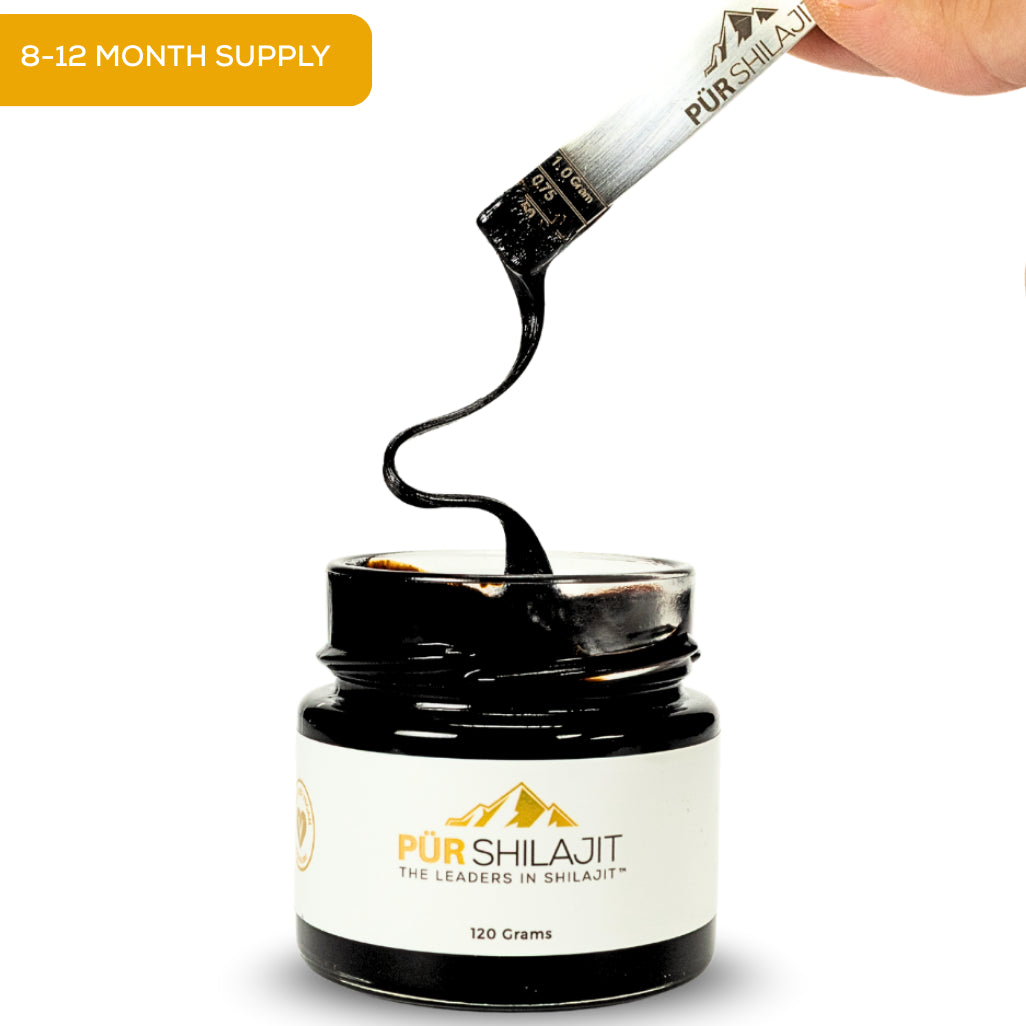
For reference, our 120 g resin jar works out to about $0.57 a day at list price. The full breakdown across forms is in How Much Does Shilajit Cost Per Day?
When liquid makes sense
Liquid isn't a bad choice. If you will genuinely never dissolve resin, and a dropper is what gets you to take it every day, consistency matters more than form. Just compare on milligrams, read the full ingredient list, and ask for a lab report on the finished liquid, not only the raw ingredient.
The Pür way: nothing to dilute
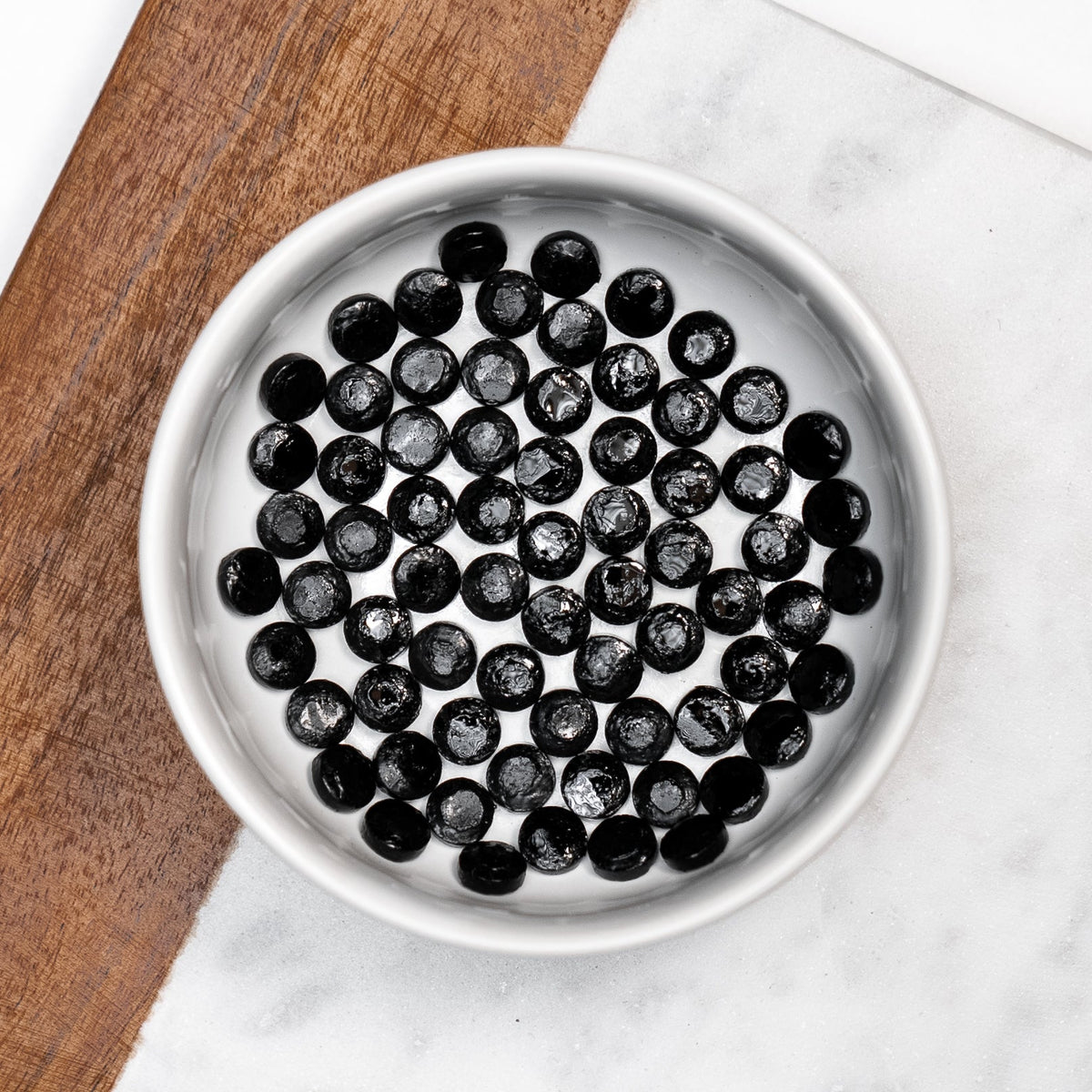
We don't make a liquid because the moment you add a carrier, you're selling less shilajit per serving. Our resin is single-source Altai shilajit, hand-harvested around 14,000 feet, sun-dried for 70+ days, never heat-purified. No molasses, no water, nothing added, which is exactly why it passes the 30-second drip test. Want zero prep instead? Our binder-free tablets and Daily Drive caps are the same pure resin, pre-measured, with nothing diluting it. Every batch is tested by Eurofins and published by lot number.
Quick questions
Is liquid shilajit more absorbable? Resin dissolves fully in warm water in about a minute, so by the time you drink it, it's a liquid too. The difference is what else is in the bottle.
Can I make my own liquid shilajit? Yes. Dissolve a serving of resin in a little warm water each morning. That's liquid shilajit with nothing added.
Why does liquid shilajit taste milder? Usually because there's less shilajit per serving, or because sweeteners and flavors were added.
The founder's tip
If you ever take resin in iced coffee, dissolve it in a splash of warm water first. Cold liquid dissolves it slowly, but warm water has it done in about a minute, and then you pour it over ice.
— Jason Reese, founder
A thank-you for reading this far: add any resin jar and The Spoon to your cart and use code RESINREPORT — the spoon's on me.
These statements have not been evaluated by the Food and Drug Administration. This product is not intended to diagnose, treat, cure, or prevent any disease.

Written by Jason Reese