Is Shilajit Vegan? 5 Label Checks for Vegan and Keto Routines (and the Capsule Shell Detail)
Short answer: shilajit itself is a mineral-rich resin that forms over long periods as plant matter breaks down inside mountain rock, so pure resin contains no animal ingredients and fits most vegan and plant-based routines. A serving is about a third of a gram, so it can't add meaningful sugar or carbs to a keto day either. What changes the answer is everything else in the product: the capsule shell, a tablet's binder or coating, a gummy's sweetener and gelling agent, a liquid's carrier. Read the ingredient list, not the front of the box.
You already know "plant-based" on the front of a box and the ingredient list on the back don't always agree. You've probably turned a bottle over in a store and found gelatin where you didn't expect it. Shilajit works the same way: the resin is simple. The format is where the surprises live.
Stick around for the founder's tip at the bottom; there's a little thank-you waiting there too. No. 3 is the one most people skip.
1. Start with what shilajit actually is
Shilajit is geological, not animal. It's plant material and minerals transformed in high mountain rock, then collected by hand where it seeps out. No animal is involved in forming it or harvesting it.
One caveat worth knowing: plant origin is not the same as a certification. If you rely on a certified vegan, kosher or similar seal, look for the seal itself. An origin story can't stand in for it.
2. Read the "other ingredients" line
This is where a one-ingredient product and a formulated one part ways. Some shilajit products add carriers, flavors or sweeteners to change texture or taste. Honey and molasses both show up in the category, and some vegans avoid honey.
The test is simple. If the ingredient list is one word long, there's nothing else to evaluate. If it's a sentence, read every word of it.
3. Check the capsule shell
This is the one most people skip, because the shell isn't the "active" part. Capsule shells are commonly made of gelatin, which is animal-derived, or a plant-based material, often listed as hypromellose (HPMC) or pullulan.
The shell is required to appear on the label, usually under other ingredients. If it just says "capsule," that's worth an email to the brand before you buy.
But the shell is only half of it. Tablets have their own fine print.
4. Look for binders and coatings on tablets
Pressed tablets sometimes include binders, fillers, flow agents or a glaze to hold their shape. Two worth recognizing: magnesium stearate, which can come from plant or animal sources, and shellac glaze, which comes from an insect resin.
Neither is unusual in supplements. They just matter if you're keeping an animal-free routine, and the label is the only place you'll find them.
5. Do the keto math on the serving, not the jar
A resin serving is 300 to 500 mg, about 0.33 g. Even if every bit of it were carbohydrate, that's a third of a gram, far below anything a keto day would notice.
Flavored formats are a different calculation. Gummies are usually built on sugar or sugar alcohols, and liquids may use glycerin or sweeteners. Check grams of sugar per serving, then multiply by how many servings it takes to match a resin serving.
The formats at a glance
| Format | What the label may list | Vegan check | Keto check |
|---|---|---|---|
| Resin | Shilajit only, if it's one ingredient | Confirm nothing else is listed | About 0.33 g per serving |
| Capsules | Shilajit plus a shell, sometimes fillers | Gelatin or plant-based shell? | Check any fillers |
| Tablets | Shilajit, sometimes binders or a glaze | Look for animal-sourced binders or shellac | Usually negligible |
| Gummies | Extract, sweeteners, gelatin or pectin, flavors | Gelatin or pectin? | Sugar per gummy, per the label |
| Liquid drops | Extract plus a carrier such as water or glycerin | Carrier and any sweetener | Sweetener per serving, per the label |
The Pür proof
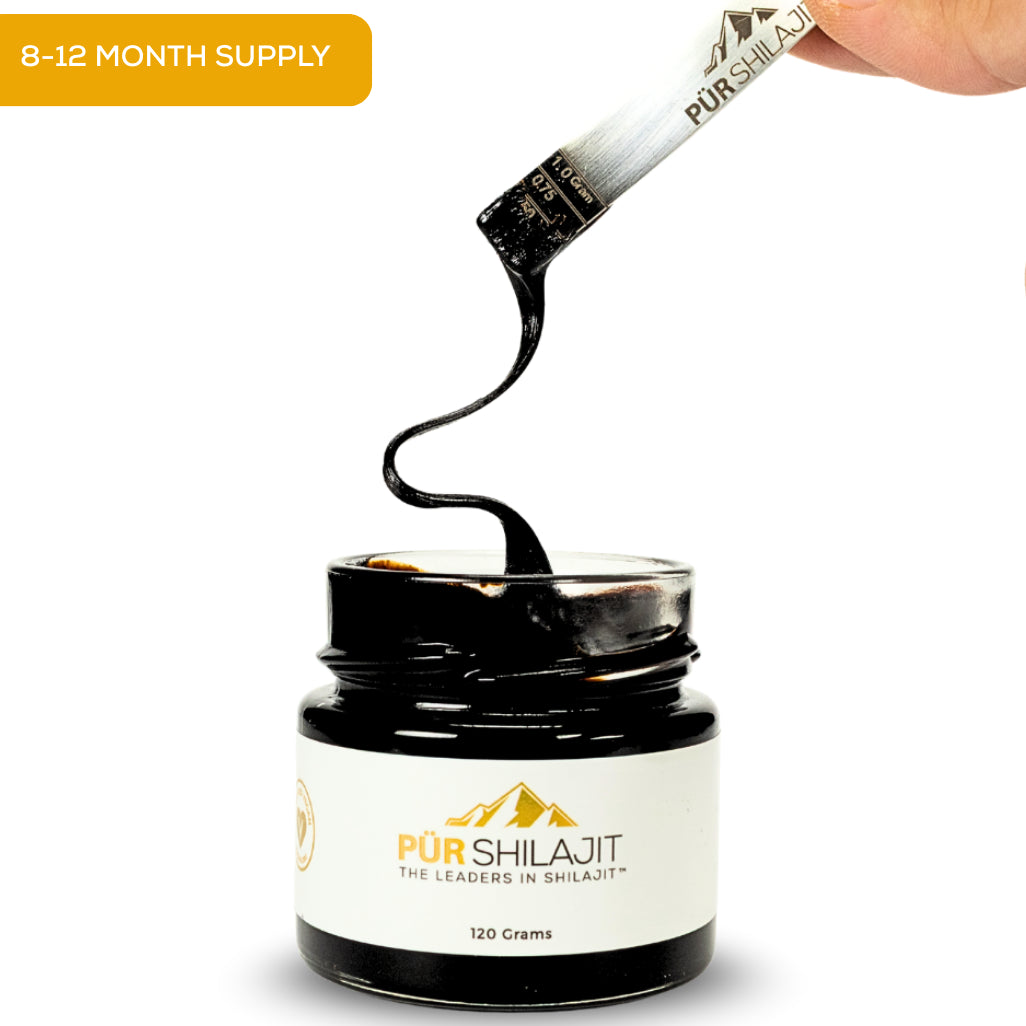
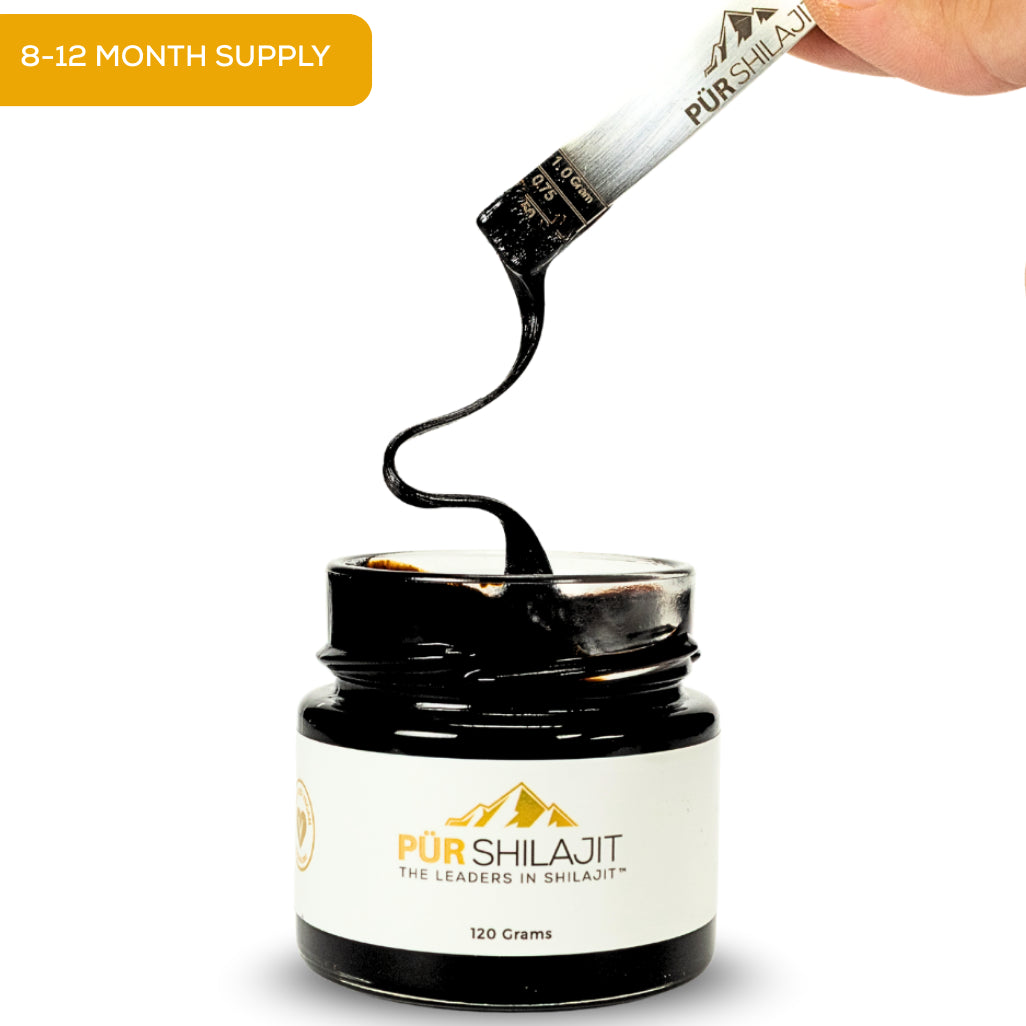
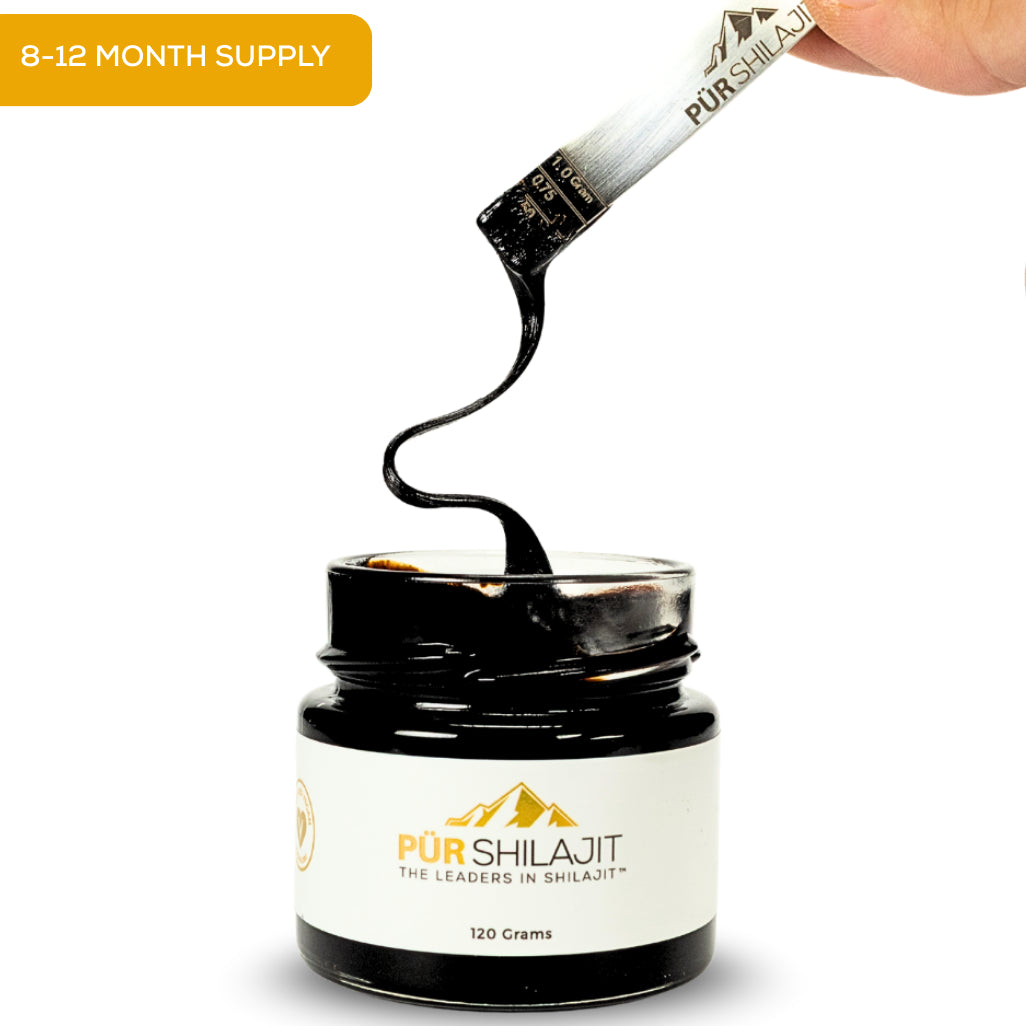
We named the company Pür for a reason: there's nothing on our resin label to read past. It's one ingredient, single-source from the Altai Mountains, hand-harvested around 14,000 feet and never below 13,500. It's sun-dried for 70+ days and never purified with heat. No molasses, no water, nothing added.
Our tablets are that same resin, pressed binder-free; two a day (0.4 g) is the serving. Prefer the spoon? The resin jar is the purest way to take it, and it passes the 30-second upside-down drip test.
Every batch is tested by Eurofins, an independent ISO 17025-accredited lab network, and the reports are published by lot number. It's California Prop 65 compliant, with 84+ trace minerals. Family-owned since 2019, 155,000+ customers, and covered by a 90-day money-back guarantee. As pür as pure gets.
Quick questions
Is shilajit vegan? The resin itself contains no animal ingredients. Whether a specific product fits a vegan routine depends on what's added, so check the other ingredients and the capsule shell.
Does shilajit break keto? Pure resin is served at about a third of a gram, so it can't add more than that. Gummies and flavored liquids are different; check sugar per serving on the label.
Is shilajit gluten-free? Pure resin has no grain in it. If you avoid gluten strictly, look for a tested gluten-free claim on the label rather than assuming, for any supplement.
The founder's tip
I read the back of a label before I read anything on the front. Here's a habit that's saved me more than once: the first time you buy a supplement, snap a photo of the back panel and keep it in a folder on your phone called "labels." When you reorder, or a formula quietly changes, you can compare in ten seconds. For a resin jar, that photo should show an ingredient list one word long.
— Jason Reese, founder
A thank-you for reading this far: add any resin jar and The Spoon to your cart and use code RESINREPORT — the spoon's on me.
These statements have not been evaluated by the Food and Drug Administration. This product is not intended to diagnose, treat, cure, or prevent any disease. Talk to your doctor before starting any supplement if you're pregnant, nursing, or under medical care.

Written by Jason Reese