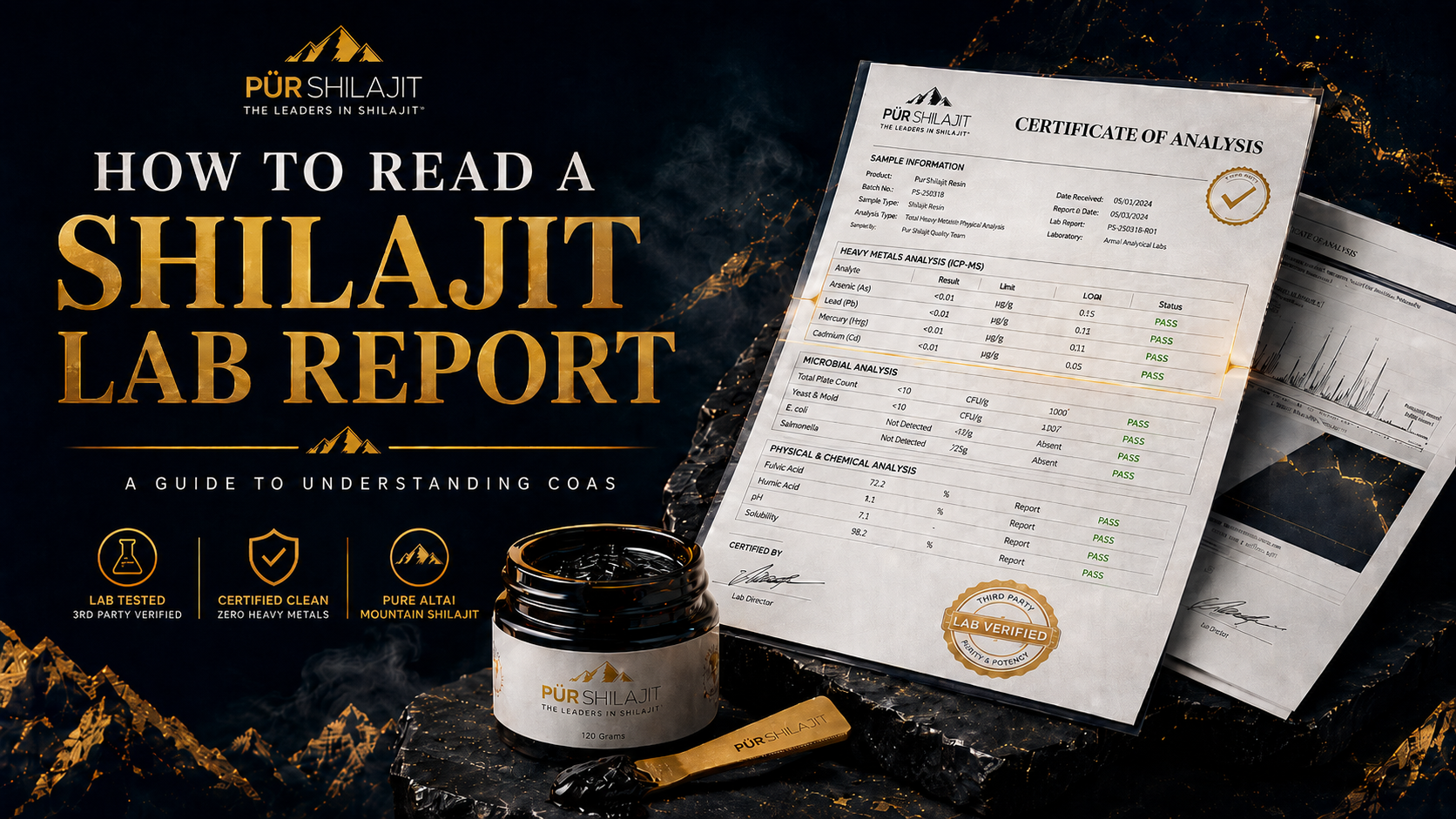
Shilajit Safety Guide
How to Read a Shilajit Lab Report
Heavy metals, Prop 65, fulvic acid, ICP-MS, and COAs explained in plain English — so you can separate real transparency from marketing noise.
A “lab tested” badge is not proof. A real Certificate of Analysis should show the lab name, lot number, test date, method, and measurable results.
What Is a Shilajit COA?
A Certificate of Analysis, or COA, is a laboratory report that shows what was tested in a specific product batch. For shilajit, this matters because authentic shilajit is a natural mineral resin. Its quality depends on where it was harvested, how it was processed, and whether each batch was independently tested.
- Batch or lot number
- Independent laboratory name
- Testing date
- Heavy metals panel
- Microbial testing
- Fulvic or humic substance data
- Testing method, such as ICP-MS
Heavy Metals in Shilajit Explained
Shilajit comes from mineral-rich mountain environments. Trace elements may naturally occur, but trace does not automatically mean unsafe. The real question is whether the product has been tested and whether results are within applicable safety limits.
What Does PPM Mean?
PPM means parts per million. It is a tiny measurement used to show how much of a substance is present. Modern lab equipment can detect extremely small amounts, so the goal is not fear. The goal is context, transparency, and verified safety.
What Is ICP-MS?
ICP-MS stands for Inductively Coupled Plasma Mass Spectrometry. It is one of the most sensitive methods used to detect heavy metals in supplements. In simple terms, it can measure metals at extremely small concentrations, often down to parts-per-billion sensitivity.
Prop 65 Explained
California Proposition 65 is one of the strictest consumer warning standards in the United States. For shilajit buyers, Prop 65 compliance matters because it forces brands to pay attention to exposure limits, not just vague purity claims.
Fulvic Acid Testing
Fulvic acid is one of the natural compounds associated with authentic shilajit. However, fulvic acid claims should be tied to real laboratory testing, not inflated marketing numbers.
When reviewing fulvic acid data, look for the lab name, method, date, and whether the report connects to the actual batch being sold.
COA Red Flags
- Cropped screenshots with missing information
- No lot number
- No lab name
- No testing date
- Only “lab tested” badges
- In-house testing only
- No heavy metal results
- No microbial results
- No testing method listed
How to Verify a Shilajit Brand
| What to Check | Why It Matters |
|---|---|
| Lot number | Connects the report to the actual batch being sold. |
| Lab name | Shows whether testing was performed by an independent laboratory. |
| Testing date | Confirms the report is current, not outdated. |
| ICP-MS method | Shows sensitive heavy metal testing. |
| Heavy metals panel | Verifies lead, cadmium, arsenic, and mercury levels. |
| Fulvic acid data | Supports potency and authenticity claims. |
Pür Shilajit’s Transparency Standard
At Pür Shilajit, we believe customers should be able to see the data behind the product.
Our current lab-results page includes third-party testing documentation, lot information, Prop 65 compliance details, and specific ppm results for lead, cadmium, arsenic, and mercury.
We do not believe trust should be built on badges alone. It should be built on visible reports, clean sourcing, careful processing, and batch-level accountability.
Frequently Asked Questions
What is a shilajit COA?
A shilajit COA, or Certificate of Analysis, is a lab report showing batch-specific test results such as heavy metals, microbial safety, fulvic acid data, lab name, lot number, date, and testing method.
What heavy metals should shilajit be tested for?
Shilajit should commonly be tested for lead, cadmium, arsenic, and mercury using a sensitive laboratory method such as ICP-MS.
Does detectable heavy metal content mean shilajit is unsafe?
Not automatically. Modern labs can detect tiny trace amounts. What matters is whether the results are tested, documented, and within applicable safety limits.
Is a “lab tested” badge enough?
No. A lab tested badge should be supported by a full Certificate of Analysis showing the lab name, lot number, date, testing method, and actual results.
Why does batch testing matter?
Natural products can vary between harvests. Batch testing helps confirm that the product being sold matches current quality standards.
Trust the Report, Not the Hype.
Before buying shilajit, ask for the COA. Verify the lab. Check the batch. Read the numbers.
View Our Lab Results