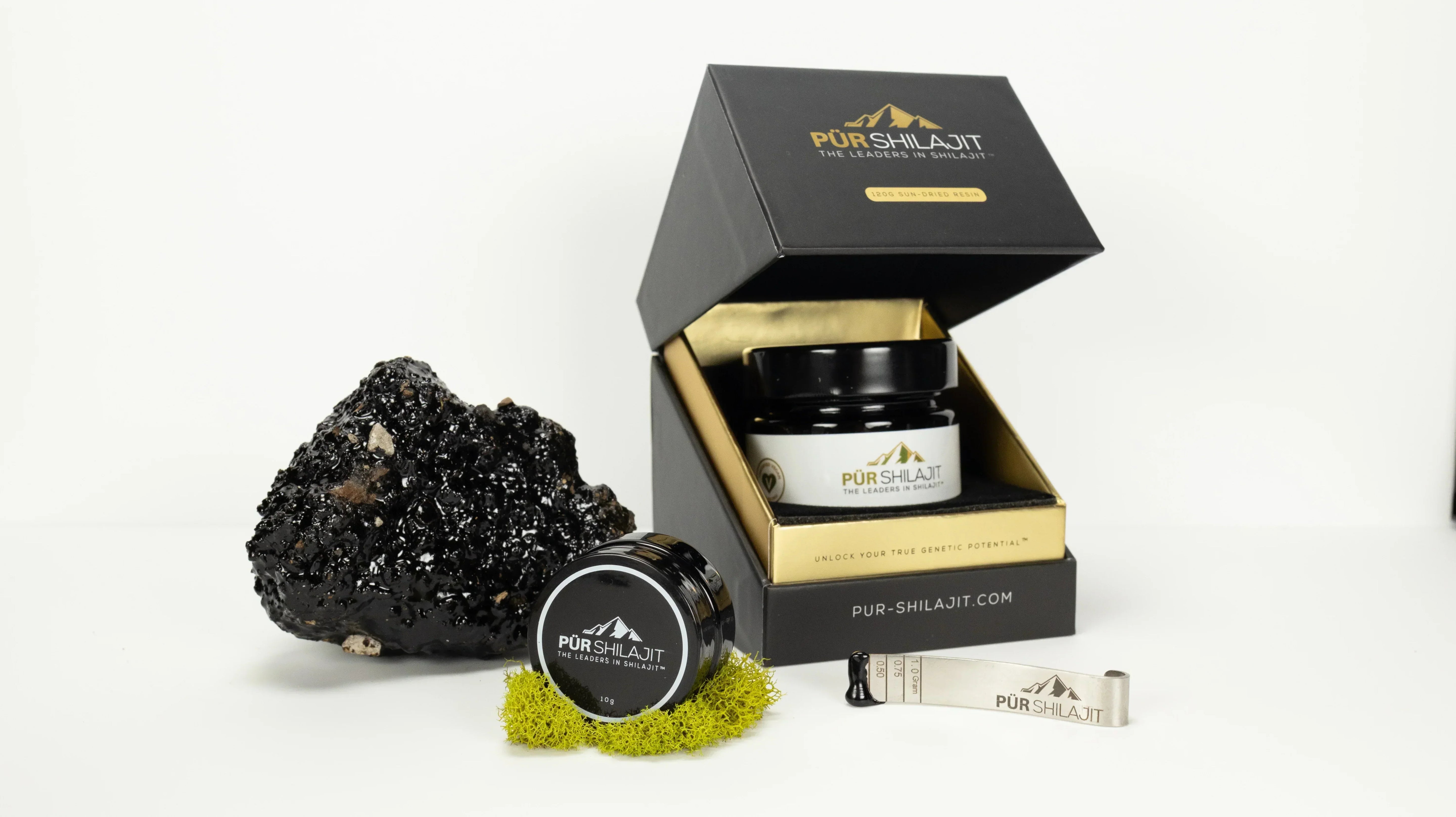
A clear, practical guide to what shilajit is, how women use it, and how to choose a pure, lab-tested resin.
1) Shilajit for Women: The Basics
What it is: Shilajit is a mineral-rich resin formed over centuries in mountain rock. When purified correctly, it delivers naturally occurring fulvic acid and 84+ trace minerals that support normal cellular energy production and mineral replenishment.*
Suggested Serving
| Level | Daily Amount | Notes |
|---|---|---|
| Starter | 150–200 mg | ~rice-grain of resin in warm water or milk |
| Standard | 300–500 mg | Once daily, same time each morning |
Common Myths (Busted)
- “It’s only for men.” False. It’s a trace-mineral supplement — minerals don’t check your ID.
- “All forms are equal.” Resin is the least-processed form; many powders and blended capsules are diluted with fillers.
- “A jar is a jar.” Without a public lab report, you have no idea what’s inside. Always check the COA.
Precaution: Avoid during pregnancy or breastfeeding. Consult your provider if managing chronic conditions or prescriptions.
2) How Women Fit Shilajit Into Their Routine
Steady Daily Energy*
Shilajit supports normal cellular energy production — no caffeine, no jitters, no crash. Most women take it in place of (or alongside) their morning coffee.
Mineral Replenishment*
Modern diets often run short on trace minerals. Shilajit’s broad mineral profile helps fill those everyday gaps as part of a balanced routine.
An Easy Ritual To Keep
Dissolve a pea-sized serving in warm water or milk, or take a one-a-day capsule. Consistency — same time every morning — matters more than anything else.
3) How to Choose & Use Shilajit Safely
How to Identify Pure Shilajit
- Lab-tested: Check the COA for heavy metals, microbes, and fulvic %.
- Authentic resin: Thick at room temp, fully dissolves, minimal residue.
- No fillers: Avoid capsules padded with cellulose and additives.
Forms & Usage
- Resin: Dissolve in warm (not boiling) water or milk.
- Capsules/Tablets: Ours are low-temp processed resin — no fillers.
- Avoid: Mixing with alcohol.
FAQ: Shilajit for Women
- Can women take Shilajit daily?
- Yes. A 150–500 mg daily serving of lab-tested, pure resin is the standard routine. Avoid during pregnancy or breastfeeding.
- Is Shilajit different for women than for men?
- No — it’s the same single-ingredient mineral supplement. Serving size, not gender, is the only variable.
- Resin or capsules?
- Resin is the classic, least-processed form. Our capsules are the same resin, pre-measured for convenience.
- What should I check before buying?
- A public, batch-specific lab report (COA), harvest elevation, and a resin that passes the 30-second drip test.
Disclaimer: For educational use only. Not a substitute for professional medical advice. Consult your healthcare provider before use if pregnant, nursing, or managing health conditions. *These statements have not been evaluated by the Food and Drug Administration. This product is not intended to diagnose, treat, cure, or prevent any disease.