Shilajit vs. Protein Powder: 5 Differences (and Why One Uses a Scoop, One a Spoon)
Short answer: Shilajit and protein powder do different jobs, so one doesn't replace the other. Protein powder is a concentrated food protein you take by the scoop, measured in grams. Shilajit resin is a one-ingredient mountain resin you take by the spoon, about 300 to 500 mg a day. Plenty of people keep both on the same shelf.
You already know your protein tub. The scoop that's always buried at the bottom, the flavor you finally settled on, the shaker that never quite smells clean. What most people never stop to think about is how little that tub has in common with the small dark jar sitting right next to it.
Stick around for the founder's tip at the bottom; there's a little thank-you waiting there too. No. 3 is the one most people skip.
1. One is a food protein, the other is a mountain resin
Protein powder is exactly what it sounds like: protein concentrated from a food source. Whey and casein come from milk. Plant versions usually come from pea, rice, soy or a blend, per the label.
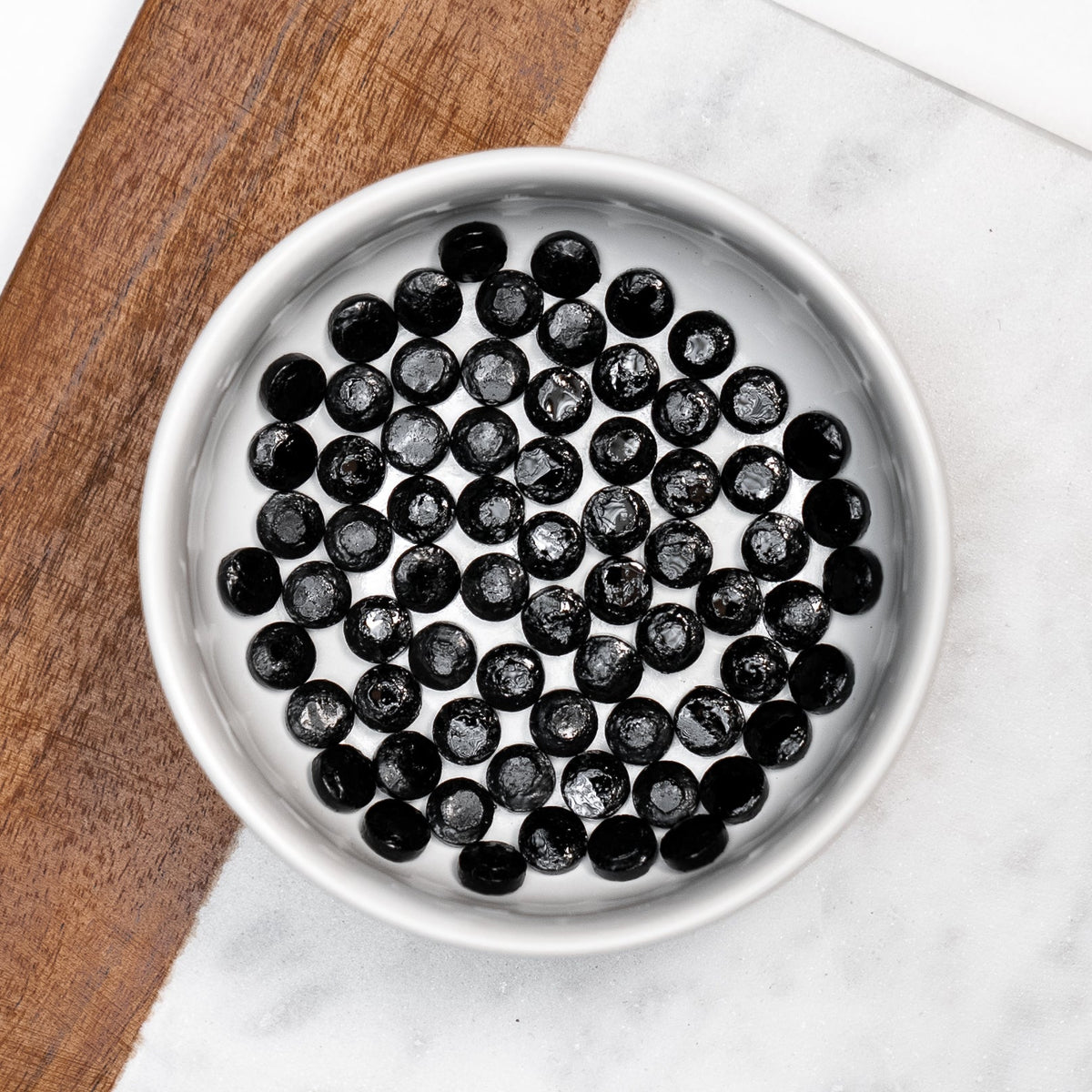
Shilajit is something else entirely. It's a dark resin that seeps from high mountain rock after plant matter breaks down over a very long time. Ours comes from a single source in the Altai Mountains, hand-harvested around 14,000 feet.
2. Grams vs. milligrams
A protein serving is measured in grams, and one scoop often lands somewhere between 25 and 40 grams, per the label. That's a meal-sized amount of food.
A shilajit serving is 300 to 500 mg of resin, about a third of a gram. Think grain of rice to small pea. That's why one comes with a scoop and the other with a spoon.
But size is only half of it.
3. The ingredient list
Turn a protein tub around and you'll usually find more than protein: flavors, sweeteners, thickeners, sometimes added vitamins or enzymes. None of that is wrong. It's just worth reading, because "vanilla" can mean a dozen different things.
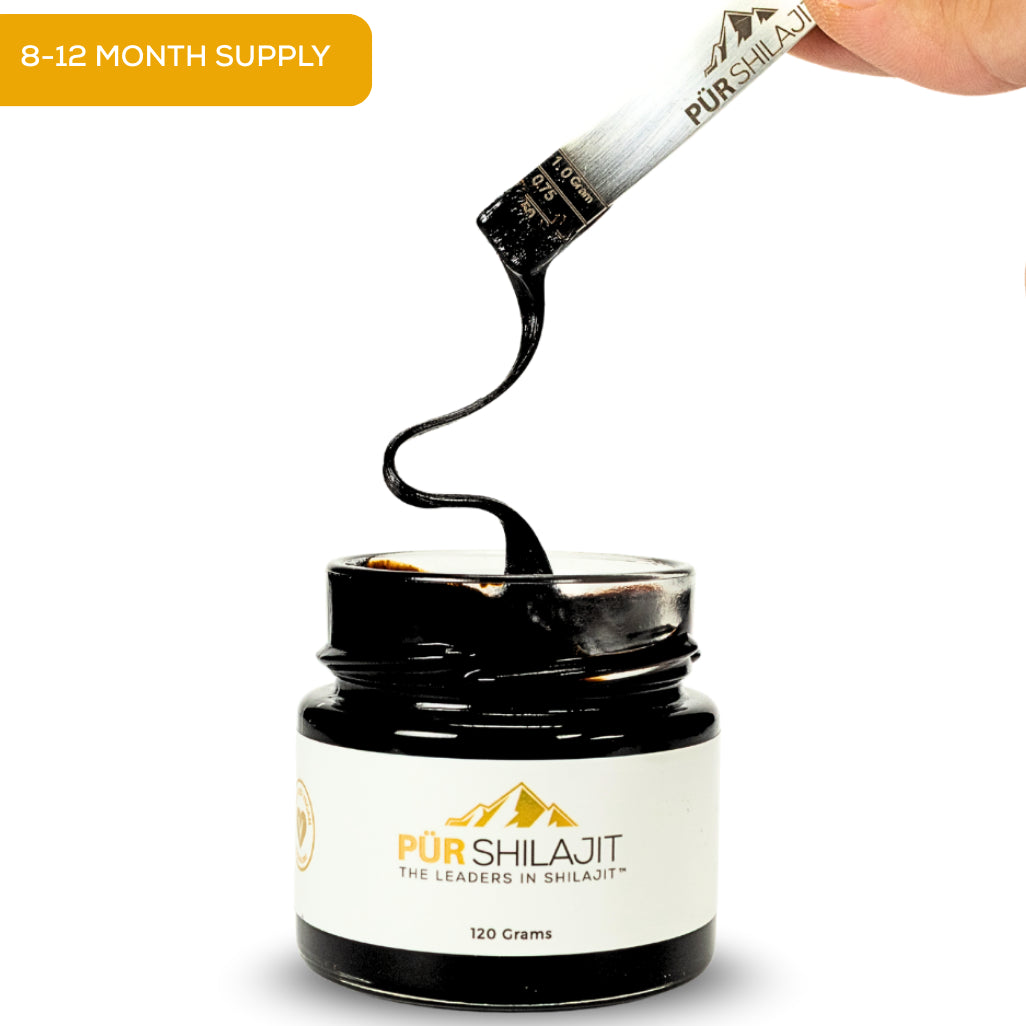
Now turn a jar of pure shilajit resin around. The list should be one line long. Ours reads: shilajit resin. No molasses, no water, nothing added. If a resin label runs longer than that, it's fair to ask what the extra ingredients are doing there.
4. What the lab report should show
With protein powder, buyers usually look at protein per serving and whether the product has been tested for contaminants; some tubs carry a third-party certification seal, per the label.
With shilajit, the questions are heavy metals, microbes and purity, batch by batch. Every Pür batch is tested by Eurofins, an independent ISO 17025-accredited lab network, and the reports are published by lot number on our lab results page. You can match the lot on your jar to its report.
5. How you actually take them
Protein powder goes into a shaker, a smoothie or a bowl of oats. It's built to be blended into food.
Shilajit resin dissolves in warm (not boiling) water or tea, or you can let a small piece melt on your tongue. And yes, both can share the same morning. The trick is the order, which is exactly what the founder's tip below covers.
Side by side
| Protein powder | Pür Shilajit Resin | |
|---|---|---|
| What it is | Concentrated food protein from milk or plants, per the label | One-ingredient mountain resin |
| Typical serving | Often 25 to 40 g a scoop, per the label | 300 to 500 mg (about 0.33 g) |
| Measured with | A scoop | A small spoon |
| Ingredient list | Varies; flavors, sweeteners and thickeners are common | Shilajit resin. That's it. |
| How it's taken | Shaken, blended or stirred into food | Dissolved in warm water or tea, or on the tongue |
| Testing to look for | Protein per serving and contaminant testing, per the label | Batch reports by lot number (ours: Eurofins) |
The Pür proof
We named the company Pür for a reason. Here's what that looks like in the jar:
- Single-source resin from the Altai Mountains, hand-harvested around 14,000 feet and never below 13,500.
- Sun-dried for 70+ days. Never purified with heat.
- One ingredient. No molasses, no water, nothing added.
- Passes the 30-second upside-down drip test; hardens in the cold and softens with warmth.
- Every batch tested by Eurofins, reports published by lot number. California Prop 65 compliant. 84+ trace minerals.
- Family-owned since 2019, 155,000+ customers, backed by our 90-day money-back guarantee.
One small serving a day, one ingredient, one resin jar that goes a long way. As pür as pure gets.
Quick questions
Can I mix shilajit into my protein shake? Yes. Dissolve the resin in a splash of warm water first, then add it to the shaker. Dropped straight into a cold shake, resin firms up and tends to cling to the bottom.
Does shilajit replace protein powder? No. Protein is a macronutrient that comes from food, and a scoop delivers a meal-sized amount of it. A shilajit serving is a few hundred milligrams of resin and isn't a protein source. They're different things.
Should I take them at the same time? Take them whenever you'll actually stick with it. Many people take shilajit in the morning with warm water and have protein whenever it fits their meals. Consistency beats perfect timing.
The founder's tip
My resin and my protein tub sit on the same shelf, and for a long time I made the same mistake every morning: I'd drop the resin straight into a cold shake, then find it stuck to the bottom of the shaker an hour later. Cold makes resin firm up. Now I put my serving in a shot glass with a splash of warm water, give it 30 seconds and a stir, and pour that into the shaker before the powder and the cold milk go in. It disappears completely. One more thing: keep a dedicated dry spoon just for the resin. A wet spoon fresh out of the shaker is how jars get messy.
— Jason Reese, founder
A thank-you for reading this far: add any resin jar and The Spoon to your cart and use code RESINREPORT — the spoon's on me.
These statements have not been evaluated by the Food and Drug Administration. This product is not intended to diagnose, treat, cure, or prevent any disease. Talk to your doctor before starting any supplement if you're pregnant, nursing, or under medical care.

Written by Jason Reese