Shilajit vs. Maca Root: 5 Differences (and the Surprising Thing They Share)
Short answer: Maca is a root vegetable grown in the high Andes of Peru and usually sold as a dried powder; shilajit is a mineral-rich resin that forms in high mountain rock and is taken in a pea-sized serving. One is a food crop measured by the spoonful, the other a resin measured in milligrams. They don't do the same job, so plenty of people keep both in the same morning routine.
You already know the morning smoothie has turned into a group project: a scoop of this, a spoon of that, and a powder somebody swore by. Maca has probably been in that blender at some point. What most people never stop to ask is how a root you can eat by the spoonful compares to a resin you take by the pea-sized bit. The answer is simpler than the labels make it look.
Stick around for the founder's tip at the bottom; there's a little thank-you waiting there too. No. 5 is the one most people skip.
1. One is a root. The other is a resin.
Maca (Lepidium meyenii) is a plant in the same family as broccoli and radishes. People in the Andes have eaten the root as a food for generations, and today it's mostly sold dried and ground into powder or packed into capsules.
Shilajit isn't grown at all. It's a dark, tar-like resin that forms slowly in high mountain rock as ancient plant matter breaks down. Nobody plants it; it's found and harvested by hand.
2. Where they come from (and the surprising thing they share)
Here's the twist: both are high-altitude products. Maca is cultivated on the high plateaus of the Peruvian Andes, where few other crops survive. Our shilajit is hand-harvested in the Altai Mountains around 14,000 feet, never below 13,500.
The difference is what "origin" means for each. Maca is a farmed crop, so origin tells you where it was grown. Shilajit is gathered from rock, so origin tells you exactly where in the mountains it came from, and that's worth having documented.
But that's only half of it. What ends up in the jar is different, too.

3. What's actually inside
Nutritionally, maca behaves like the root vegetable it is: mostly carbohydrate, with some fiber and protein. That's why it blends into smoothies and oatmeal so easily and tastes earthy, a little malty.
Shilajit's signature is fulvic acid, a compound formed over centuries in mineral-rich mountain soil. In our resin it travels with 84+ trace minerals. It doesn't taste like breakfast; it tastes like the mountain, smoky and bitter.
4. Serving size and form
Maca servings are measured in grams of powder, often a spoonful or more, per the label. You'll see it sold raw or "gelatinized," which means it was cooked and dried to remove some of the starch. Labels usually say which one you're getting, so it's worth a look.
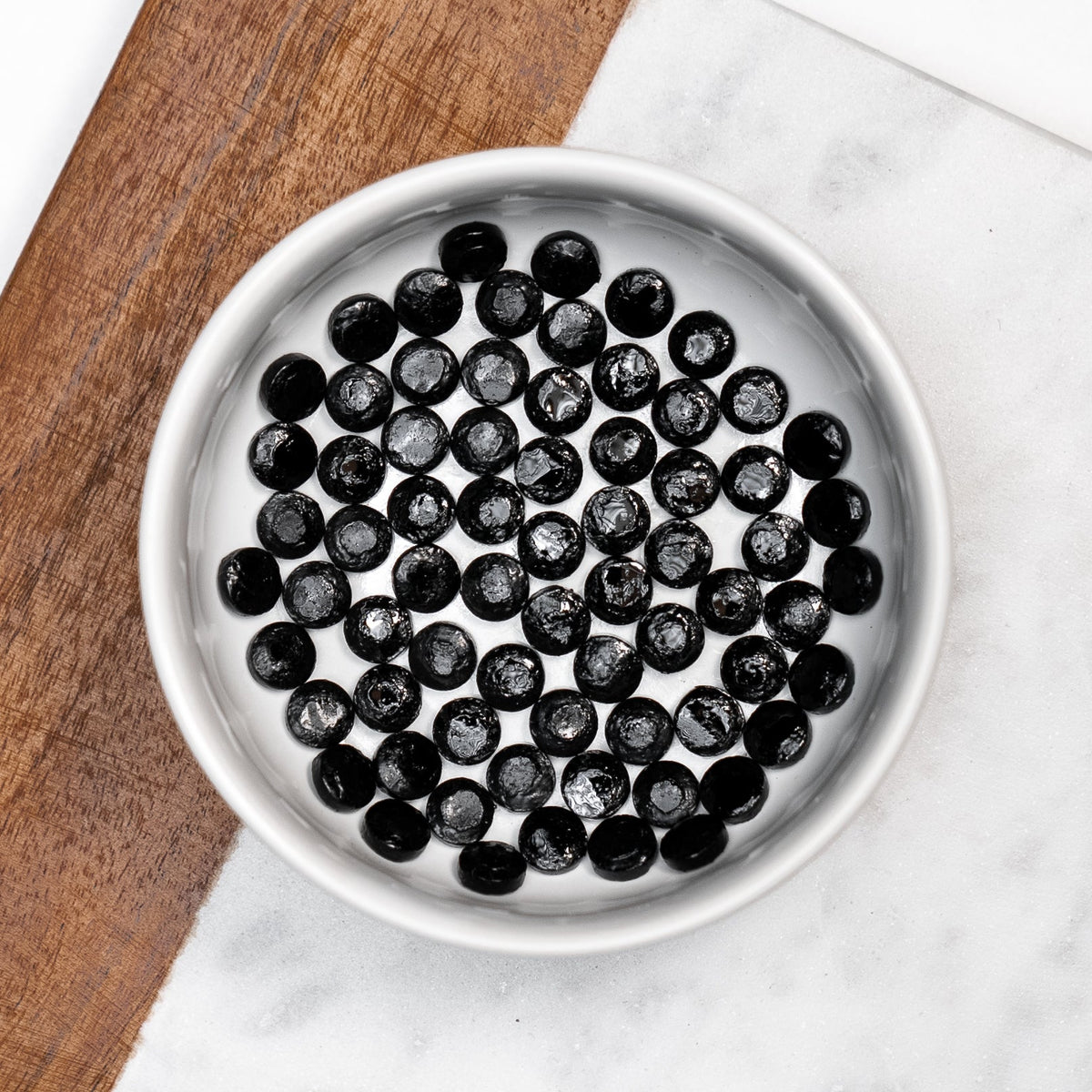
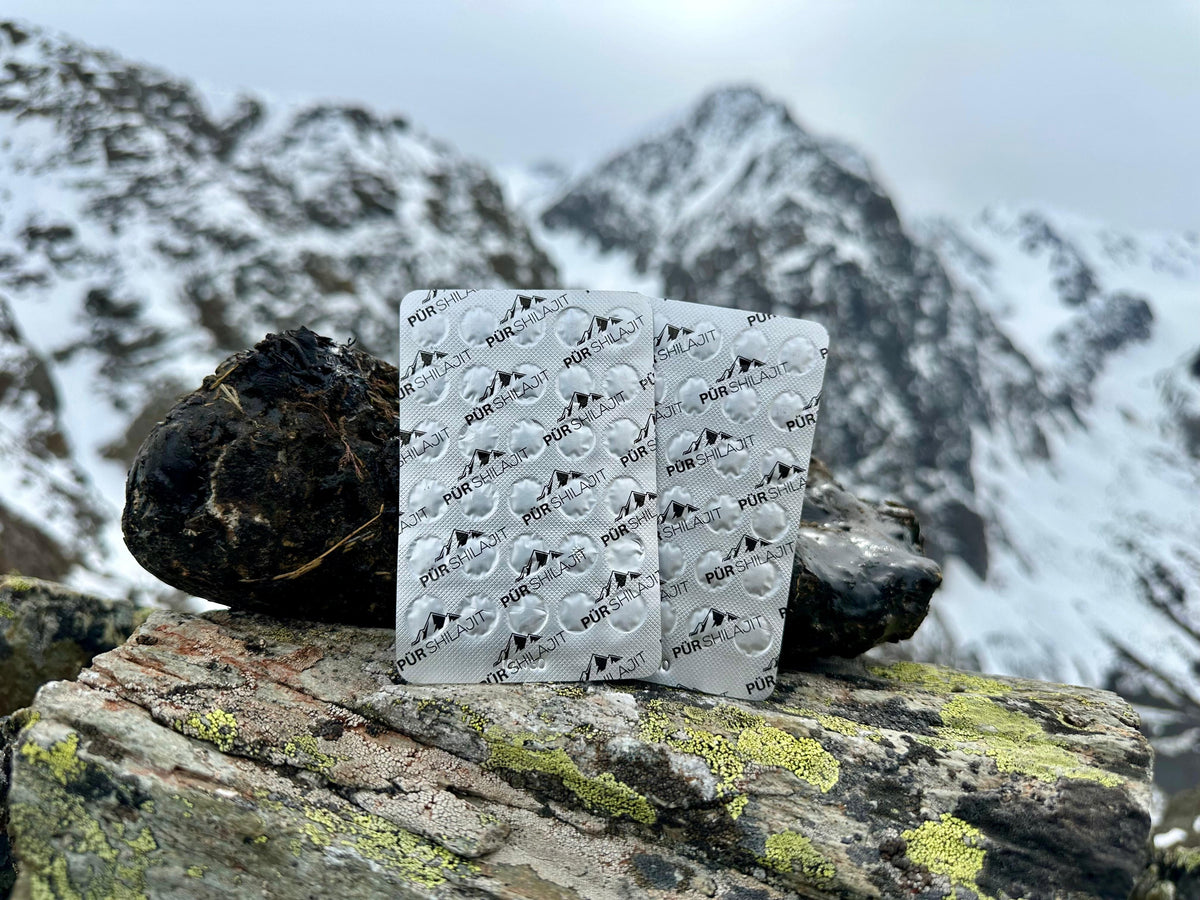
Shilajit resin is measured in milligrams: 300 to 500 mg (about 0.33 g), roughly a pea-sized amount, once a day. Our tablets are 2 a day (0.4 g) and binder-free, and Daily Drive is 1 vegan cap (500 mg).
| Maca root | Pür Shilajit resin | |
|---|---|---|
| What it is | A root vegetable (brassica family) | A mineral-rich resin from mountain rock |
| Origin | Cultivated in the high Andes of Peru | Single-source Altai, around 14,000 feet |
| Common forms | Raw or gelatinized powder, capsules | Resin, binder-free tablets, vegan caps |
| Serving | Grams of powder, per the label | 300 to 500 mg, pea-sized |
| Taste | Earthy, malty | Smoky, bitter |
| What to check | Origin, raw vs. gelatinized, testing | Lot-numbered lab report, one ingredient |
5. How you check what you're buying
This is the one most people skip. With maca, read for three things: where it was grown, whether it's raw or gelatinized, and whether the brand shares third-party testing.
With shilajit, the checks are different because it's a resin, not a crop:
- One ingredient. Resin only: no molasses, no water, no flavors.
- A lab report for your lot. Not a general certificate; the report that matches the number on your jar.
- The drip test. Flip the open jar upside down for 30 seconds. Thick resin stays put.
- Temperature behavior. Real resin firms up in the cold and softens with warmth.

The Pür proof
We named the company Pür for a reason. Our resin is single-source from the Altai Mountains, hand-harvested around 14,000 feet, sun-dried for 70+ days and never purified with heat. One ingredient, nothing added. It passes the 30-second upside-down drip test, hardens in the cold and softens with warmth.
Every batch is tested by Eurofins, an independent ISO 17025-accredited lab network, and the reports are published by lot number. It's California Prop 65 compliant and carries 84+ trace minerals.
- Resin: 120 g for $209, about $0.57 a day, or try the 10 g jar at $34.99.
- Tablets: 12 g for $44.99, 24 g for $63.99.
- Daily Drive: 30 vegan caps for $44.99.
Family-owned since 2019, trusted by 155,000+ customers, and backed by a 90-day money-back guarantee. As pür as pure gets.
Quick questions
Can you take shilajit and maca together? Many people do, often in the same morning: maca blended into food, shilajit dissolved in warm water or taken as a tablet. If you're under medical care, check with your doctor before adding either.
Is maca a mineral supplement like shilajit? Not really. Maca is a root vegetable eaten as food. Shilajit is a resin whose signature is fulvic acid alongside trace minerals.
Which is easier to measure? Maca is scooped by the gram, per the label. Shilajit resin is a pea-sized 300 to 500 mg; tablets and caps take the guesswork out completely.
The founder's tip
If you're a smoothie person, here's the mistake I see all the time: dropping cold resin straight into the blender. It just grabs onto the blade and sulks. Put the pea-sized bit in a mug with a splash of warm water instead, give it a minute and a stir, and pour that in with everything else. It disappears completely, maca and all. Takes thirty seconds, and you'll never chase a sticky lump around the pitcher again.
— Jason Reese, founder

A thank-you for reading this far: add any resin jar and The Spoon to your cart and use code RESINREPORT — the spoon's on me.
These statements have not been evaluated by the Food and Drug Administration. This product is not intended to diagnose, treat, cure, or prevent any disease. Talk to your doctor before starting any supplement if you're pregnant, nursing, or under medical care.

Written by Jason Reese