Shilajit Sticks vs. a Jar: 5 Differences That Change Your Real Cost Per Serving
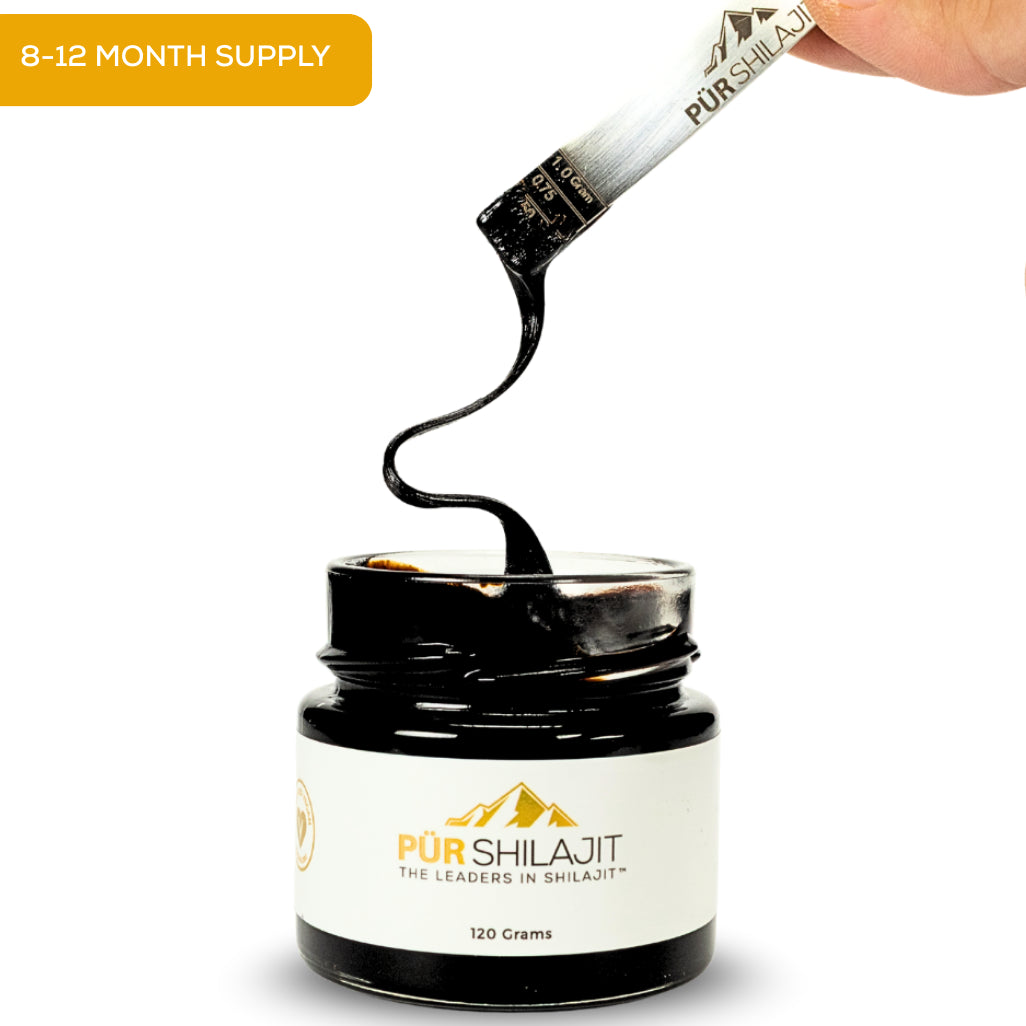
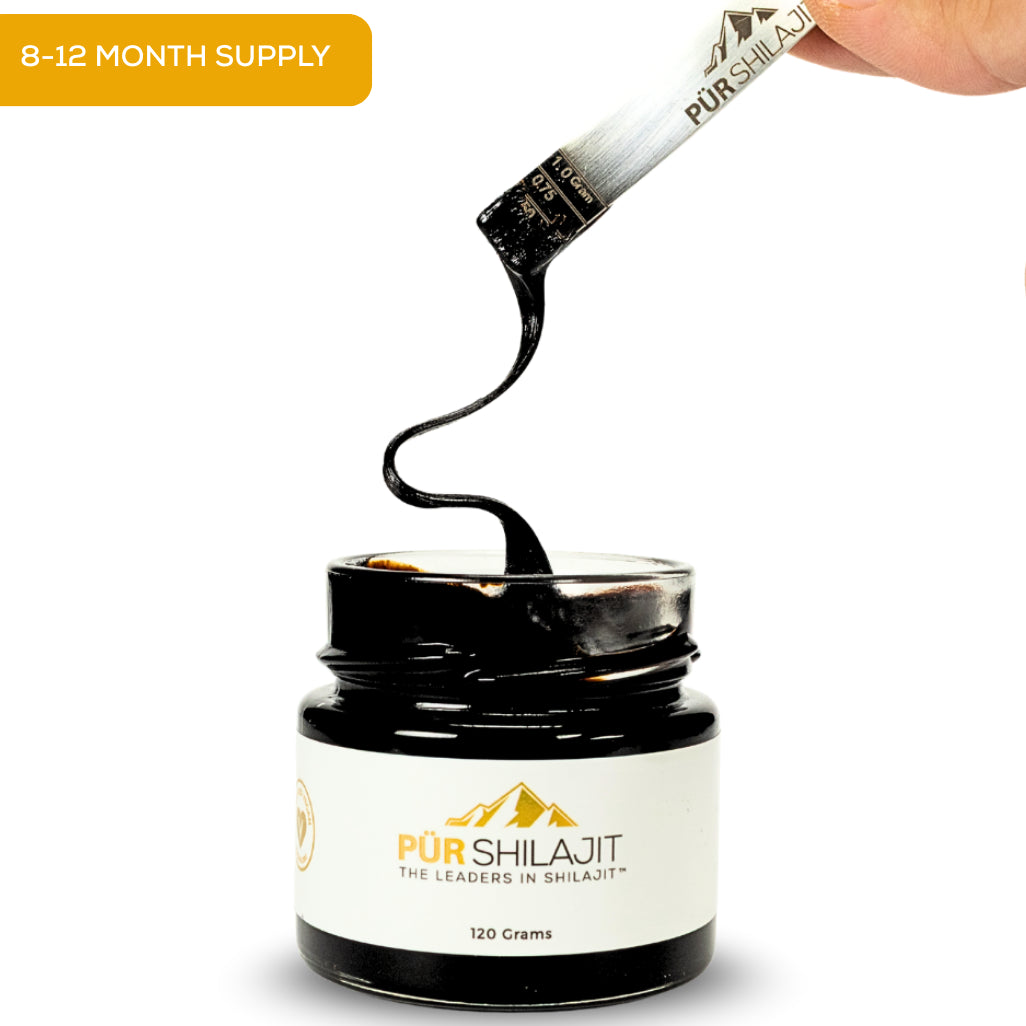
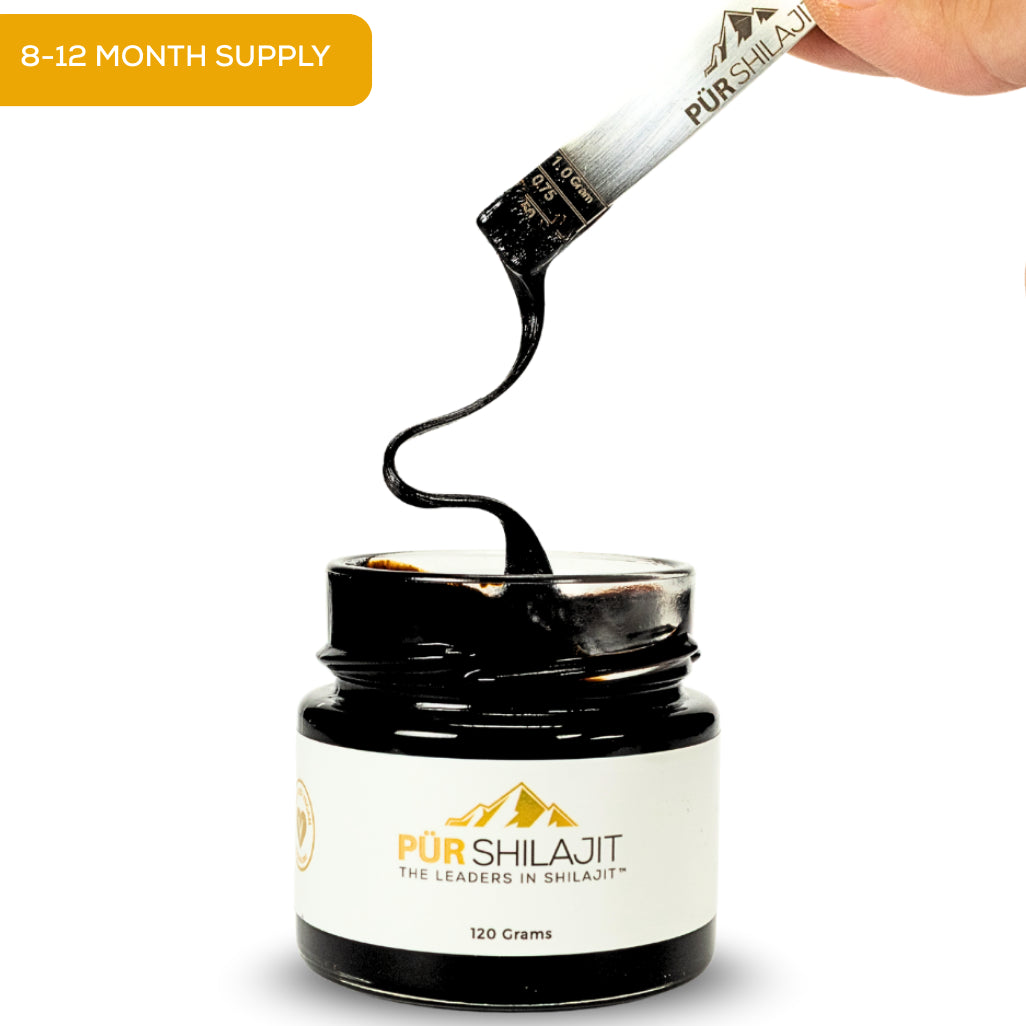
Short answer: Shilajit sticks and single-serve pouches trade cost for convenience. To compare them fairly with a jar, divide the price by the number of servings and check how many milligrams of shilajit each stick holds, per the label. A 120 g jar of Pür resin works out to about $0.57 a day at list price, and a pre-portioned stick has to beat that number while giving you the same amount of the same ingredient.
You already know the single-serve stick is the easy option. Tear, squeeze, done, no spoon to wash. That convenience is real, and it's worth paying for in the right situation. What the box doesn't tell you is how much you're paying for it, or what you're giving up to get it.
Here are five differences that settle it. Stick around for the founder's tip at the bottom; there's a little thank-you waiting there too. No. 2 is the one most people skip.
1. What's actually inside the stick
A jar of resin can hold one thing: resin. A squeezable stick has to flow out of a narrow tear, so many are made from liquid or softened shilajit, and some list water, sweeteners or other ingredients alongside it.
That's not automatically a problem. It just means you should read the ingredient list per the label before you compare prices, because you may not be comparing the same product.
2. How many milligrams you get per serving
This is the one people skip. A stick fixes your serving for you, which feels precise. But the number that matters is how many milligrams of shilajit are in it, not how much the stick weighs.
Our recommended daily amount of resin is 300 to 500 mg (about 0.33 g). If a stick lists its shilajit content per the label, hold it up against that range. If it only lists total weight, you can't tell how much of it is shilajit.
But milligrams are only half of it. Price is the other half.
3. The real cost per serving
The math is the same for every format: price divided by servings. A box of sticks is usually priced per box, so divide by the count on the label. A jar is priced by the gram, so divide the jar size by your daily serving first.
| Format | How to find cost per serving | Pür list price per day |
|---|---|---|
| Single-serve sticks or pouches | Box price ÷ sticks in the box (per the label) | — |
| Resin, 120 g jar | $209 ÷ about 365 servings | about $0.57 |
| Resin, 10 g jar | $34.99 ÷ about 30 servings | about $1.17 |
| Tablets, 24 g box | $63.99 ÷ 60 servings (2 tablets each) | about $1.07 |
Once you've run the stick math, you'll know exactly what the convenience costs you per day. For a full breakdown across every form, see the real cost-per-day math.
4. Packaging per serving
Thirty sticks means thirty wrappers a month. A 120 g jar is one container that lasts about a year of daily servings.
If you care about what goes in the trash, that difference adds up quickly. If you don't, it's a non-issue. Either way, it's worth knowing.
5. Whether you can trace it to a lab report
Any format can be tested. The question is whether you can match what you're holding to a batch report. Look for a lot number on the box or the stick, then look for a report with the same lot number from an independent lab.
If you can make that match, the format matters a lot less. If you can't, the stick or the jar is asking you to take its word for it.
When a stick makes sense, and what to do instead
Single-serve formats shine in a gym bag, a carry-on or a desk drawer. If portability is the whole point, there's another option: pressed tablets. They're pre-portioned, travel without mess, and on our side they're binder-free, so you get the same one-ingredient resin in a form you can toss in a pocket.
The Pür proof
Whatever format you choose, the ingredient should be the same thing. Ours is: single-source resin from the Altai Mountains, hand-harvested around 14,000 feet and never below 13,500, sun-dried 70+ days and never purified with heat. No molasses, no water, nothing added. One ingredient, as pür as pure gets.
Every batch is tested by Eurofins, an independent ISO 17025-accredited lab network, with reports published by lot number. California Prop 65 compliant, 84+ trace minerals, and it passes the 30-second upside-down drip test. Family-owned since 2019, trusted by 155,000+ customers, and backed by a 90-day money-back guarantee.
Pick your format: Resin (120 g $209, or 10 g $34.99) or Tablets (12 g $44.99, 24 g $63.99; 2 binder-free tablets a day).
Quick questions
Are shilajit sticks cheaper than a jar? It depends on the box. Divide the box price by the number of sticks, then compare it with a jar's price divided by its servings. At list price, a 120 g Pür resin jar is about $0.57 a day.
How much shilajit should be in one serving? We recommend 300 to 500 mg of resin a day (about 0.33 g). Check the milligrams of shilajit per stick on the label, not just the stick's total weight.
What's the most portable form of shilajit? Pre-portioned formats like sticks and tablets. Pür Tablets are pressed resin with no binders, two a day.
The founder's tip
Here's what I tell anyone who asks me about sticks: keep the big jar at home and a box of tablets in your bag. The jar is the everyday, cheapest-per-day option. The tablets are for airports and hotel rooms where nobody wants a sticky spoon. You don't have to choose one format for your whole life. Use the jar where you live and the portable option where you don't.
— Jason Reese, founder
A thank-you for reading this far: add any resin jar and The Spoon to your cart and use code RESINREPORT — the spoon's on me.
These statements have not been evaluated by the Food and Drug Administration. This product is not intended to diagnose, treat, cure, or prevent any disease.

Written by Jason Reese