Shilajit Research: 5 Open Questions (and Why People Still Swear by It)
Short answer: Science hasn't fully caught up with shilajit. Researchers are still mapping its full compound profile, how it works in the body, the ideal long-term serving, and how traditional accounts hold up under modern study, and large clinical trials remain rare. What can be measured today is what's in a given jar, batch by batch, which is why independent lab testing matters so much.
You already know the internet is louder about shilajit than the research is. You've seen the testimonials, and you've probably noticed how few large studies sit behind them. That instinct is a good one. The honest picture is more interesting than the hype anyway.
Here are the five biggest open questions, and why people keep making shilajit a daily ritual regardless. Stick around for the founder's tip at the bottom; there's a little thank-you waiting there too. No. 4 is the one that matters most for your own routine.
1. Bioactive compounds and standardization
Open question: What are the exact active compounds in pure shilajit, and how can products be standardized?
Scientists agree shilajit contains fulvic acid, minerals, and dozens of rare organic molecules. The complete profile is still being mapped, which makes standardization tricky.
Until global standards exist, independent lab testing is the most reliable way to know what's in the jar you're holding. See how we publish ours on the lab results page.
2. Mechanism of action
Open question: How exactly does shilajit work in the body?
Early research has looked at everyday cellular energy processes and at fulvic acid's possible role in nutrient transport. The precise biochemical "switches" remain under investigation, so be wary of anyone who claims to have them fully figured out.
3. Tradition vs. modern study
Open question: How well do traditional accounts hold up under modern research methods?
Ayurvedic texts described shilajit in the language of their era: vitality, rejuvenation, "Destroyer of Weakness." Modern research asks narrower questions with control groups and lab assays, and the honest answer is that large clinical trials remain rare.
What's not in question is what's in a quality resin. Mineral content and fulvic acid are measurable, batch by batch. If you're new to the basics, start with what shilajit is and what it contains.
4. Long-term use and serving size
Open question: What is the ideal serving for daily use over the long term?
Traditional practice suggests small daily amounts, and most modern guidance lands at 300 to 500 mg of resin per day.
The real variable is quality. Poor-quality products may contain contaminants, so the sensible approach is consistent, moderate use from suppliers who publish their testing.
5. Clinical evidence vs. anecdotal stories
Open question: Why do so many people swear by shilajit despite limited large-scale studies?
Shilajit stories fill online forums and wellness groups, yet large, double-blind trials are still rare. The gap between science and experience is wide.
For many, the proof is in the practice: a small daily ritual that earns its place for them personally. That's exactly what a 90-day money-back guarantee is for.
Open question vs. what you can check today
| Still open | What you can verify right now |
|---|---|
| Full compound profile | A lab report matched to your lot number |
| Exact mechanism | That the label lists one ingredient |
| Tradition vs. trials | A named, documented source |
| Ideal long-term serving | A clear serving size: 300 to 500 mg of resin |
| Large clinical evidence | A guarantee that lets you judge it yourself |
The Pür proof
We can't settle open science questions. What we can do is make everything about our resin checkable, and we named the company Pür for a reason.
- Single-source resin from the Altai Mountains, hand-harvested around 14,000 feet and never below 13,500.
- Sun-dried 70+ days, never purified with heat. No molasses, no water, nothing added: one ingredient.
- Every batch tested by Eurofins, an independent ISO 17025-accredited lab network, with reports published by lot number. California Prop 65 compliant, 84+ trace minerals.
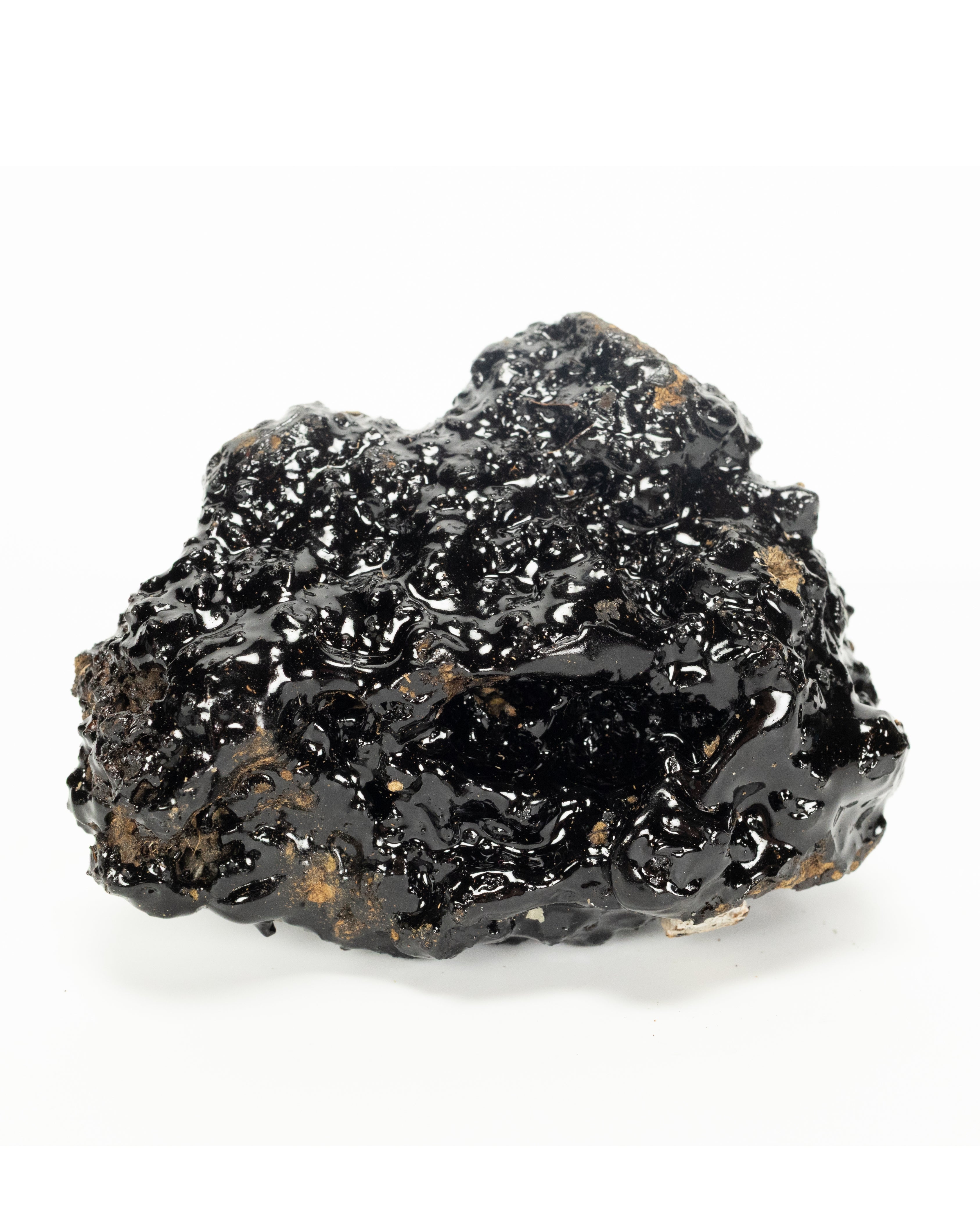
- Passes the 30-second upside-down drip test; hardens in the cold and softens with warmth.
- Family-owned since 2019, 155,000+ customers, 90-day money-back guarantee.
Pick your format: Resin (120 g, $209, about $0.57/day; or 10 g, $34.99), Tablets (12 g $44.99, 24 g $63.99; 2 binder-free tablets daily), or Daily Drive (30 vegan caps, $44.99; one a day).
Quick questions
Is there solid clinical research on shilajit? There is early research, but large, double-blind clinical trials remain rare. Treat bold claims with caution and focus on what can be verified, like lot-matched lab reports.
How much shilajit do people usually take? Most modern guidance lands at 300 to 500 mg of resin per day, taken consistently.
Why does lab testing matter if the science is still developing? Because the open questions are about how shilajit works, not about what's in your jar. Contents can be tested batch by batch today.
The founder's tip
People ask me how to tell if shilajit is "working" for them when the research is still catching up. My honest answer: give it a fair, boring trial. Same serving, same time every morning, stacked onto something you already do, like your first glass of water. Jot one line in your phone notes each week. After a couple of months you'll have your own data instead of someone else's testimonial, and that's worth more than any forum thread.
— Jason Reese, founder
A thank-you for reading this far: add any resin jar and The Spoon to your cart and use code RESINREPORT — the spoon's on me.
These statements have not been evaluated by the Food and Drug Administration. This product is not intended to diagnose, treat, cure, or prevent any disease.